




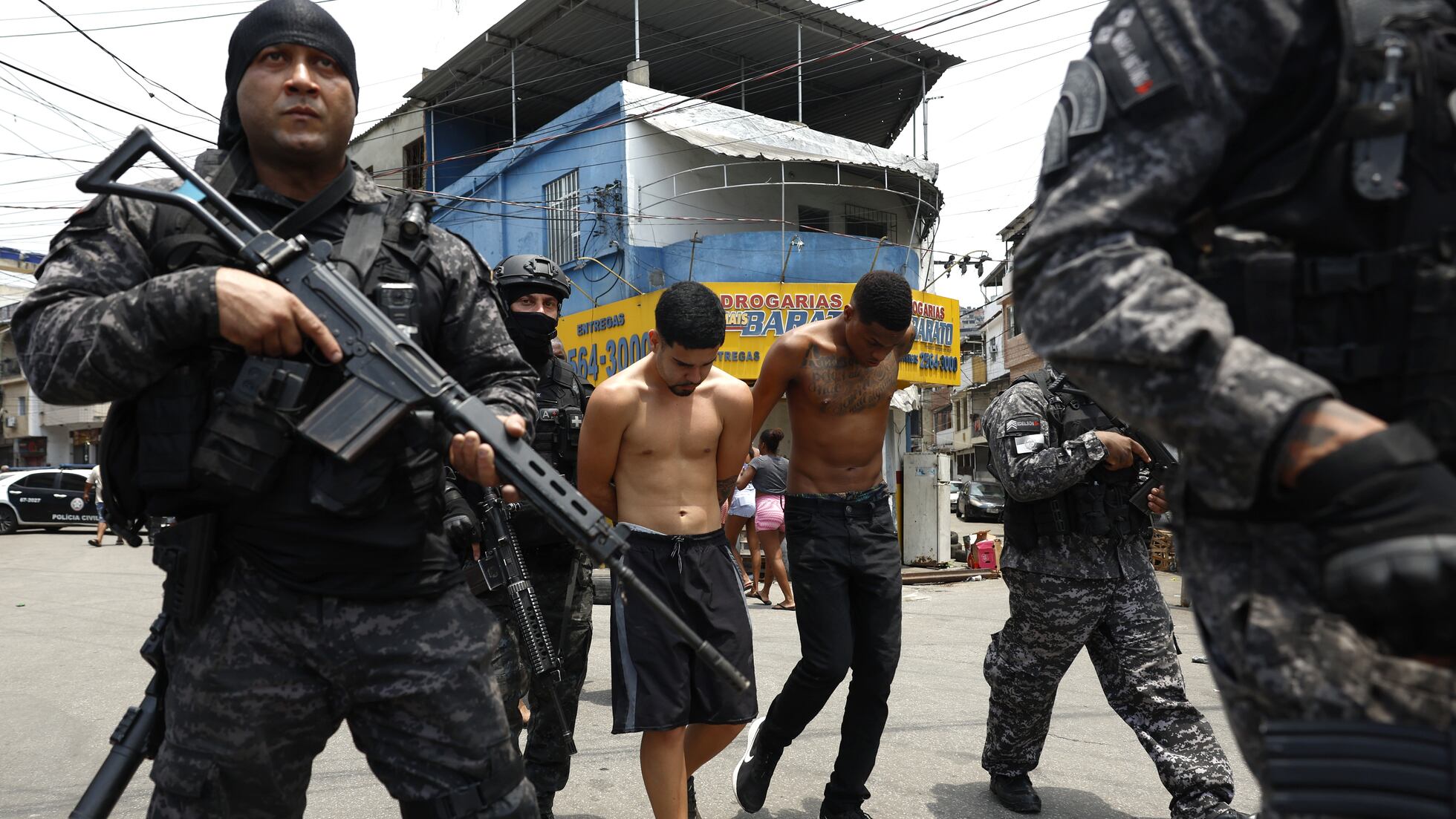
Brazilian Police Raid Exposes Al-Qaeda Ties in Massive Criminal Money Laundering Operation
By Hotspotnews
Brazilian authorities have struck a significant blow against organized crime with a major operation targeting powerful criminal factions and their suspected links to global terrorism. Police in Rio de Janeiro, working alongside the Public Ministry, uncovered a sophisticated money laundering scheme that funneled more than R$100 million to Brazil’s notorious criminal organizations. The investigation has also raised serious red flags about possible connections between these local gangs and Al-Qaeda, involving Lebanese-origin businessmen operating in the volatile Triple Frontier region.
This is not just another routine bust. It reveals how criminal networks inside Brazil are intersecting with international jihadist elements. The Triple Frontier—where Brazil, Paraguay, and Argentina meet—has long been a notorious hub for smuggling, drug trafficking, and illicit finance. For years, conservative voices have warned that porous borders and weak oversight in this area allow dangerous actors to embed themselves and move money freely.
The operation involved raids, seizures of documents, and the disruption of financial pipelines feeding Brazilian factions. These groups already control large swaths of territory, dominate prisons, and engage in extortion, drug trafficking, and violence on a massive scale. Adding a potential terrorist financing dimension turns a serious domestic security problem into a broader threat that could affect the entire Western Hemisphere.
Conservatives have consistently argued that lax immigration policies, unchecked border regions, and governments more interested in social spending than hard security create exactly these kinds of vulnerabilities. When criminal factions can launder tens of millions and potentially partner with groups like Al-Qaeda, it demonstrates the real-world consequences of prioritizing ideology over law and order.
The involvement of individuals of Lebanese descent in the Triple Frontier is particularly telling. That region has a documented history of serving as a base for Hezbollah financing networks and other Islamist-linked activities. While authorities are still piecing together the full picture of any Al-Qaeda connection, the mere possibility should alarm every serious observer of national security. Radical Islamic terrorism does not respect national borders, and Brazil is not immune.
This police action is a welcome display of resolve by Brazilian law enforcement. Yet it also serves as a reminder that more decisive action is needed. Strong borders, aggressive financial tracking, and a zero-tolerance approach to both street-level crime and foreign terrorist financing are essential. Half-measures and political correctness have allowed these threats to grow. Brazil—and the broader free world—cannot afford to treat these networks as someone else’s problem.
The operation sends a clear message: when authorities get serious about enforcement, they can hit criminal and terrorist financing where it hurts. The question is whether political leaders will follow through with the sustained, tough policies required to prevent the next scheme from taking root. National security begins with securing the homeland against all threats—domestic gangs and foreign extremists alike.


