


Brazil’s Approval of a Sanctioned Venezuelan General Raises SERIOUS Doubts About Lula’s Regional Priorities
By Hotspotnews
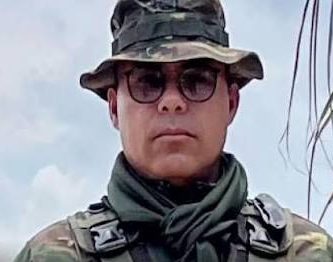
The Brazilian government’s decision to grant diplomatic approval for Venezuelan General Luis Gerardo Reyes Rivero to serve as military attaché in Brasília has stirred significant controversy. Reyes Rivero was sanctioned by the United States in November 2024 for his alleged role in the violent repression of protests following Venezuela’s disputed presidential election that year. The move, formalized through the Ministry of Defense and communicated by the Foreign Ministry, has been justified by Brazilian officials on narrow legal grounds: the country recognizes only sanctions approved by the United Nations Security Council and does not automatically apply unilateral measures imposed by other nations.
This technical explanation has done little to quiet the political reaction. For many Brazilians, particularly on the opposition side, the appointment is not a routine diplomatic formality. It is viewed as a deliberate signal of continued affinity with elements of the Chavista security apparatus at a moment when Venezuela itself is undergoing profound change.
Lula’s Record on Venezuela
President Luiz Inácio Lula da Silva’s approach to Venezuela has evolved over time. In earlier years, including during his previous administrations and the early phase of his current term, Brazil maintained close political and economic ties with the governments of Hugo Chávez and later Nicolás Maduro. Lula hosted Maduro in Brasília, defended aspects of the Bolivarian project against international criticism, and worked to reintegrate Venezuela into regional forums after the rupture that occurred under the Bolsonaro administration.
That stance shifted after the July 2024 Venezuelan presidential election. Maduro claimed victory amid widespread accusations of fraud and a failure to release detailed voting records. Lula’s government refrained from fully recognizing the result, described the Maduro government as having an authoritarian slant, and blocked Venezuela’s entry into the BRICS group. Relations cooled.
The situation changed dramatically in January 2026 when United States forces captured Maduro and transferred him to face charges in New York. Delcy Rodríguez assumed the role of acting president. Lula condemned the U.S. operation as a dangerous violation of national sovereignty and a threat to the international order. At the same time, his government pivoted toward engagement with the interim Venezuelan authorities. Brazil has offered humanitarian assistance after earthquakes, maintained diplomatic channels, and emphasized the need to strengthen democracy, improve living conditions, and restore stability in the neighboring country rather than focusing on Maduro’s return.
What This Represents to the United States
From Washington’s perspective, the decision carries clear symbolic and practical weight. The United States has used targeted sanctions as a tool to isolate individuals linked to repression and authoritarian practices under the previous Maduro government. By granting agrément to a general still on that list, Brazil is effectively declining to reinforce those measures.
The move is likely to be interpreted as a public assertion of Brazilian sovereignty against unilateral American pressure and as continued tolerance—if not quiet solidarity—with residual elements of the Chavista security structure. In an already strained bilateral relationship marked by trade disputes, visa frictions, and divergent views on the U.S. intervention in Venezuela, the appointment registers as another incremental signal of limited alignment. It suggests that Brasília is unwilling to treat U.S. sanctions designations as a meaningful factor in its own diplomatic and military credentials process.
Possible Consequences
The immediate fallout is unlikely to produce a dramatic rupture. Brazil and the United States maintain extensive economic, security, and people-to-people ties that neither side has an interest in fully dismantling. However, several practical and political consequences are plausible.
Diplomatically, the decision may harden attitudes in Washington and reduce goodwill on secondary issues such as defense cooperation, intelligence sharing, or coordinated responses to regional security challenges. It could complicate future requests for Brazilian support on sanctions enforcement or on isolating remaining hard-line figures associated with the Maduro era. Within the U.S. political debate, the episode provides critics of engagement with Lula’s government additional evidence that Brazil prioritizes ideological or sovereignty-based considerations over closer partnership on democratic norms and accountability.
Inside Brazil, the same decision amplifies existing domestic doubts. Critics argue that the government could have declined the nomination without legal cost and that proceeding with it unnecessarily invites friction with the United States while projecting an image of comfort with officials tied to past repression. With presidential elections approaching in October 2026, such episodes become ready material for the opposition, reinforcing narratives about Lula’s judgment and long-term regional priorities.
Broader Risks and Doubts
Beyond the bilateral dimension with the United States, the appointment strengthens several broader concerns. It fuels the perception that Lula’s foreign policy still carries residual affinity for leftist authoritarian networks. It raises questions about whether Brazil is sufficiently attentive to the human-rights records of those it credentials for sensitive military-diplomatic roles. And it contributes to public distrust among Brazilians who already view the Workers’ Party’s historical ties to Chavismo with skepticism.
None of this means Brazil is on the verge of adopting Venezuela’s political or economic model. Brazil retains competitive elections, independent institutions, and a vigorous opposition. The appointment itself is a diplomatic credential, not a blueprint for domestic transformation. Yet symbols matter in politics. By choosing to proceed when refusal was available, the government has handed its critics—and Washington—a tangible example of what they describe as misplaced priorities.
The episode illustrates the tightrope Lula continues to walk: balancing historical affinities, a doctrine of non-interference, pragmatic engagement with a transformed Venezuela, and the domestic and international costs of appearing insufficiently distant from the repressive practices associated with the previous Maduro government. How that balance is judged will form part of the larger debate Brazilians will settle at the ballot box later this year.