


Brazil’s Dangerous Role in China’s Tariff Evasion Scheme
By Hotspotnews
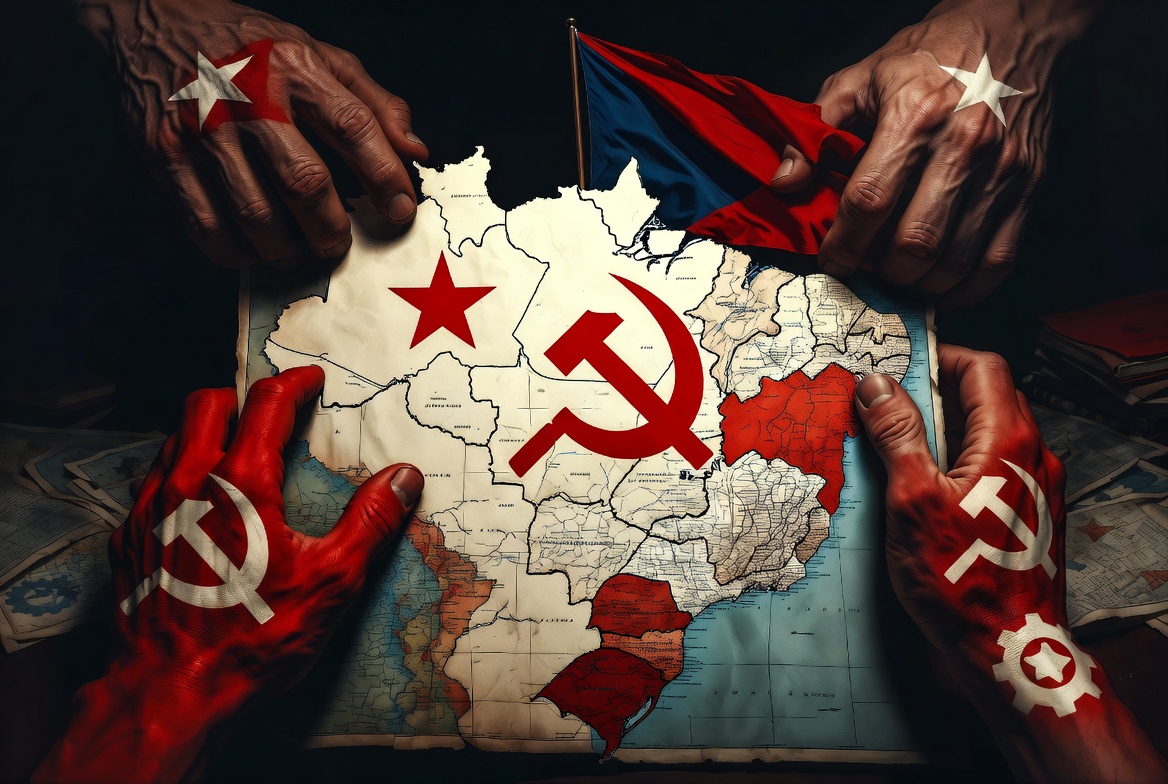
The Trump administration has once again drawn a clear line in the sand against communist China’s economic warfare. On August 13, the White House released a hard-hitting report exposing the “Great Transshipment Scam” — a sophisticated global network that allows Chinese goods to slip into the American market by pretending to come from elsewhere. Brazil finds itself squarely on that list, ranked in Tier 2 alongside other countries that have become convenient platforms for Beijing’s deception.
This is not abstract bureaucracy. For years, Chinese exporters have responded to President Trump’s tariffs by routing products through third countries, performing minimal processing or simple relabeling, and declaring a new origin. The result? Tens of billions of dollars in lost U.S. tariff revenue every year, American factories undercut, and good-paying manufacturing jobs displaced. The report estimates the scale of this fraud in the tens of billions annually under conservative figures, with far higher numbers possible. Brazil’s inclusion as a “scale leader with significant economic integration with China” and a “regional production and logistics platform” should alarm every Brazilian who values sovereignty and every American who values fair trade.
Brazil’s deep commercial ties with Beijing have created exactly the kind of infrastructure China needs: major ports, manufacturing capacity, bonded warehouses, and supply-chain links that make origin-shifting easy. The report does not claim the Brazilian government is actively running a criminal conspiracy. It does not need to. Structural dependence is enough. When a country becomes so integrated into Chinese production and logistics networks that it can efficiently support rerouting and “transformation” claims, it becomes a useful tool — whether by design or by neglect.
Conservatives have warned about this for years. China’s strategy in Latin America is not charity. It is long-term leverage: buy influence through trade and investment, lock in commodity supplies, and use regional partners as buffers against American pressure. Brazil’s role as a major soy, iron ore, and agricultural supplier to China has been profitable in the short term. But the cost is becoming clearer. When the United States identifies Brazil as part of the shadow network enabling tariff evasion, it signals that Brazilian goods and Brazilian logistics will face heightened scrutiny at American ports. Compliance costs will rise. Negotiations will harden. Trust erodes.
President Trump’s approach is straightforward and overdue. Differentiated tariffs exist for a reason: countries that engage in unfair practices, forced technology transfer, and mercantilism must pay a price. Allowing China to launder its exports through friendly third countries defeats the entire purpose. The administration is responding with stronger customs enforcement, AI-powered detection tools, anti-transshipment clauses in trade deals, and clear warnings that facilitators will face consequences. This is America First trade policy in action — protecting American workers instead of subsidizing Beijing’s industrial strategy.
For Brazil, the choice is becoming unavoidable. Continued deepening of economic dependence on China invites exactly this kind of designation and the commercial friction that follows. Aligning more closely with the United States and other free-market democracies offers a better path: secure market access, technology partnerships, and genuine reciprocity rather than one-sided extraction. Brazilian exporters and policymakers who pretend this report is mere American bullying miss the larger point. China is the one systematically gaming the system. Countries that enable it, even passively, will eventually share the cost.
The report is a warning shot, not a declaration of economic war. But it is a serious one. Brazil can treat it as an opportunity to reassess its strategic posture, strengthen origin controls, and reduce vulnerability to Chinese pressure. Or it can dismiss the concerns and watch the scrutiny intensify. Conservatives on both sides of the equator should hope Brazilian leaders choose the former. Economic sovereignty is not optional when dealing with a regime that views trade as a tool of power.
image source: @promosxululu