


What a Major PCC Attack Would Set in Motion
By Hotspotnews
A large coordinated attack by the Primeiro Comando da Capital would be treated first as a Brazilian public-security emergency, not as a foreign intervention. The closest precedent is May 2006, when the faction answered a mass transfer of leaders, including Marcos Willians Herbas Camacho, known as Marcola, with prison rebellions and attacks on police and public transport across São Paulo state. Buses were burned, officers were killed, and the country’s largest city largely stopped. Counts differ by what is included: early tallies put the dead near 140, while later reviews that add police reprisals put the toll in the hundreds, with one 2026 retrospective citing 564 dead and 110 wounded over nine days. The lesson state governments drew was operational, not diplomatic: isolate prison leadership, flood the streets with military police, and accept a long argument over unlawful killings.
In October 2026 the same machinery would start again, with the election calendar laid on top. State military police and the civil police would take the streets. The Federal Police would open a federal case if the targets included federal sites, banks, or electoral infrastructure. The governor of the affected state could request Army support under existing public-security rules; those troops would answer to Brazilian command. The electoral limit that keeps the armed forces 100 metres from polling stations, in force from 2 to 5 October under TSE rules, can be lifted by a judge or by the polling-station president. It does not bar a security deployment away from the ballot box. If attacks hit voting sites, the TSE could delay polling in those sections, reprint materials, and reschedule only the disrupted locations. A national cancellation is not the default.
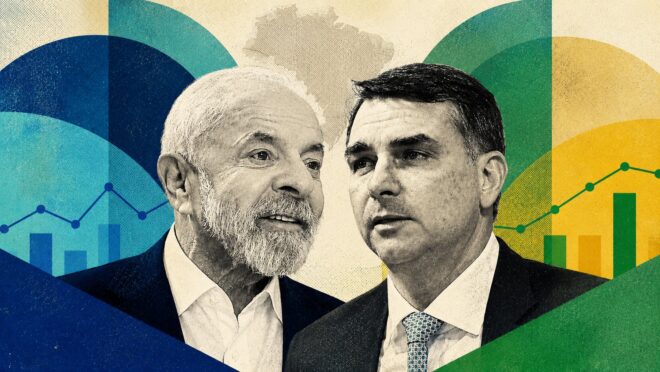
The political consequence would depend on who was in office and who was blamed. An attack before or during the 4 October first round would dominate the campaign, with both Luiz Inácio Lula da Silva and Flávio Bolsonaro claiming the other side was soft on the faction. It would not certify a winner. Certification stays with the electoral courts. A Flávio Bolsonaro victory would not be the attack’s legal result; it would be a separate count. Violence after a result would go to the same courts as a challenge, and to state police as a crime.
Outside Brazil the new designations would bite harder than in 2006. In June 2026 the U.S. State Department listed Comando Vermelho and the PCC as specially designated global terrorists and moved to list them as foreign terrorist organizations. On 22 September, fifteen Shield of the Americas governments — the United States, Argentina, Bolivia, Chile, Colombia, Costa Rica, the Dominican Republic, Ecuador, El Salvador, Guyana, Honduras, Panama, Paraguay, Peru and Trinidad and Tobago — said they intended to freeze assets, restrict visas, and prosecute material support for 24 groups, including the PCC. Brazil and Mexico are not members. After an attack, those governments could block accounts, refuse entry to associates, and pressure banks that touch faction money. They also said they would ask the Organization of American States for a Rio Treaty consultation. That is a diplomatic meeting, not permission to enter Brazil.
U.S. steps already used in this crisis would be the likely ceiling unless Brasília asked for more: another consular drawdown, sanctions on named facilitators, and intelligence sharing. The 1 October Southern Command post about an 18-hour airborne deployment described a standing capability. It did not name the PCC or Brazil, and the 2 October embassy suspension was tied to a security alert that federal police did not confirm. Neighbors can tighten borders and honor the sanctions list. They have no standing right to send troops because a Brazilian faction attacked Brazilian targets.
The lasting costs would be domestic. Transport and schools would stop in the affected cities. Prisons would be locked down and leaders moved. Insurers and banks would reprice risk. Human-rights cases from 2006 are still open, including claims that police death-squad killings were poorly investigated; a repeat would reopen that fight. Foreign sanctions would complicate legitimate firms accidentally linked to faction cash. None of that transfers command of Brazilian streets to Washington.
Pressure is not the same as being finished. The PCC can still shut down parts of a city. The 4 October election is close and bitter. Washington has already used tariffs, visas, gang designations, and a consular suspension, and some neighbors have joined a sanctions club Brasília refused. What does not follow is collapse or a foreign takeover. The vote is still run by Brazilian electoral courts. The armed-forces limit is a rule about polling stations, not a surrender of the Army. A PCC attack would be met first by state police and, if requested, by Brazilian troops. A Flávio Bolsonaro win would be a count, not an invasion trigger. A Lula win would mean more friction with Washington, not automatic occupation. China, Europe, and Mercosur do not disappear because one hemispheric coalition left Brazil off the list. Screwed would require the institutions that certify the vote and answer a crime wave to stop working. They have not.
#PCC #BrazilSecurity #ShieldOfTheAmericas #BrazilElection #PublicSecurity
Sources: CNN Brasil retrospective on the May 2006 São Paulo attacks, 13 May 2026; Harvard Law School summary of the Justiça Global report on those attacks and police reprisals, 2011; Clifford Chance briefing on the June 2026 U.S. SDGT and intended FTO designations of CV and PCC; U.S. State Department joint statement on hemispheric sovereignty and the 24-group list, 22 September 2026; InSight Crime, 24 September 2026, on the Shield of the Americas blacklist; TSE resolution 23.751 and the October 2026 electoral calendar on armed-forces distance from polling stations; U.S. State Department and embassy notices on the 2 October 2026 consular suspension; Brazilian federal police statements that the reported threat to U.S. sites was not confirmed.


