




OPINION
The Ultra-VIP Lunch That Exposed a Pattern
A conservative critique of power, privilege, and selective justice
By Hotspotnews
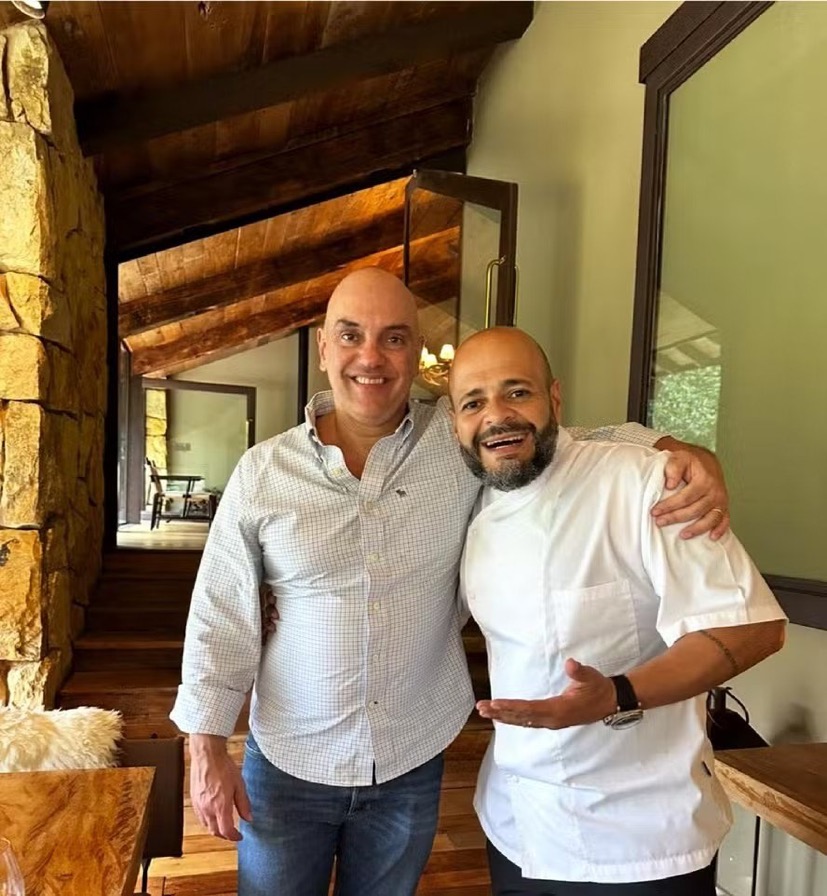
In December 2023, banker Daniel Vorcaro arranged what he called an “ultra-VIP” lunch for Supreme Court Justice Alexandre de Moraes at the Six Senses Botanique hotel in Campos do Jordão. The menu featured caviar, scallops with salmon roe, truffled egg, foie gras, dry-aged beef, wagyu, and white truffles. Rare wines from Vorcaro’s private cellar — including La Tâche, Haut-Brion, Château Mouton Rothschild, and Château Cheval Blanc — were selected with instructions to choose the oldest vintages available. Staff were told to create a “complete experience,” display horses on the grounds, and avoid mentioning Vorcaro’s name so the guest of honor would not feel constrained. Vorcaro described Moraes as his “most important guest to date.” Four security officers accompanied the nine-person party. The event lasted more than four hours and ended with cigars.
This was not an isolated social courtesy. Federal Police records extracted from Vorcaro’s phone show the relationship began in late December 2023, facilitated by former Communications Minister Fábio Faria. A first meeting occurred around December 21. Days later came the Campos do Jordão lunch. Within weeks, in January 2024, Banco Master signed a three-year contract with the law firm of Moraes’s wife, Viviane Barci de Moraes. The agreement was worth approximately R$131 million in gross payments — R$3 million net per month — for “strategic consulting” that included work before the Central Bank, Federal Revenue, CADE, and even police inquiries. Metadata on the draft showed Moraes himself opened and edited the document before it was sent. Payments began in February 2024; roughly R$80 million was transferred before the bank was liquidated in November 2025.
Over the following two years the contacts continued. Police identified at least six to eight in-person encounters. Vorcaro later sent Moraes dozens of messages, including one in November 2025 expressing “gratitude of my life” and a “debt of life” owed by his entire family and circle. When investigations into Banco Master intensified, Vorcaro turned to the justice rather than the contracted law firm, asking whether he should leave the country and whether certain officials could intervene. A second proposed contract involving shares in a private jet and helicopter was also discussed.
From a conservative standpoint the sequence raises obvious questions of appearance and substance. A justice who has used extraordinary powers to police speech, investigate political opponents, and shape electoral rules accepted lavish hospitality from a banker whose institution later collapsed amid fraud allegations. The same justice’s family firm received a multimillion-real retainer immediately after the social approach. The timing, the secrecy instructions, the editing of the contract, and the later personal appeals form a pattern that looks less like coincidence and more like access-for-influence. Ordinary Brazilians face a rigid justice system; the well-connected appear to dine on wagyu and rare Bordeaux while contracts are drafted.
Defenders note that Moraes never sat on Master cases and that the firm’s compliance office consulted him precisely to check for conflicts. Those explanations do not erase the optics or the documented closeness. When a Supreme Court minister becomes the recipient of “eternal gratitude” from a financier under investigation, public confidence in equal justice suffers.
Sources: Federal Police reports released by Justice André Mendonça; contemporaneous coverage in O Globo, VEJA, Gazeta do Povo, Folha de S. Paulo, Estadão, and CNN Brasil.
#CasoMaster #AlexandreDeMoraes #DanielVorcaro #STF #JusticaSeletiva #EliteNoPoder #ContratoMaster #CamposDoJordao


