


Political Ties Cloud Dino’s Role at the STF
By Hotspotnews
The Recusal Request Against Flávio Dino Tests Whether Brazil’s Supreme Court Can Still Claim Impartiality
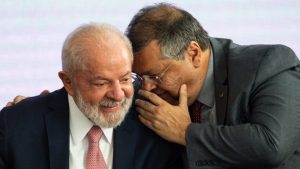
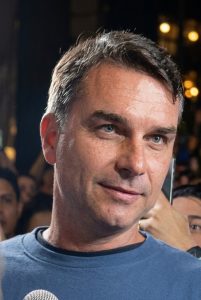
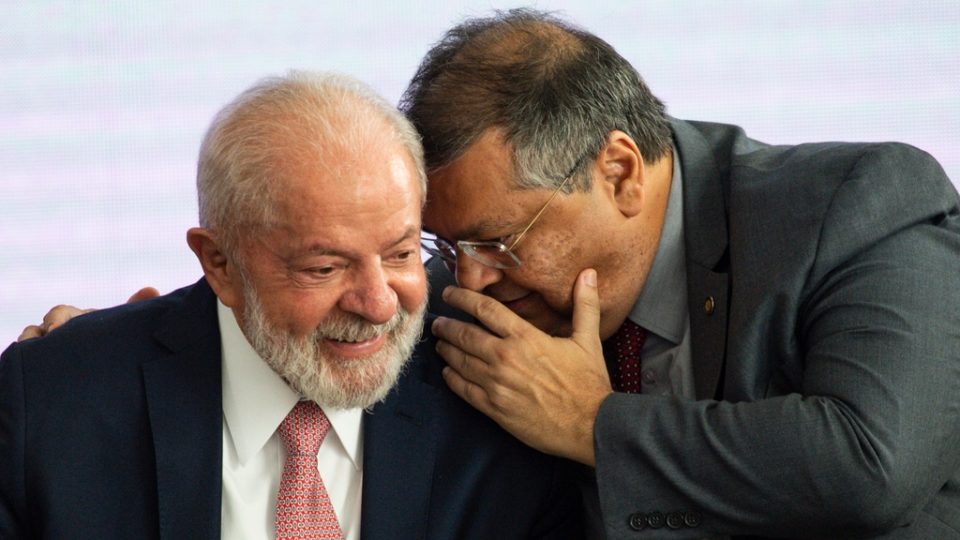
Flávio Bolsonaro’s defense filed a formal request with STF President Edson Fachin on September 30 asking that Justice Flávio Dino be declared suspect in every case touching the senator, President Lula, or the 2026 presidential race. The petition seeks an immediate suspension of those matters and their redistribution. Lawyers argue that a relationship of intimate friendship built over decades—preceding Dino’s arrival on the Court and continuing afterward—makes impartial judgment of the president’s principal electoral opponent impossible. The filing cites Dino’s shared political field with Lula, public statements of support before he donned the robe, and repeated personal contacts. Among the cases named are investigations into the financing of the film Dark Horse and the use of parliamentary amendments, plus petitions brought by the PT itself.
Dino’s path to the bench is not in dispute. He served as Lula’s justice minister, governed Maranhão under left-aligned parties, and was nominated by the president in 2023. Senate confirmation was narrow. Brazilian reporting, including accounts in G1, CNN Brasil, Folha, and O Globo, has documented both the historical alliance and ongoing contacts. The defense’s core claim is chronological and cumulative: isolated gestures might be explained away, but the pattern is not.
Possible consequences turn on whether the Court treats the appearance of bias as a real institutional problem. If Fachin or the full bench grants the request, the affected cases move to other rapporteurs. Investigations do not disappear; they simply proceed before a justice whose personal history with one of the litigants is not decades long. That outcome would slow certain lines of inquiry in the short term and invite accusations that the defense is forum-shopping. It would also establish a clearer precedent that close political friendship with a sitting president can disqualify a justice from electoral-adjacent matters weeks before a vote. For conservatives who have watched successive appointments shift the Court’s center of gravity, the practical effect would be limited but the symbolic one larger: a public acknowledgment that the robe does not erase prior political identity.
If the request is denied, the status quo continues. Decisions on the listed matters remain with a justice the opposition regards as aligned with the incumbent. Near an election, even routine procedural rulings can be read as campaign interventions. Rejection would reinforce the argument, already circulating among PL allies, that certain channels of the Court function as an extension of the executive rather than a check on it. That perception, whether fully accurate or not, carries its own costs: further polarization, challenges to the legitimacy of any adverse ruling, and heightened risk that the eventual electoral result is contested on institutional rather than purely ballot grounds. Past Brazilian experience shows that questions of judicial neutrality, once raised and left unresolved, do not fade quietly.
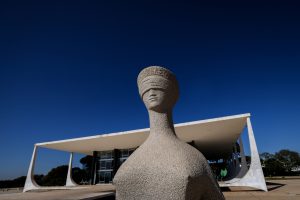
The deeper issue is structural. A Court whose members include recent political allies of one side of a polarized contest will face repeated recusal demands whenever that side’s interests are at stake. Granting them selectively invites charges of inconsistency; refusing them wholesale invites charges of capture. Either path tests whether the STF can maintain public confidence that outcomes track law rather than the political biography of the rapporteur. Sources for the filing and the cited relationship include contemporaneous reporting by G1, CNN Brasil, O Globo, and Folha de S.Paulo.
#STF #FlavioDino #FlavioBolsonaro #Eleicoes2026 #ImparcialidadeJudicial #Brasil #Justica #Lula #PL #SeparacaoDePoderes
Sources: G1, CNN Brasil, O Globo, and Folha de S.Paulo.


