




When Friendship and Fortune Meet at the Highest Court
By Hotspotnews
Brazilians have long been told that no one stands above the law. Recent recordings and documents now force a harder question: does that principle still apply when the person in question sits on the Supreme Court?
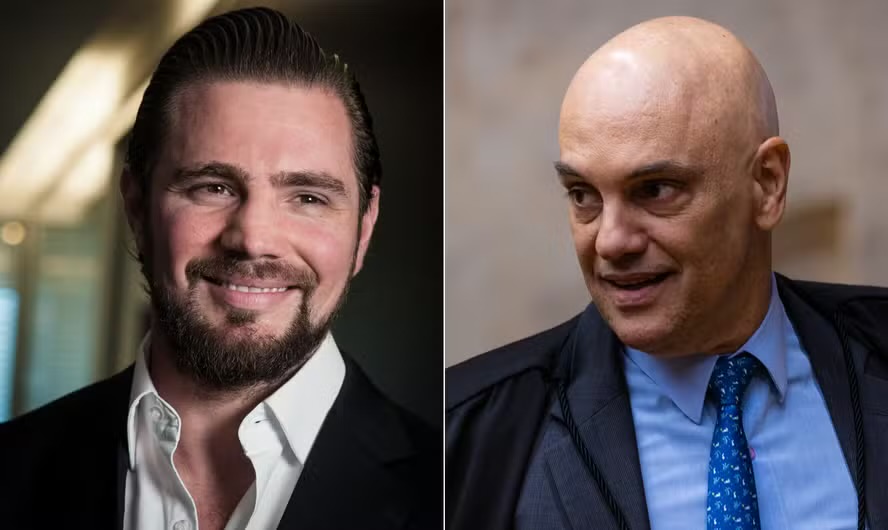
On September 30, 2026, Revista Piauí published private WhatsApp audio from Fabiano Zettel, brother-in-law and financial operator of former Banco Master owner Daniel Vorcaro. In a conversation dated September 2, 2025, Zettel told a companion: “Xandão is Daniel’s best friend. I’m counting on him. Best friend, they have dinner together, they go out together.” “Xandão” is the familiar nickname for Justice Alexandre de Moraes.
The remark arrived the same day messages extracted from Vorcaro’s phone by federal police detailed a December 30, 2023, lunch Vorcaro arranged for Moraes at the Six Senses Botanique hotel in Campos do Jordão. Vorcaro did not attend, yet he directed the chef on the menu—caviar, truffles, foie gras, wagyu—and selected rare wines from his own cellar. He called Moraes his “most important guest” and asked that his name not be mentioned during the meal.
Weeks later, in January 2024, Banco Master signed a R$131 million contract with the law firm of Viviane Barci de Moraes, the justice’s wife. The agreement covered “strategic consulting” on matters involving the Central Bank, Federal Police, Receita Federal and CADE. Metadata later examined by investigators showed the draft was opened and edited under a user profile identified as “Ministro Alexandre de Moraes.” The firm has said the justice was consulted only to confirm there was no legal impediment; Moraes has not been shown to have judged any Master case. The bank paid roughly R$80 million before the Central Bank liquidated it in November 2025.
None of this is a criminal conviction. Zettel’s private boast does not by itself prove an improper relationship. A luxurious lunch is not a crime. A spouse’s legal work for a private client is not automatically forbidden. Yet the pattern is what a conservative view of institutions cannot ignore: a sitting justice of the nation’s highest court appearing socially close to a banker whose institution later collapsed amid fraud allegations, while that banker’s company paid tens of millions to the justice’s family firm and the justice himself touched the contract.
Conservatives have spent years arguing that concentrated power without visible accountability corrodes public trust. When ordinary citizens face swift punishment for lesser offenses, the sight of elite proximity—dinners, private banquets, nine-figure retainers—feeds the suspicion that some doors remain permanently open. The rule of law is not a slogan reserved for political opponents. It is the expectation that those who interpret the Constitution live under the same standards they apply to everyone else.
Investigations continue. The public is entitled to more than silence or technical denials. Transparency about the nature of the relationship, the exact services rendered under the contract, and any communications between the justice and Vorcaro would serve the institution better than another round of partisan deflection. A court that claims to defend democracy cannot afford even the appearance that friendship and fortune travel together at the top.
#RuleOfLaw #STFAccountability #InstitutionalIntegrity #EqualJustice #BrazilPolitics
Sources: Revista Piauí (September 30, 2026 audio report); messages from Daniel Vorcaro’s phone reported by O Globo; contract details and metadata analysis reported by CNN Brasil, Folha de S.Paulo, JOTA and Estado de S. Paulo; Federal Police documents unsealed in the Banco Master inquiry.


