




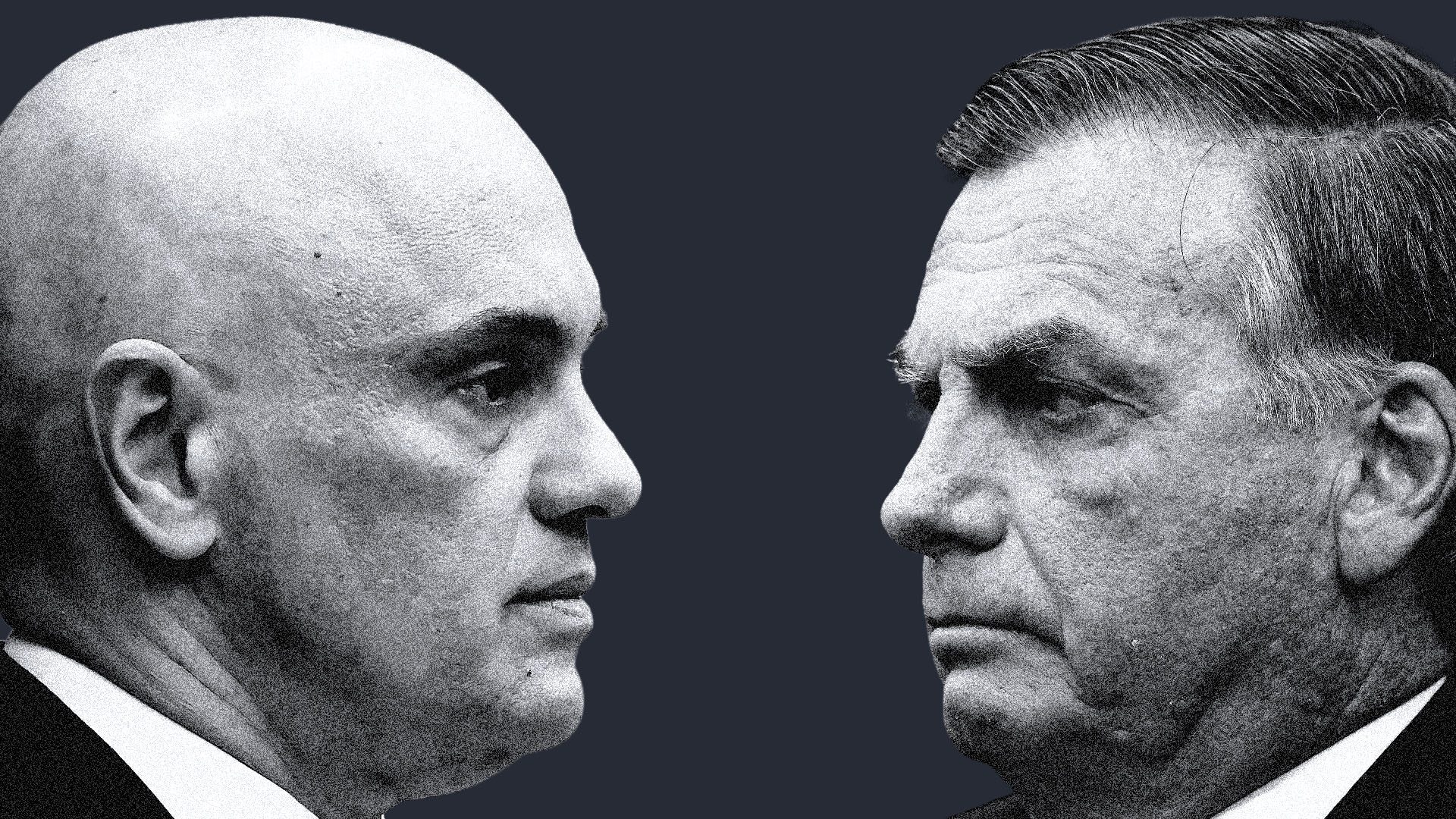
Brazil’s Double Standard Justice: The Persecution of Conservatives While Millions Flow to Judicial Elite
By Hotspotnews
In the halls of Brazilian power, justice is not blind—it is selectively sighted, peering sharply at conservatives while averting its gaze from the elite networks that sustain the establishment. The latest chapter in this saga involves a jaw-dropping R$129 million contract tied to the family of Supreme Federal Court (STF) Minister Alexandre de Moraes, contrasted against the relentless pursuit of Jair Bolsonaro and his allies over mere drafts of documents that were never enacted. This is not mere coincidence or bureaucratic oversight. It is the exposed underbelly of a system where lawfare serves as a political bludgeon, sovereignty is invoked only when convenient, and transparency evaporates when it threatens the powerful.39
The conservative movement in Brazil has long warned of institutional capture. Recent events vindicate those warnings with stunning clarity. Transparência Internacional Brasil, a respected anti-corruption voice not beholden to any party, has now sounded the alarm, labeling the Procuradoria-Geral da República’s (PGR) inaction on the Moraes family contract as “grave” and worsening with every revelation. This is the same system that mobilized with lightning speed against alleged coup plotting on the right. The double standard is no longer deniable—it is documented, defended by insiders, and devastating to public trust.
The Relentless Hunt: Bolsonaro and the “Coup Drafts”
After the 2022 election, Bolsonaro’s refusal to concede gracefully—coupled with widespread doubts about electoral integrity—unleashed a torrent of investigations. Authorities seized upon internal documents, drafts, and contingency planning labeled as evidence of a coup. These “minutas” were never formally adopted, never implemented, and in many cases represented nothing more than hypothetical scenarios or internal deliberations common in turbulent political transitions.
Yet the consequences were anything but hypothetical. Bolsonaro was barred from running for office until 2030. Allies faced arrests, interrogations, and prosecutions framed as existential threats to democracy. Military figures and civilian supporters were swept up in operations portraying conservative dissent as insurrection. The message from the STF-dominated establishment was unmistakable: challenge the system, and the full weight of the state will descend upon you. Even unexecuted ideas became prosecutable offenses, with intent twisted into action through creative legal interpretations.
This approach reeks of selective prosecution. Conservatives see it as classic lawfare—the weaponization of courts to neutralize political rivals. While the left celebrates it as safeguarding institutions, the reality is a judiciary acting as political enforcer, eroding the very democratic norms it claims to protect. Bolsonaro, a leader who commanded broad popular support and challenged entrenched corruption, was reduced to a target rather than a legitimate voice in the democratic arena. How can Jair Bolsonaro be arrested and Moraes with a contract signed is not?
The Protected Elite: R$129 Million and a WhatsApp Draft
Now juxtapose this fervor with the Banco Master affair. The financial institution, under Daniel Vorcaro, collapsed amid allegations of large-scale fraud that reportedly dwarfed previous banking scandals. Yet before its liquidation, it entered a stunning consulting agreement with the law firm of Viviane Barci de Moraes, wife of the powerful STF Minister Alexandre de Moraes.
The terms were extraordinary: R$3.6 million per month for three years, potentially reaching R$129 million. Tens of millions were paid out. Most damningly, Viviane herself personally forwarded the draft contract—the “minuta”—directly to Vorcaro via WhatsApp in January 2024, complete with a casual note. Vorcaro replied inquiring about signing logistics. This was no arm’s-length transaction handled by intermediaries. It was direct, personal, and high-stakes.
The firm’s defense is predictable: legitimate regulatory and compliance work, dozens of meetings, legal opinions on ethics codes, risk management, and interactions with agencies like the Central Bank and tax authorities. They insist no STF matters were involved and that a team of lawyers plus subcontractors delivered value. Yet the optics—and the timing amid the bank’s mounting troubles—cry out for scrutiny. Vorcaro himself reportedly alluded to the relationship in plea discussions as a means of building proximity to the minister. Separate reports of Moraes contacting Central Bank leadership about the bank only deepen suspicions of intertwined interests.
In a nation where conservatives are hounded over paper trails, this multimillion-real arrangement linked to the spouse of a sitting STF justice—who wields enormous influence in politically sensitive cases—has elicited comparative silence from the usual guardians of institutional purity. The bank’s fraud probes, the scale of payments relative to its size, and the family connection to judicial power demand rigorous, independent examination. Instead, we see hesitation and deflection.
Transparency Internacional Enters the Fray
Even non-partisan watchdogs can no longer ignore the disparity. Transparência Internacional Brasil has publicly rebuked the PGR for its “grave inaction,” demanding investigation into the Moraes family’s ties to Banco Master. They describe the episode as emblematic of advanced state capture—where private interests burrow into the heart of public power, shielded by institutional inertia. This is powerful validation. When an organization dedicated to integrity across the spectrum flags the problem, it transcends partisan grievance. It becomes a national wake-up call.
Their intervention highlights what many Brazilians already sense: the system protects its own. Revelations keep emerging—the personal WhatsApp draft, payment flows exceeding R$80 million, the bank’s collapse—yet prosecutorial urgency remains conspicuously absent.
Sovereignty for Thee, But Not for Me
The hypocrisy extends beyond domestic contracts. STF Minister Luís Roberto Barroso reportedly held secret meetings with U.S. officials, pressing for American statements on “democracy” and boasting of external pressure’s role in reining in the military during 2022. When conservatives explore similar channels—such as transition planning discussions—the establishment erupts in outrage, decrying treason and foreign meddling. Sovereignty, it seems, is a flexible concept: inviolable when shielding left-leaning power, expendable when conservatives seek international engagement.
This selective nationalism mirrors broader patterns. International criticism of Moraes’ record—including past U.S. actions citing concerns over arbitrary detentions, expression curbs, and politicized cases—has been downplayed or dismissed by his defenders. Yet the same voices amplify threats against the right. True patriots demand consistent sovereignty: Brazilian institutions answering first to the Brazilian people, not ideological factions or foreign applause.
The Deeper Crisis: Captured Institutions and Eroding Trust
Brazil stands at a crossroads. A powerful STF, insulated from accountability, has expanded its role into electoral oversight, content moderation, and political arbitration. When combined with family business dealings that raise unavoidable conflict questions, the foundation of impartial justice crumbles. Conservatives are not anti-institution—they are pro-equal application of the law. Drafts should not destroy lives on one side while contracts shield fortunes on the other.
The human cost is real: polarized society, disillusioned voters, talented leaders sidelined, and everyday Brazilians questioning whether their democracy serves them or a self-perpetuating elite. State capture thrives in opacity. Sunlight—full investigations, transparent family disclosures for high officials, and reforms curbing judicial activism—is the disinfectant.
A Path Forward: Equal Justice or Continued Decay
The R$129 million contract, the WhatsApp minuta, the PGR’s foot-dragging, and the contrasting treatment of Bolsonaro’s circle reveal a system in urgent need of renewal. Conservatives will not relent in demanding accountability. Transparência Internacional’s stance offers common ground for all who value integrity over tribal loyalty.
Brazil’s greatness lies in its people, its potential, and its conservative roots of faith, family, and ordered liberty—not in an untouchable judiciary or protected networks. True democracy requires one standard: apply the law equally, investigate vigorously without fear or favor, and restore sovereignty to the citizenry. Until then, scandals like this will persist, eroding the republic one selective silence at a time.
The Brazilian people deserve better. The evidence is mounting. The question is whether the institutions will finally listen—or continue proving the critics right.


