

Breaking Beijing’s Grip: U.S. Diplomat Gabriel Escobar Charts America-First Path to Critical Minerals Security with Brazil
By Hotspotnews
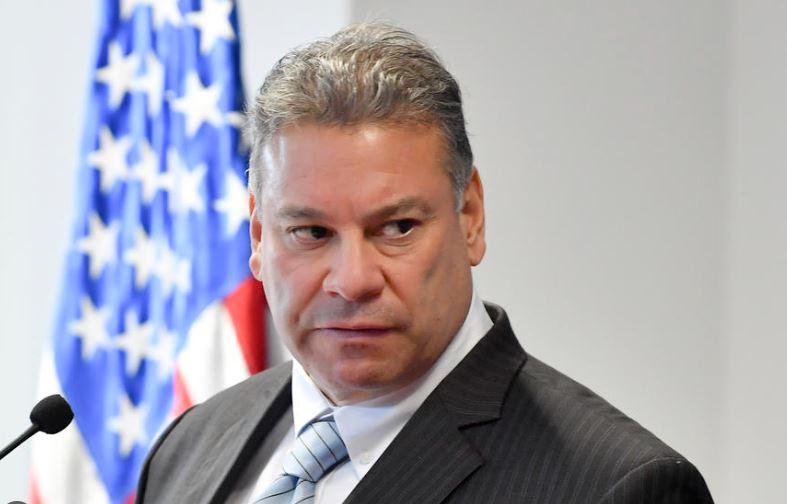
In a revealing interview with Brazil Mineral, U.S. Chargé d’Affaires Gabriel Escobar laid out a no-nonsense strategy for America to reclaim control over the critical minerals that power our economy, our military, and our future. Far from vague platitudes about global cooperation, Escobar’s message was clear: Brazil represents a massive, untapped opportunity to break China’s stranglehold on supply chains for rare earths, lithium, and other vital resources. The United States has already put real money on the table—more than $600 million in existing investments—and stands ready to pour billions more into Brazilian mining and processing to ensure our industries are never again at the mercy of a single adversarial supplier.
Escobar didn’t mince words about the stakes. For two decades, he explained, America allowed its domestic mining and processing capacity to atrophy, leaving the world dangerously dependent on one country. That reality became “scary” during recent trade negotiations, when threats of restricted access to critical minerals exposed vulnerabilities across defense, technology, and manufacturing sectors. Brazil, with its enormous reserves and private-sector-driven mining industry, is positioned to become a cornerstone partner in building secure, resilient chains. As Escobar noted, “Brazil has the opportunity to play a massive role in developing secure and resilient global critical minerals supply chains.”
The agreements already in place demonstrate that this is not aspirational talk—it is happening now. The U.S. has signed a memorandum of understanding with the state of Goiás, the first such formal pact with any Brazilian state government. Escobar’s delegation also engaged deeply with Minas Gerais, touring research labs, mines, and universities to map out collaboration on exploration, processing, and technology transfer. These state-level deals are pragmatic conservatism in action: bypassing federal hesitation in Brasília to work directly with pro-business governors who understand that faster permitting and clearer incentives will attract capital.
A high-profile Brazil-U.S. Critical Minerals Forum in São Paulo further solidified these ties. The event drew more than 200 public and private sector leaders, forging direct connections between American investors and Brazilian opportunities. Despite the Brazilian federal government’s refusal to participate, the forum delivered tangible results: identification of projects ready for U.S. backing across the full supply chain—from extraction to finished materials for batteries, magnets, and semiconductors.
Escobar outlined the specific tools America is deploying. Financing is lined up through the Export-Import Bank and the U.S. International Development Finance Corporation, both already active or preparing to back mining and processing ventures. Technical assistance flows from Department of Energy national laboratories, enabling research partnerships, feasibility studies via the U.S. Trade and Development Agency, and university exchanges. The goal is explicit: help Brazil develop its processing capacity while securing American access to materials that reduce our exposure to Chinese dominance.
From a conservative viewpoint, Escobar’s approach is refreshing realism. It rejects the failed policies that hollowed out U.S. mining through overregulation and instead prioritizes strategic alliances that advance American interests first. By leveraging private enterprise and agile state governments in Brazil, Washington is creating jobs on both sides of the equator, strengthening supply-chain sovereignty, and countering Beijing’s economic coercion without endless foreign aid or multilateral bureaucracy. Escobar candidly acknowledged Brazil’s own hurdles—bureaucratic licensing delays and complex tax regimes—that must be addressed if this partnership is to reach its full potential. Conservatives have long warned that such red tape kills investment; if Brazilian leaders streamline these barriers, the rewards will be enormous: economic growth in Brazil and a fortified industrial base for the United States.
This is the kind of forward-looking, interest-driven diplomacy America needs. Gabriel Escobar has laid out the roadmap: concrete investments, signed agreements with forward-leaning states, and a clear-eyed recognition that diversifying away from China is not optional—it is essential for national security and prosperity. If executed with the same focus, this U.S.-Brazil partnership could become a blueprint for how free-market nations outmaneuver authoritarian competitors in the race for the materials that will define the 21st century.