





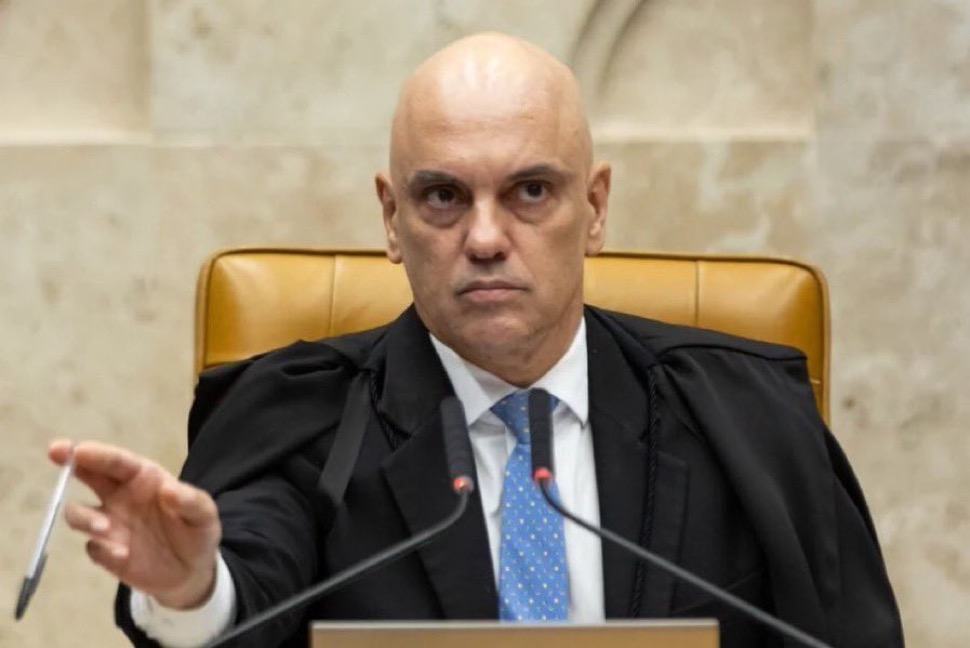
STF’s Stonewalling Exposed: Alexandre de Moraes and the Banco Master Scandal – Is the Supreme Court Protecting Its Own?
By Hotspotnews
In a brazen display of institutional arrogance, Brazil’s Supreme Federal Court (STF) has once again placed itself above the law and the elected representatives of the people. As the Parliamentary Commission of Inquiry (CPMI) into the INSS social security frauds delves deeper into the massive Banco Master scandal, the STF is responding not with transparency, but with bureaucratic evasion and procedural gamesmanship designed to shield one of its most controversial ministers from scrutiny.
At the center of this firestorm is Daniel Vorcaro, the embattled former figure behind Banco Master, currently behind bars amid allegations of massive fraud, irregular loans, money laundering, and influence peddling that allegedly siphoned billions from hardworking Brazilians’ social security funds. Vorcaro’s phone records—obtained through legitimate congressional investigation—reveal damning contacts, including messages sent on the very day of his arrest in November 2025. Those messages went to a functional phone number tied directly to the STF, saved in his contacts in connection with Minister Alexandre de Moraes.
Telecom records and official inquiries confirm the number belongs to the Court. Multiple reports indicate it was routinely used by Moraes himself, including for communications with journalists. Yet when the CPMI, led by Senator Carlos Viana, formally demanded clarification on who was operating that line during the critical contacts, the STF’s response was telling: not a straightforward confirmation or denial, but a letter demanding the commission “explain” its motives first. In classic elite fashion, the Court is hinting that depending on the “purpose,” the request might be kicked upstairs—or buried entirely under claims of institutional privacy.
This is not accountability; it is obstruction. While ordinary Brazilians face aggressive surveillance, asset freezes, and censorship from the same STF under Moraes’ watch, a sitting minister’s potential links to a banker accused of looting public funds get the kid-gloves treatment. Moraes has publicly denied exchanging those messages, but the Court refuses to produce basic administrative records to clear the air. Instead, it circles the wagons, much as it has throughout the Banco Master probe—issuing orders to restrict access to Vorcaro’s data, ordering Federal Police “triage” to filter “intimate” content, and repeatedly intervening to limit what elected lawmakers can examine.
Conservatives have long warned that Brazil’s judiciary, particularly the activist wing of the STF, operates as an unelected super-government. Ministers like Moraes wield near-monarchical power: banning social media accounts, jailing critics, and meddling in elections and investigations alike, all while preaching about “democracy” and “rule of law.” Now, as the CPMI uncovers networks of influence reaching into the highest levels—including reported business ties involving Moraes’ own family—the mask slips further. The same Court that preaches transparency for others demands “clarification” when sunlight threatens to reach its chambers.
Senator Viana is right to escalate this to STF President Edson Fachin. The people deserve answers: Who was using that STF phone? What was discussed with Vorcaro on the day of his arrest? Were there favors, warnings, or influence exchanged in the shadow of one of Brazil’s largest financial scandals? Brazilians are tired of two-tiered justice—one for the powerful insiders in Brasília, another for everyone else.
The Banco Master affair is not just about fraud; it is a symptom of a rotten system where political and judicial elites protect each other at the expense of the nation. If the STF continues this evasion, it will only confirm what millions of patriotic Brazilians already suspect: the Court is more interested in self-preservation than in justice. Congress must stand firm. The investigation must continue without judicial sabotage. And the Brazilian people must demand real reform—because no one, not even a Supreme Court minister, is above the law.
The republic hangs in the balance. Transparency now, or deeper erosion of public trust tomorrow.


