



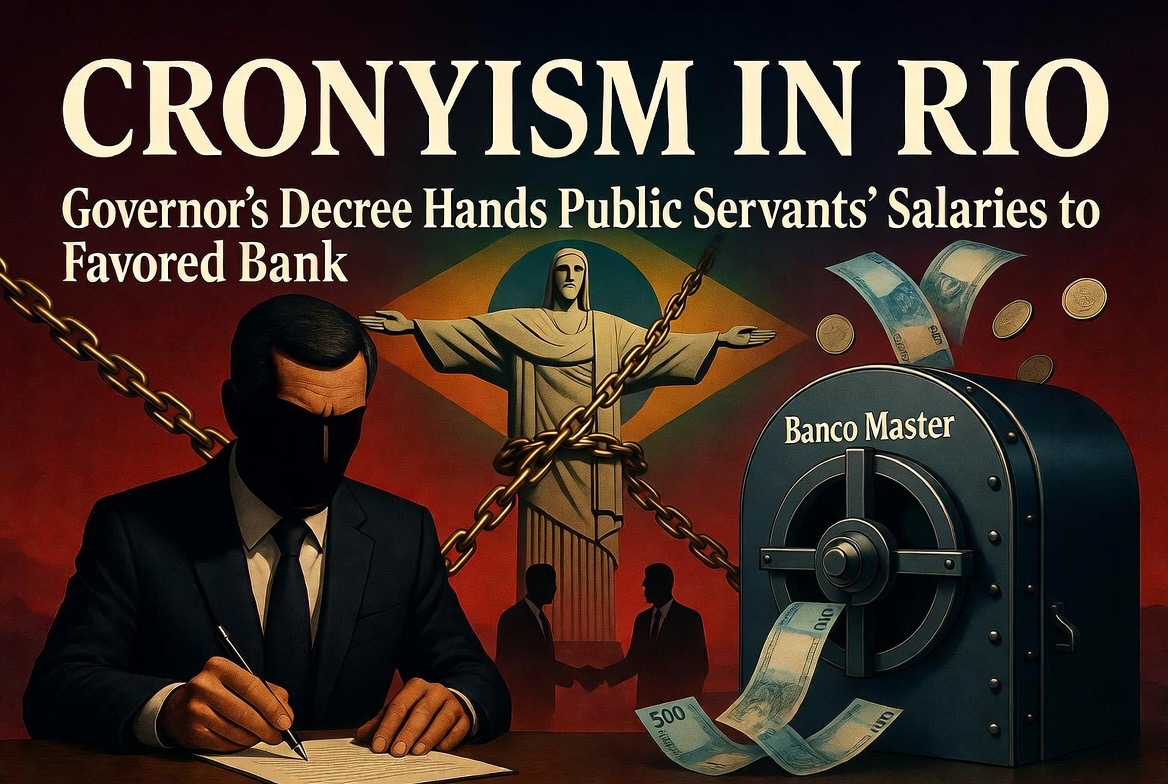
Cronyism in Rio: Governor Cláudio Castro’s Decree Hands Lucrative Deal to Banco Master While Public Servants Foot the Bill
By Hotspotnews
In yet another troubling example of how insider deals thrive in Brazilian state politics, fresh revelations from a legislative probe in Rio de Janeiro expose how Governor Cláudio Castro allegedly used executive power to clear the path for a favored financial institution to tap into the steady paychecks of state employees.
According to an ongoing investigation by a commission in the Rio Legislative Assembly (Alerj), Castro signed a decree on May 27, 2021, that dismantled previous safeguards designed to protect public servants from aggressive lending practices. The move specifically benefited the Banco Master group through its affiliate PKL One, allowing the entity — previously barred as a non-financial company — to enter the profitable payroll loan (consignado) market for Rio’s civil servants.
The changes were sweeping. The decree raised the allowable debt margin on salaries from 35% to 55%, handed exclusivity over benefit cards (Credcesta), and authorized the sharing of sensitive public employee data. Just five days later, PKL One secured its accreditation. No technical studies or justifications were provided to lawmakers despite repeated requests, according to the commission led by Deputy Flávio Serafine.
This is classic crony capitalism: government officials rewriting rules to benefit well-connected players at the expense of ordinary workers. Public servants, already squeezed by high taxes and economic pressures, now face higher debt loads pushed through convenient payroll deductions. The temptation for over-indebtedness is built into the system, with banks collecting reliably while taxpayers ultimately bear the risk if defaults or bailouts follow.
Efforts to launch a full CPI (Parliamentary Inquiry Commission) to dig deeper have reportedly been stalled in the Assembly, with critics pointing to political protections at play. The pattern fits a familiar story in Brazilian politics across party lines: decrees signed quietly, benefits flowing to insiders, and accountability blocked by procedural maneuvers.
Castro, who rose with support from conservative and anti-PT voters, now finds himself defending actions that smell of the very establishment favoritism conservatives have long denounced. Whether this was poor judgment, pressure from financial interests, or something worse remains to be fully investigated. What is clear is that public employees deserve transparency, not engineered access to their salaries for private profit.
As Brazilians continue to demand smaller government, less bureaucracy, and genuine rule of law, episodes like this underscore why skepticism toward concentrated political power is not paranoia — it is prudence. When governors can unilaterally expand debt access and data-sharing for chosen banks without rigorous oversight, it erodes trust in institutions and burdens the very middle-class workers who keep the state running.
The people of Rio — and all Brazilians tired of scandals — deserve answers, not excuses. A thorough, independent investigation free from political shielding is the minimum requirement. Cronyism, wherever it appears, must be exposed and rooted out if the country is to build a truly free and prosperous economy that rewards merit rather than connections.