



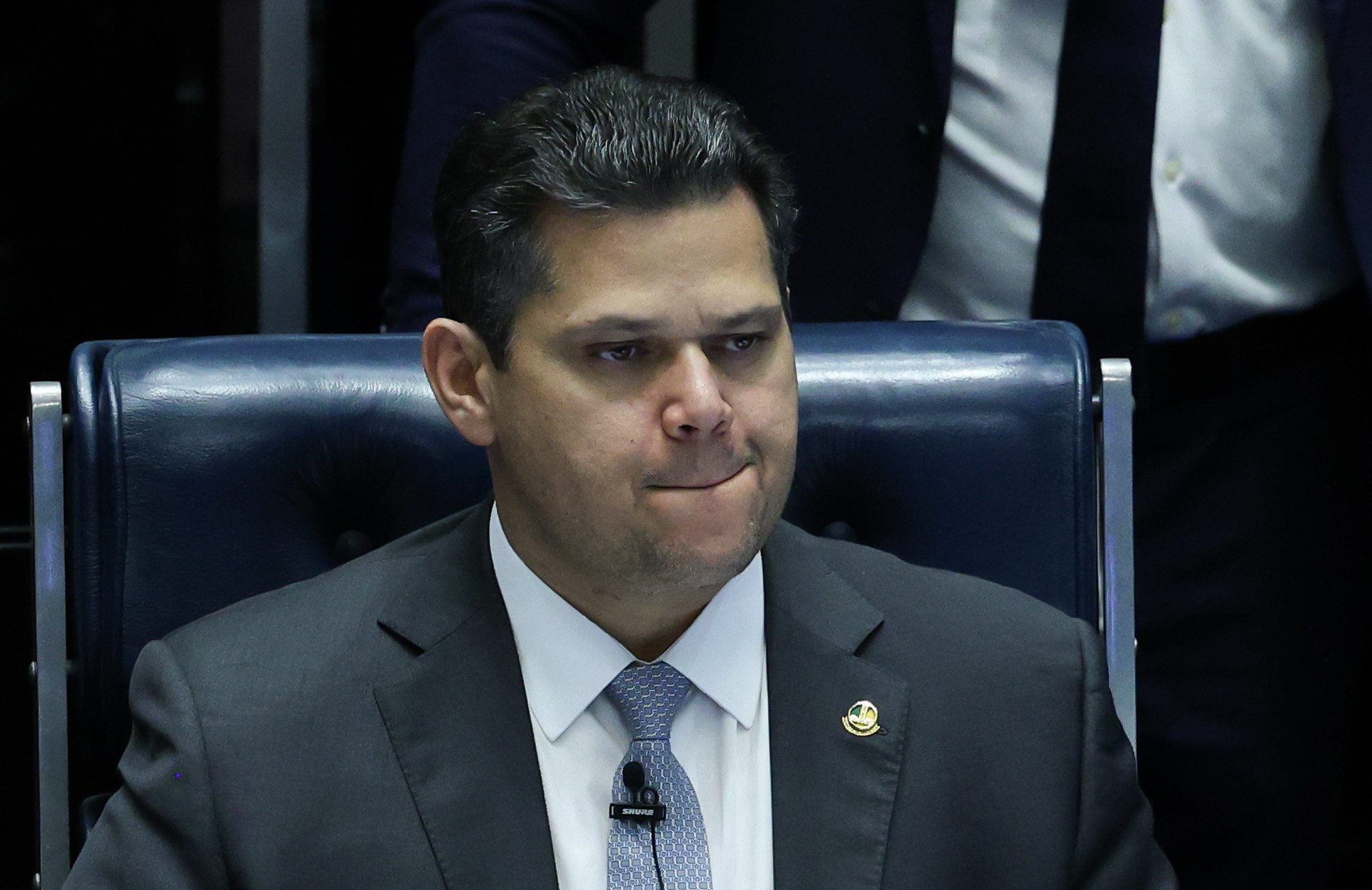
Davi Alcolumbre and the Rot at the Heart of Brazil’s Senate
By Hotspotnews
In the corridors of power in Brasília, Senator Davi Alcolumbre stands as a textbook example of how Brazil’s political class endures scandal after scandal with remarkable resilience. As President of the Federal Senate and the National Congress, the Amapá native wields enormous influence over the legislative agenda. Yet a cascade of serious allegations—spanning years and involving ghost employees, public contract fraud, family business dealings, and now explosive claims tied to one of the country’s largest financial scandals—continues to dog him. These are not isolated whispers but patterns backed by police investigations, journalistic exposés, and attempts at cooperation from key figures in the cases. The central question now is whether Alcolumbre possesses the institutional armor and political cunning to weather this storm once again.
Alcolumbre’s troubles are not new. In 2021, a high-profile investigation by Veja magazine laid bare a “rachadinha” scheme in his Senate office. According to the reporting, six women from the Federal District were hired as parliamentary advisors but allegedly funneled the vast majority of their salaries—between 80 and 90 percent—back to the senator’s operation. The total alleged diversion reached at least R$2 million over several years. Alcolumbre denied any personal involvement, attributing the scheme to a former aide who later reached a non-prosecution agreement. The episode faded from daily headlines without resulting in a conviction against the senator himself, but it established a recurring theme: close associates entangled in schemes that ultimately benefit those in power.
More recently, attention has turned to Alcolumbre’s home state of Amapá and his political network there. Federal Police investigations have targeted his alternate senator (suplente), Breno Chaves, who was indicted in May 2026 for alleged fraud in public bids worth at least R$60 million related to DNIT infrastructure contracts. Chaves faces charges including criminal association, influence peddling, and active corruption. Reports have also highlighted Alcolumbre-linked figures serving in key positions at state entities, such as the Amapá Previdência (Amprev) pension fund, which invested hundreds of millions in the troubled Banco Master. Historical reporting has long pointed to family connections in Amapá involving land issues and resource extraction, adding layers to questions about how political influence translates into economic advantage in one of Brazil’s less-developed regions.
The most explosive development came in mid-June 2026. A Veja cover story, drawing from details in a rejected delation proposal by Daniel Vorcaro—the founder of Banco Master, now at the center of a massive fraud investigation—alleged that Vorcaro claimed to have transferred US$30 million (roughly R$155 million at current rates) to Alcolumbre via a secret foreign account. The payment was purportedly made in exchange for legislative support on matters of interest to the bank, handled through an ex-partner. Vorcaro, whose delation attempts were reportedly turned down by authorities for lacking sufficient new evidence, has been linked to broader probes involving organized crime elements and large-scale financial irregularities, including ties to pension funds and public resources.
Alcolumbre responded forcefully and swiftly. In a Senate floor speech and official statements, he categorically denied ever receiving any such funds in Brazil or abroad. He labeled the claims “absolutely false,” described them as an attack on the Senate’s honor, and announced plans to pursue civil and criminal legal action against those spreading the allegations. He has consistently invoked the presumption of innocence and called for due process. Supporters argue that rejected delations often contain unverified or exaggerated claims used as bargaining chips, and that no concrete proof or conviction has materialized against him personally.
Beyond the specific accusations lies a pattern of institutional protection. As Senate President, Alcolumbre holds significant sway over the legislative calendar. Critics, including voices from opposition circles and reform-minded lawmakers, have accused him of stalling or resisting a full joint congressional inquiry (CPMI) into the Banco Master affair. Such inquiries have the power to summon witnesses, break bank secrecy, and shine light on political connections. His ability to build broad coalitions—securing overwhelming support for his leadership roles across different administrations—reflects the pragmatic, deal-making nature of Brazil’s centrão bloc. These centrist power brokers often prioritize access to amendments, nominations, and budgetary influence over ideological consistency, allowing figures like Alcolumbre to navigate governments from across the spectrum.
This resilience raises a deeper concern for conservatives and those who value genuine accountability: the Brazilian system frequently shields entrenched elites. Slow judicial processes, political bargaining, and a culture of “everyone does it” have allowed numerous politicians to survive serious clouds of suspicion. Alcolumbre’s case fits a familiar script—denial, legal threats, institutional leverage, and the passage of time diluting public outrage. Associates bear the brunt of indictments while the principal figure maintains plausible deniability and continues wielding power.
Is Alcolumbre strong enough to escape these challenges?
In the short term, yes. His position as Senate President provides formidable defenses. He controls the flow of legislation, influences committee work, and benefits from a fragmented Congress where cross-party deals remain the currency of survival. Broad support among senators suggests many colleagues see value in stability over disruption, especially with elections on the horizon. The absence of ironclad, court-proven evidence directly implicating him personally—combined with his vigorous denials—allows him to frame attacks as politically motivated persecution. In Brazil’s polarized environment, such narratives often find receptive audiences.
However, his position is not impregnable over the longer haul. Accumulating scandals erode credibility, even among pragmatic allies. Public fatigue with corruption is real, and opposition forces—particularly those aligned with stronger anti-establishment or law-and-order positions—can weaponize these issues during campaigns. If investigations gain momentum or new evidence emerges from ongoing Federal Police work, the political cost could rise sharply. Senate leadership is not a lifetime appointment; future votes for the presidency of the house could turn against him if enough senators calculate that association carries too much baggage. Moreover, in a country still scarred by past mega-scandals, sustained pressure from civil society, independent media, and reformist lawmakers could force greater transparency.
Ultimately, Alcolumbre represents a symptom of a deeper malaise in Brazilian politics: the dominance of transactional power over principled governance. Conservatives who seek smaller government, stronger institutions, and genuine rule of law should view these developments not merely as one man’s troubles but as a call to demand rigorous, impartial investigations free from political interference. Presumption of innocence must be respected, but so must the public’s right to know whether those entrusted with high office have upheld their duties or exploited them. Until the pattern of scandals around powerful figures like Alcolumbre is confronted head-on rather than papered over, Brazil’s institutions will continue to suffer from a profound deficit of trust. The Brazilian people deserve better than business as usual in Brasília.


