






Flávio Bolsonaro’s VP Dilemma: Weighing Tereza Cristina Against Romeu Zema for 2026
By Hotspotnews
As Senator Flávio Bolsonaro positions himself as a leading pre-candidate for the Brazilian presidency in the October 2026 elections under the Liberal Party (PL), the selection of his vice-presidential running mate remains one of the most debated topics within the right-wing spectrum. Two names have consistently emerged at the forefront: Senator Tereza Cristina (PP-MS), the former Minister of Agriculture, and former Governor Romeu Zema of Minas Gerais. The choice reflects deeper strategic tensions — between broadening coalitions through the Centrão and maintaining ideological cohesion with the more hardline base, including the added complexity of Zema’s affiliation with the Novo party.
Profiles of the Contenders
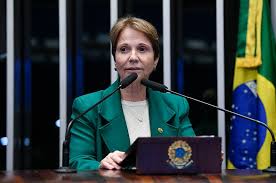
Tereza Cristina brings extensive experience in agribusiness, one of Brazil’s most vital economic sectors. As a senator from Mato Grosso do Sul and a key figure in Jair Bolsonaro’s former government, she offers deep technical knowledge in rural development, exports, and agricultural policy. Her profile as a pragmatic woman from the Center-West is often highlighted by PL president Valdemar Costa Neto and Centrão allies as a way to expand appeal, particularly among moderate voters and female electors who have shown greater resistance to the Bolsonaro brand in past contests.
Romeu Zema, a businessman-turned-governor, governed Minas Gerais with a strong emphasis on fiscal austerity, state reforms, and liberal economic policies. Re-elected with robust support, he projects an image of administrative competence and efficiency. Zema remains affiliated with the Novo party — a small, ideologically consistent liberal-right party known for its emphasis on free-market principles, reduced government spending, and opposition to traditional political bargaining. Recent public interactions with Flávio have fueled speculation about a joint ticket, though Zema has focused on his own presidential ambitions and only recently resigned as governor to pursue national options.
Comparative Analysis: Benefits, Risks, and Trade-offs
Regional and Sectoral Reach
Tereza Cristina strengthens ties to the powerful agribusiness lobby and delivers solid support in the Center-West. Her background equips the ticket to address rural concerns credibly, potentially consolidating a key voting bloc that influences national economic debates. Zema offers concentrated strength in Minas Gerais — Brazil’s second-largest electoral college and a perennial swing state. His governance record there could translate into meaningful vote gains in the Southeast.
Electoral Broadening vs. Base Unity
Selecting Tereza Cristina could help soften the ticket’s image and attract independents, women, and moderate center-right voters through gender balance and cross-aisle respect. Centrão backing would also provide organizational advantages, including better access to funding, television time, and congressional support for coalition-building. However, this comes with internal resistance from Flávio’s closer ideological circle, who view her as too aligned with pragmatic Centrão bargaining.


Loyalty and Sabotage Risk — The Novo Factor
Zema’s membership in Novo is viewed by many in Flávio’s ideological circle as a net positive for internal stability. Novo is a disciplined, smaller party with limited infrastructure but strong principles on economic liberalism and minimal involvement in traditional patronage politics. This reduces the perceived danger of a vice who might engage in constant negotiations for positions or ministries — a common concern with Centrão-linked figures. Allies argue Zema would bring “peace” to the campaign, minimizing risks of divided loyalties or post-election pressures that could undermine Flávio’s agenda.
In contrast, Tereza Cristina’s ties to the PP and broader Centrão raise greater skepticism among hardcore bolsonaristas, who fear potential horse-trading or diluted messaging. While she served loyally in the previous Bolsonaro administration, the Novo affiliation positions Zema as a lower-risk partner in terms of long-term loyalty and campaign cohesion.

Vote Potential and Alliance Implications
Tereza Cristina likely edges out in overall additional votes by consolidating agribusiness, enabling broader alliances through Centrão machinery, and addressing demographic gaps. Her choice could facilitate wider coalition support but risks alienating parts of the ideological base.
Zema’s gains are more targeted: delivering depth in Minas Gerais and energizing the conservative core through his liberal credentials. However, Novo’s small size and ideological purity limit its ability to deliver extensive party machinery, funding, or congressional seats compared to larger blocs like the PP. This could constrain broader alliance-building in a fragmented political landscape, though it strengthens the ticket’s appeal to market-oriented and anti-PT voters. Internal discussions suggest Zema could help close gaps in key swing-state polling, potentially pushing Flávio into a statistical tie with Lula in some scenarios.
Current Dynamics in Mid-April 2026
The debate continues to divide Flávio’s allies: Centrão sectors strongly favor Tereza Cristina for her coalition potential, while the more ideological wing leans toward Zema, seeing his Novo background as a safeguard for unity and principle. Flávio has publicly praised Tereza as a highly respected option but has postponed any definitive announcement, testing additional names from the PP to maintain negotiating leverage. Zema has downplayed interest in the vice slot while pursuing his own path, though right-wing unity talks remain active.
Flávio’s rising numbers in hypothetical matchups against incumbent President Luiz Inácio Lula da Silva give him flexibility. The vice choice will ultimately serve as both a campaign signal and a foundation for any future governing coalition in Brazil’s fragmented political landscape.
In summary, Tereza Cristina offers pragmatic breadth, sectoral power, and alliance infrastructure at the potential cost of some base friction and higher perceived loyalty risks. Romeu Zema provides managerial credibility, swing-state muscle, and lower sabotage risk — reinforced by his Novo affiliation’s emphasis on ideological consistency — though with more limited coalition-building capacity. Neither option is without trade-offs, but the decision will reveal whether Flávio prioritizes wide coalition-building or tighter ideological alignment and internal stability in his bid to challenge Lula in 2026. The coming months of negotiations and polling will likely narrow the field further.


