




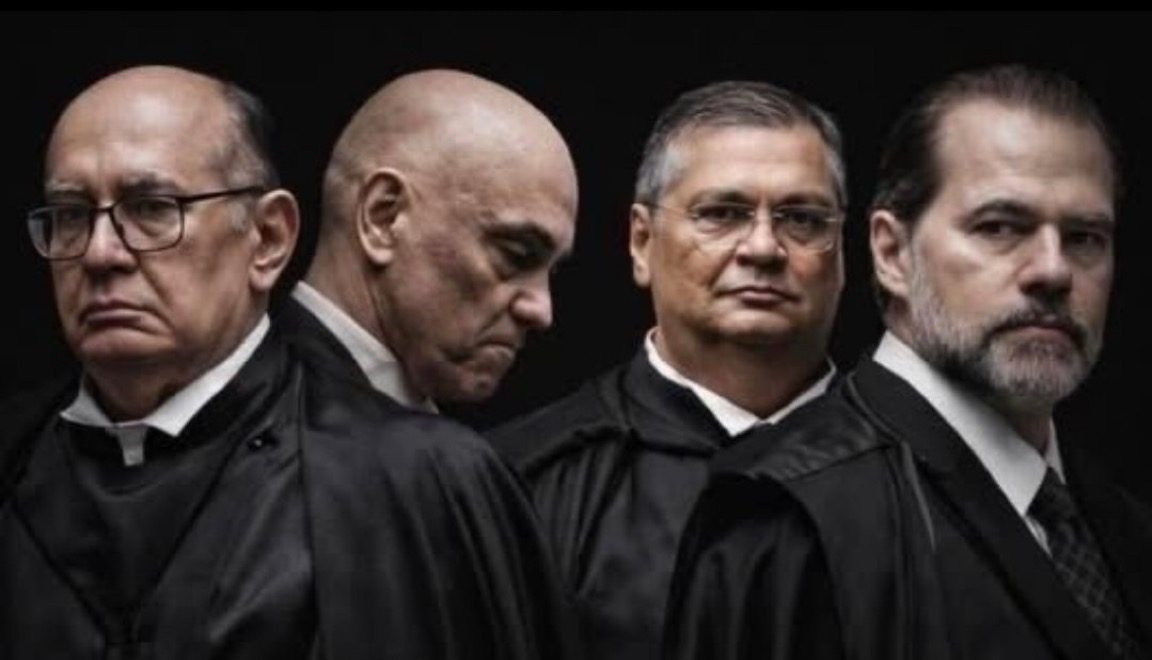
Gilmar Mendes Moves to Shut Police and Military Out of the Supreme Court
By Hotspotnews
Brazil’s Supreme Court is once again rewriting its own rules. On Saturday, Justice Gilmar Mendes formally proposed an internal regulation that would ban Federal Police delegates, other career police officers, and members of the Armed Forces from serving as advisors in ministers’ cabinets. The only exception would be security work. Anyone currently holding those posts would be sent back to their original agencies.
The proposal arrives just weeks before the first round of the presidential election. Flávio Bolsonaro is the main opposition candidate. The timing has not gone unnoticed.
Mendes and his allies say the change is about institutional hygiene. They argue that police officers working inside the Court create a conflict of interest because the STF oversees investigations those same officers help conduct. Cabinets, they claim, risk becoming “police stations.”
That argument sounds reasonable until you look at who is actually affected. Two Federal Police delegates currently work in the cabinet of Justice André Mendonça, the Court’s most identifiably conservative member and a Bolsonaro appointee. Another works with Alexandre de Moraes. The rule would immediately remove those officials.
A new president does not appoint the personal staff of sitting justices. Ministers hire their own advisors. So the regulation does not stop a future administration from naming new justices when vacancies occur. What it does is freeze the current composition of the Court’s inner offices and prevent any future minister from bringing in experienced investigators or military professionals.
In practice, the Court is insulating itself. After years of expanding its own power into investigations, social media, and political speech, the STF now wants to decide who may even sit in the rooms where those cases are prepared. Police and military officers are treated as a contamination risk rather than as professionals with relevant expertise.
This is not a minor administrative tweak. It is a preemptive institutional lock. If the opposition wins in October, the Court will already have written a rule that limits how its own members can staff their offices. The justices who drafted the proposal will still be there. The people they do not want in the building will not.
Brazil’s Constitution already contains incompatibilities for public officials. Those rules exist to prevent real conflicts, not to protect a court from the political consequences of an election. When the same Court that has spent years intervening in politics now claims it must be shielded from police and military presence, the public is entitled to ask whose interests are actually being protected.
#STF #GilmarMendes #BrazilElection2026 #RuleOfLaw #InstitutionalOverreach
Sources: CNN Brasil, G1, Estadão, Folha de S.Paulo, O Globo, Valor Econômico (reporting from 5–6 September 2026).


