




Giving Drink to the Thirsty Is Not a Priority of the Comando Vermelho
By Hotspotnews
In the Gospel of Matthew (25:35), one of the works of mercy that define the final judgment is simple and direct: “I was thirsty and you gave me drink.” In Banabuiú, a municipality of just over 17,000 inhabitants in the Sertão Central of Ceará, that phrase took on a reversed and brutal meaning in October and November 2026.
Starting on October 19, messages and a document titled “Edital Banabuiú,” signed by the so-called “Diretoria de Banabuiú” and attributed to the Comando Vermelho (CV), began circulating among local merchants and distributors of mineral water. The text made the sale and distribution of 20-liter water jugs conditional on the faction’s “authorization.” Those who refused to pay would “suffer the consequences”: loss of their jugs and closure of their businesses. Reported amounts ranged from R$200 to keep a store open to weekly fees of up to R$750, plus charges of R$1.50 per jug sold.
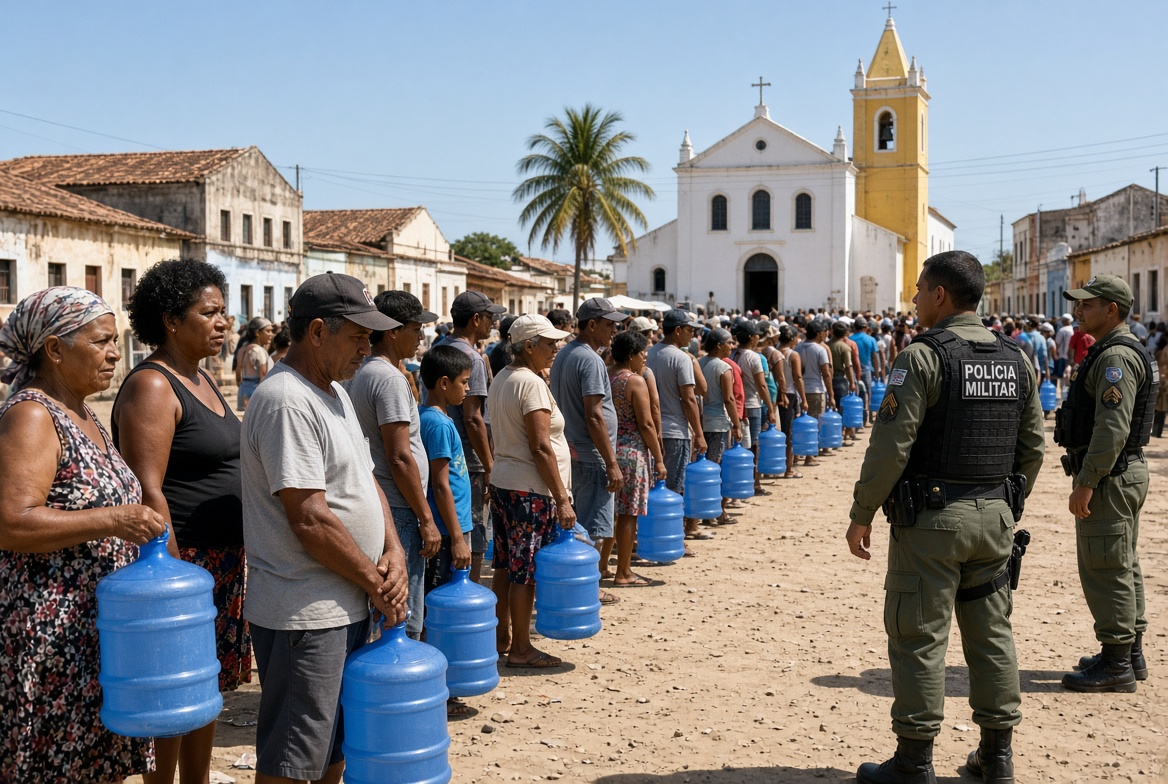
Faced with the threats, private distributors suspended sales. Piped water continued to arrive, but mineral water — a daily staple for much of the sertão — disappeared from shelves. A municipal school even suspended classes due to the lack of supply. Residents formed lines in Praça da Matriz and at improvised points just to obtain the basics.
The state’s response came in the form of an emergency operation. The Companhia de Água e Esgoto do Ceará (Cagece), under Military Police escort, began transporting loads of jugs (around a thousand per day at peak) from neighboring municipalities. Sales were limited — usually two jugs per person — and took place under heavy surveillance. Three suspects were arrested on October 22; Civil Police identified the coordinator of the extortion as someone who was allegedly in Rio de Janeiro. As of early November, distribution still depended on police escort.
The episode is not isolated. Brazilian factions, especially the CV, have been expanding control beyond drug trafficking and territorial disputes in cities. In parts of the interior and the North/Northeast, they increasingly regulate the commerce of essential goods: fuel, cooking gas, food, and now water. This is not “charity” or a “parallel state” in the sense of providing services. It is monopoly by force, aimed at extracting revenue and demonstrating who is in charge. Whoever controls access to water controls people’s daily lives.
The biblical phrase remains a simple ethical criterion: care for those who are thirsty. In Banabuiú, the Comando Vermelho made clear, through an “edital,” that this is not its priority. The priority is the fee. Water returned — under escort, in lines, rationed — not because of the faction, but in spite of it. The contrast is direct and needs no elaborate interpretation.


