


The Cost of Institutional Mistrust: How Uncertainty, Poverty, and Corruption Feed One Another in Brazil. When you re elected lula you condemned Brazil.
By Hotspotnews
Brazil does not suffer from a shortage of laws, agencies, or official statistics. It suffers from a deepening collapse of confidence in the institutions that produce and enforce them. When citizens no longer believe that courts, statistical agencies, or public accounts operate independently of political power, the practical results are measurable: higher uncertainty, slower investment, persistent poverty, and an environment in which corruption thrives precisely because accountability is selective.
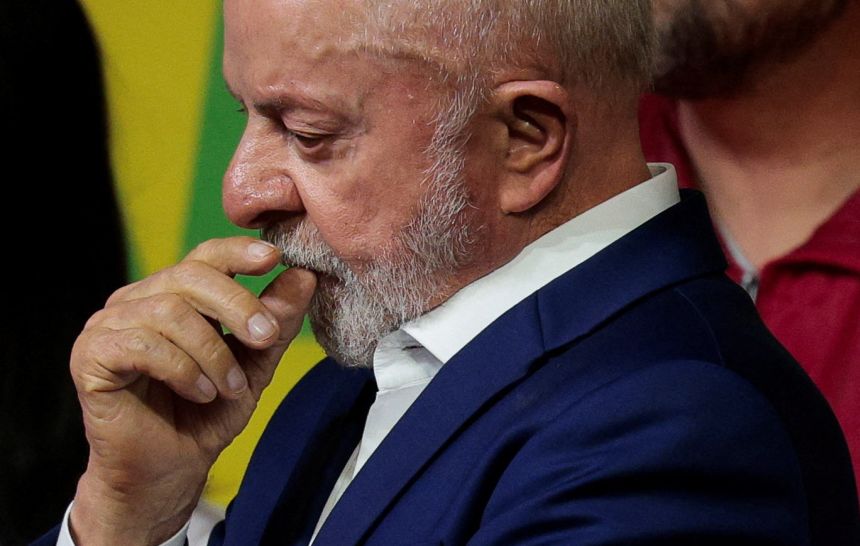
The appointment of Marcio Pochmann to lead the Brazilian Institute of Geography and Statistics (IBGE) in 2023 illustrated the problem in plain view. A longtime PT figure previously criticized for ideological management at Ipea, Pochmann was named by President Lula over the preferences of the Planning Ministry that formally oversees the institute. Within months, career staff issued open letters accusing the leadership of authoritarian practices; directors resigned; a parallel foundation was created and later suspended after internal revolt. The sudden removal of the coordinator of National Accounts added to the perception that technical independence is secondary to political alignment. Even if no single published unemployment or poverty figure has been forensically proven false, the leadership controversy itself is sufficient to erode trust. Aggregate numbers that show declining unemployment and poverty can coexist with high food prices, elevated public debt, and widespread private skepticism precisely because the institution producing those numbers is no longer regarded as neutral.
That skepticism is reinforced by the broader judicial environment. The events of January 8, 2023, and the subsequent STF-led prosecutions have become a lasting symbol of unequal treatment. Hundreds were detained; many faced lengthy pretrial measures and plea agreements whose fairness remains contested. The same court that handled those cases later convicted former President Bolsonaro on charges built largely around draft documents, meetings, and testimony obtained under pressure. Critics note the contrast with complex financial cases that move more slowly or produce lighter consequences despite thicker paper trails. When the highest court is widely viewed as both participant and arbiter in the central political conflict of the decade, ordinary citizens and civil servants alike calculate the personal cost of dissent. Technical staff inside agencies become less likely to document irregularities; investors discount official projections; entrepreneurs treat regulatory and tax rules as unpredictable rather than stable.
The economic consequences follow directly. Uncertainty raises the required return on capital. Projects that would proceed under credible institutions are delayed or relocated. Public spending on international travel, large entourages, and discretionary programs continues while basic cost-of-living pressures remain acute for lower-income households. Official series may register improvements in headline poverty and employment, yet the lived experience of many Brazilians—stagnant real incomes after food inflation, heavy tax burdens, and visible luxury in government—produces a different conclusion. When the data-producing agency is led by a political appointee with a record of controversy, and when courts are perceived as protective of one side, the gap between statistics and daily life is interpreted not as a measurement problem but as evidence of capture.
Corruption flourishes in exactly this setting. It does not require every official number to be invented; it requires only that the mechanisms of detection and punishment operate unevenly. When powerful actors believe enforcement is selective, the incentive to extract rents increases. When citizens believe complaints will be ignored or punished, the incentive to report decreases. The result is a self-reinforcing cycle: mistrust reduces transparency, reduced transparency protects existing arrangements, and protected arrangements deepen mistrust. Poverty is not merely a statistical residual; it is the outcome of capital that stays on the sidelines, of productivity that is not realized, and of public resources that are diverted rather than invested.
No single appointment or court decision created this condition, but the cumulative effect of politicized leadership at core institutions and contested judicial processes has made it structural. Brazil’s problem is not the absence of data or the absence of courts. It is the absence of confidence that either will treat citizens and political competitors according to fixed rules rather than according to who holds power. Until that confidence is restored through demonstrated independence rather than official assertion, uncertainty will continue to tax growth, poverty will remain more stubborn than headline figures suggest, and corruption will find the space it needs to persist.
#Brazil #InstitutionalCrisis #IBGE #STF #Corruption #EconomicUncertainty #Poverty #MistrustInInstitutions #BrazilPolitics #Accountability
Sources: Public reporting on IBGE internal crises and Pochmann’s prior Ipea tenure (VEJA, Gazeta do Povo, CNN Brasil, 2023–2026); documented staff letters and director resignations; STF proceedings related to January 8, 2023 events and subsequent political cases; IBGE published series on unemployment and poverty contrasted with private cost-of-living measures and fiscal projections.


