


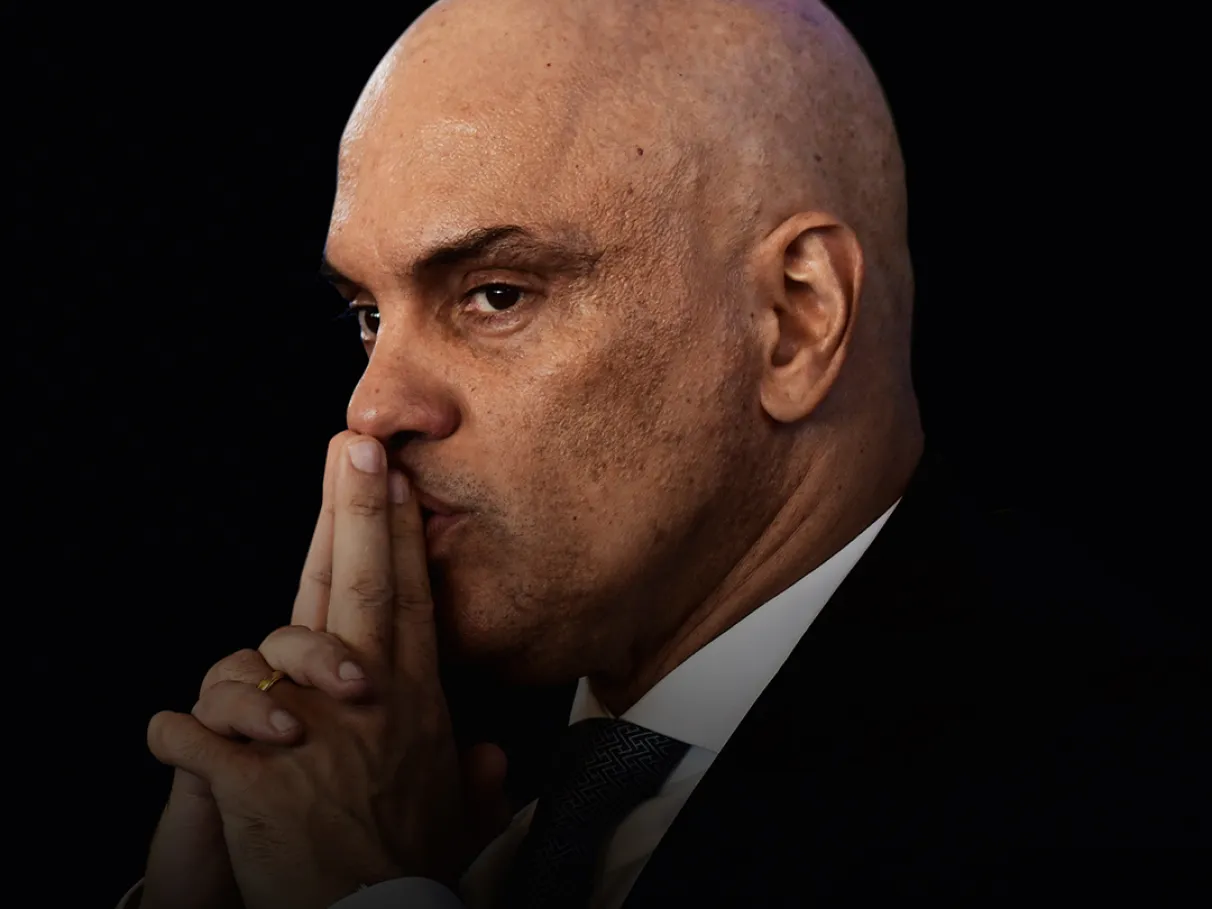
Is the Brazilian Congress still alive? Or Moraes has just closed Congress
Is Brazil emerged in Dictatorship?
By Hotspotnews
In a brazen display of judicial overreach, the Brazilian Supreme Court has declared that neither the Legislative nor the Executive branches can grant amnesty or pardon for crimes against democracy. This ruling, highlighted by a post from Senator Jorge Seif Junior, is nothing short of a constitutional coup, stripping Congress and the President of their rightful powers and concentrating authority within the judiciary. This is not just a legal dispute; it is a direct assault on the very foundations of Brazilian democracy.
The context is alarming. Former President Jair Bolsonaro has been sentenced to 27 years in prison for allegedly attempting a coup, a decision that has deepened political divisions and prompted international concern, including from U.S. politicians like Marco Rubio. Against this backdrop, Congress is considering an amnesty bill to pardon those convicted over the January 8, 2023, riot, including Bolsonaro himself. However, the Supreme Court’s stance—that such a move is unconstitutional—sets the stage for a constitutional crisis of unprecedented proportions.
This is about the separation of powers, a principle that is the bedrock of any democracy. The Constitution of Brazil explicitly grants the Legislative and Executive branches the authority to grant amnesty and pardon. By overruling this, the Supreme Court is not just interpreting the law; it is rewriting it, effectively nullifying the constitutional roles of Congress and the President.
This judicial activism is part of a broader trend where the Supreme Court has increasingly inserted itself into political matters, often at the expense of democratic norms. The conviction of Bolsonaro, the house arrest of other political figures, and now this ruling on amnesty all point to a judiciary that has overstepped its bounds, acting more like a political actor than a neutral arbiter of the law.
The implications are dire. If the Supreme Court can declare that Congress cannot legislate on amnesty, what is left of legislative authority? If the President cannot exercise the power of pardon, what is left of executive discretion? This is not just a theoretical concern; it is a practical one. The ability of Congress to function effectively is severely compromised if its decisions can be overruled on such fundamental matters. While Congress is not officially “out of order” in a legal sense, its capacity to govern is being eroded by judicial fiat.
This situation is exacerbated by the political polarization in Brazil, a country still reeling from the aftermath of Bolsonaro’s presidency and his refusal to accept the 2022 election results. The Supreme Court’s actions are fueling this divide, not healing it. The international community is watching, and the message is clear: Brazilian democracy is under threat, not from external forces, but from within, by a judiciary that has forgotten its place.
We must demand accountability. The Supreme Court must be reminded that it serves the Constitution, not the other way around. Congress must assert its authority, and the President must defend the executive’s role. The people of Brazil deserve a democracy where power is balanced, not concentrated in the hands of a few unelected judges. The time to act is now, before the judicial overreach becomes irreversible.


