




Judicial Tyranny in Brazil: One Minister’s Stroke of the Pen Undermines Congress and the Will of the People
By Hotspotnews
In a nation that prides itself on democratic institutions, the events of the past week expose a bitter truth: Brazil’s Supreme Federal Court (STF) operates as a law unto itself, overriding and humiliating the people’s elected representatives with alarming ease. On May 8, 2026, Senate President Davi Alcolumbre promulgated Law 15.402/2026, known as the Lei da Dosimetria. This legislation, passed by strong majorities in Congress after overriding President Lula’s veto, aimed to bring fairness and proportionality to sentencing guidelines—particularly for those convicted in connection with the January 8, 2023, events in Brasília. For hundreds of defendants, including former President Jair Bolsonaro (facing over 27 years in prison), it offered a chance at reduced terms, adjusted regimes, and basic legal equity.
Yet, within 24 hours, STF Minister Alexandre de Moraes—acting alone in a monocratic decision—suspended the law’s application in ongoing cases tied to January 8. Citing pending challenges from leftist groups like PSOL-Rede and the Brazilian Press Association (ABI), Moraes halted any immediate relief, ordering sentences to proceed under the old, harsher rules. No full court hearing. No debate. Just one powerful judge’s ink stroke declaring that the will of Congress must wait.
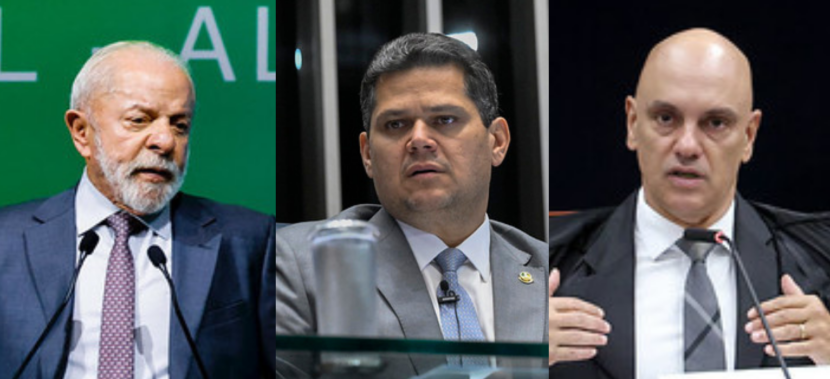
This is not justice; Far from it This can only be called judicial activism run amok.But run amok is not what it is The blatant alliance of Lula, Moraes and Alcolumbre against the people. Three corrupt men holding a nation, through injustice, tyranny and dictatorship. Conservatives have long warned that Brazil’s STF has transformed from guardian of the Constitution into an unelected super-legislature. Here, a body of appointed ministers—many with deep personal and political ties to the current establishment—blocks a law approved by the people’s representatives. Congress, representing millions of voters, acted within its constitutional authority. Moraes responded by effectively nullifying it for the cases that matter most to his political opponents.
The role of Senate President Alcolumbre raises even deeper suspicions. As a centrist power broker with longstanding personal friendships with Moraes, Alcolumbre fulfilled his procedural duty by promulgating the law after Lula’s deadline expired. But his reluctance to aggressively defend it—or to advance long-stalled investigations like the CPI into the Banco Master financial scandal—fuels legitimate questions about backroom deals. Opposition voices point to potential leverage: stalled probes that could touch elite circles, including connections involving STF figures, traded for procedural theater that appeases the right without delivering real change. Whether outright manipulation or simple self-preservation, the pattern is clear: institutional insiders protect the system at the expense of accountability.
For Bolsonaro supporters and millions of ordinary Brazilians who reject the narrative of January 8 as an existential threat to “democracy,” this episode confirms what they have felt for years. The heavy sentences handed down—often by the same court acting as investigator, prosecutor, and judge—smack of political persecution. Many see January 8 not as an insurrection but as a legitimate outcry against perceived electoral irregularities and government overreach. The dosimetria law represented a modest step toward correcting disproportionate punishments. Its swift neutralization by Moraes? A reminder that the “deep state” in Brasília answers to itself, not the ballot box.
Public mistrust runs deep and justified. Impeachment of STF ministers remains a near-impossibility due to high thresholds and gatekeepers like Alcolumbre. Reforms to curb monocratic decisions—such as proposed constitutional amendments—face endless delays in an election year. This self-reinforcing grip on power creates what many describe as a “perfect crime”: visible democratic processes that ultimately change nothing, while dissenters remain sidelined or silenced.
Yet despair is not the answer. The Brazilian people have proven resilient. The 2026 elections offer a critical opportunity to elect lawmakers who will prioritize judicial reform, limits on single-judge tyranny, and genuine separation of powers. Congress must find the courage to push back—fast-tracking PECs against monocratic acts and refusing to let personal alliances trump institutional duty.
The dosimetria saga is more than a legal dispute; it is a symptom of a republic captured by its own guardians. True conservatives understand that democracy dies not with dramatic coups, but with the quiet erosion of legislative authority by an imperial judiciary. Brazilians deserve better: equal justice under law, not the rule of one minister’s whim. The fight for that principle continues. The people must vote to change the decay in Brazil powers. Brazil is in a desperate need of change.


