



Justice André Mendonça’s Moment to Defend Brazil’s Future
By Hotspotnews
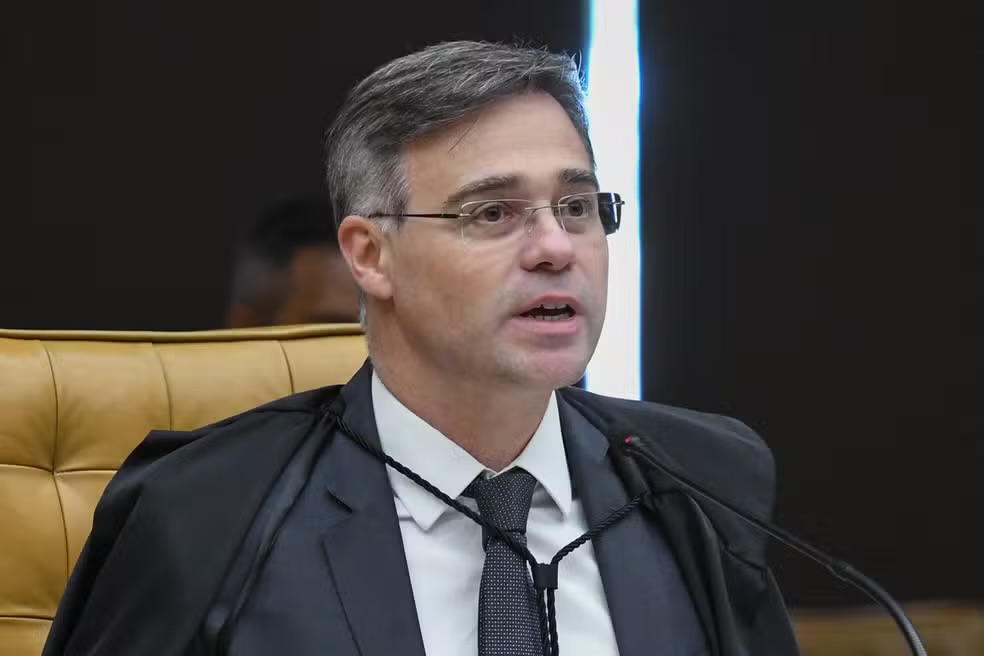
As the clock ticks toward a defining moment in Brazil’s judicial and political landscape, Supreme Court Justice André Mendonça finds himself at the center of a storm that could reshape the nation’s destiny. On this Saturday, September 13, 2025, with the weight of history on his shoulders, Mendonça has been tasked with ruling on a habeas corpus that could suspend a contentious action penal linked to an alleged 2022 coup plot involving former President Jair Bolsonaro. For conservatives who value law, order, and the preservation of democratic principles, this is not just a legal proceeding—it’s a battle for the soul of a country under siege by overreach and political vendettas.
Mendonça, appointed by Bolsonaro in 2021 as a nod to the evangelical base that has been a cornerstone of the former president’s support, now holds the reins to a case that could either vindicate or condemn the conservative movement in Brazil. The allegations of a coup plot, rooted in claims of election interference, have been fueled by investigations that some see as politically motivated, targeting Bolsonaro and his allies with a fervor that smacks of persecution. Yet, the evidence—often circumstantial and gathered in a climate of heightened tension—raises serious questions about due process and the impartiality of the judiciary.
Conservatives across Brazil are watching closely, hoping Mendonça will uphold the Constitution with the courage it demands. As a man of faith and a jurist appointed to reflect the values of millions who yearn for a return to traditional governance, he has the opportunity to strike a blow against what many view as a judicial overreach by the Supreme Court. The case hinges on technicalities—fumus boni iuris and periculum in mora—legal thresholds that, if met, could halt this penal action and send a message that no one is above the law, not even the courts themselves. A suspension could force a reevaluation of the entire case, potentially exposing flaws in the prosecution’s narrative and restoring faith in a system that has increasingly favored political agendas over justice.
The backdrop to this drama is a nation divided. Bolsonaro’s supporters argue that the coup allegations are a fabricated attempt to silence a populist leader who dared to challenge the entrenched elite. They point to the chaotic aftermath of the 2022 election and the January 8, 2023, riots in Brasília as evidence of a broader conspiracy against democracy—one orchestrated by those now wielding judicial power to settle scores. For them, Mendonça’s ruling is a litmus test of whether the judiciary will serve as a neutral arbiter or a tool of the left-leaning government under President Luiz Inácio Lula da Silva.
Critics, however, warn that Mendonça’s evangelical roots and his appointment by Bolsonaro could cloud his judgment, turning this into a personal crusade rather than a legal decision. Yet, this narrative underestimates the man. Mendonça has shown restraint and prudence in his tenure, often casting solitary votes that reflect a commitment to constitutional principles over political pressure. Now, with the eyes of the world on him, he has the chance to prove that his faith and his office are not at odds but aligned in the pursuit of justice.
The conservative hope is that Mendonça will see through the political theater and recognize the danger of a judicial system that punishes dissent with lengthy prison sentences—Bolsonaro faces 27 years if convicted—without ironclad proof. The “fruit of the poisoned tree” doctrine, a legal principle that could invalidate evidence obtained improperly, looms large here. If Mendonça applies it rigorously, he could dismantle the case against Bolsonaro, forcing a return to first-instance courts and a fairer trial process. This would not only protect a conservative icon but also safeguard the rights of every Brazilian against arbitrary state power.
As night falls on September 13, 2025, the nation waits. For conservatives, this is more than a legal ruling—it’s a stand against the erosion of democratic norms and the silencing of a movement that seeks to reclaim Brazil’s heritage. André Mendonça has the pen to write a new chapter, one where justice prevails over politics, and the rule of law stands tall. Let us pray—and demand—that he rises to the occasion.


