



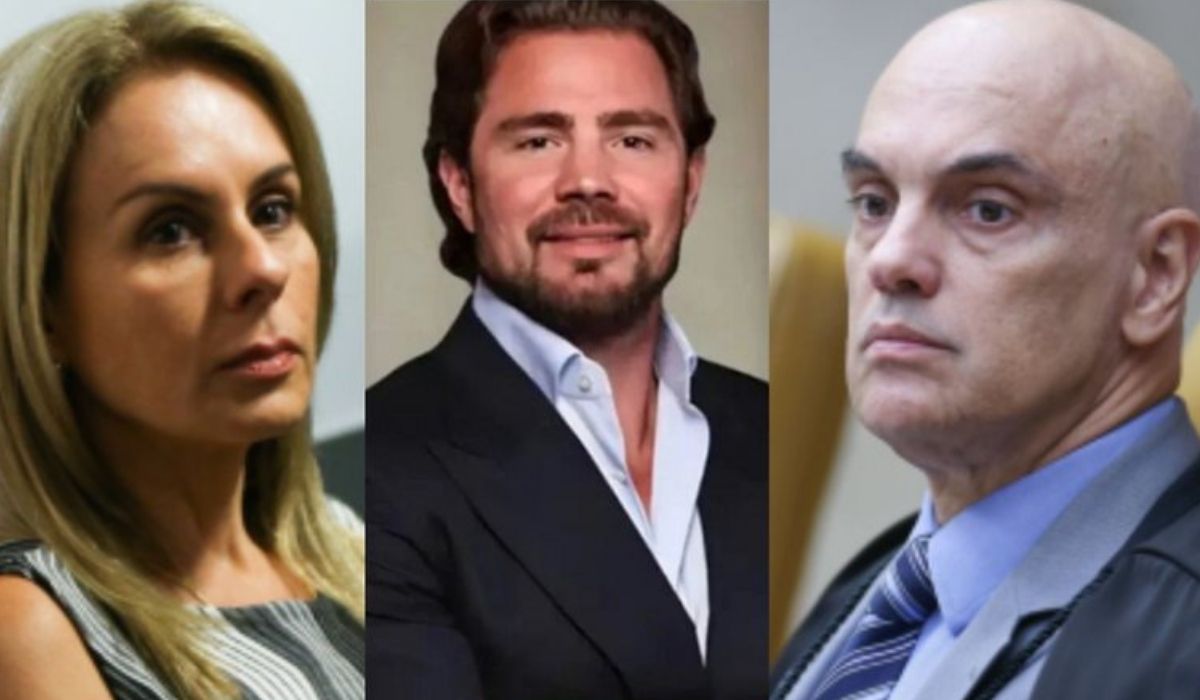
Justice for Some, Impunity for Others: The Banco Master Scandal and the Shield of Privilege
By Hotspotnews
In a nation that claims to operate under the rule of law, the principle of equality before justice should be non-negotiable. Yet once again, Brazilians are confronted with a familiar spectacle: a massive financial scandal involving billions of reais in alleged fraud, a detailed Federal Police investigation, and the conspicuous absence of high-ranking officials from the list of those facing formal charges. The latest chapter in the Banco Master case lays bare the structural protections that continue to insulate members of the elite while ordinary citizens and mid-level operators face the full weight of the law.
On October 28, 2026, the Polícia Federal submitted a partial report of more than 700 pages to the Supremo Tribunal Federal. In it, investigators requested the indictment of 15 individuals tied to an alleged criminal organization centered on the Banco Master and its dealings with the publicly controlled Banco de Brasília (BRB). At the center stands Daniel Vorcaro, the former controller of Banco Master, described by the PF as the leader who coordinated the strategic core of the scheme. Also named is Paulo Henrique Costa, the former president of the BRB, along with Vorcaro’s former partner Augusto Lima and a dozen others spanning executive, operational, and related roles.
According to the Federal Police, between July 2024 and October 2025 the Master transferred approximately R$ 17.5 billion in credit portfolios to the BRB. Of that total, roughly R$ 12.2 billion lacked verifiable proof of existence. Investigators allege fraudulent management of a financial institution, investment fraud, money laundering, and the operation of a criminal organization designed to inflate assets and facilitate larger transactions involving a public bank. Several of the named individuals are already in custody. The report is partial; a further installment was expected in early November, and the PF has sought additional time to complete forensic work.
What the report does not contain is equally significant. Seized materials, messages, and documents referenced multiple ministers of the Supremo Tribunal Federal, including Alexandre de Moraes, Dias Toffoli, and Kassio Nunes Marques. Earlier phases of the investigation had already brought to light extensive contacts: messages attributed to Vorcaro expressing “eternal gratitude” and seeking guidance near the time of his arrest; records of meetings; and substantial commercial arrangements, including a multi-year contract valued in the range of R$ 130 million involving the law firm of Moraes’s wife. Similar mentions and financial threads have touched other members of the Court. Yet none of these magistrates appear among the 15 recommended for indictment.
The formal explanation rests on the foro privilegiado. Under Brazilian rules, formal investigative acts against sitting STF ministers require authorization from the Court itself. The Presidency of the STF has clarified this procedural barrier. In practice, it creates a high threshold that ordinary defendants never face. The investigation continues, and the PF has indicated it is still examining possible irregularities involving other public agents. But the first major charging recommendation has drawn a bright line: the bankers and executives are in the crosshairs; the justices whose names surfaced in the evidence are not.
From a conservative perspective grounded in constitutional order and equal application of the law, this outcome is deeply troubling. The rule of law does not exist to protect the powerful from scrutiny; it exists to subject power to the same standards applied to everyone else. When a public bank is alleged to have absorbed billions in questionable assets, when a private banker cultivated close ties with the highest judicial authorities, and when the resulting evidence produces indictments that stop short of those authorities, public confidence erodes. Citizens reasonably ask whether the system is designed to deliver accountability or merely to manage appearances.
The scale of the alleged fraud is not abstract. It involves public resources and institutions that ultimately answer to the Brazilian taxpayer. The BRB, majority-owned by the Federal District government, stands at the center of losses and controversy. Treating such a case with maximal transparency and rigor should be the default, not a selective exercise that carefully navigates around the judiciary’s own ranks. Special procedural protections for high officials may have been conceived as safeguards against political persecution. In practice, they too often function as shields that delay or dilute accountability precisely when it is most needed.
Conservatives have long argued that institutions must be constrained by law rather than elevated above it. The Banco Master investigation offers a concrete test of that principle. The Federal Police has done substantial work documenting an apparent scheme of remarkable size. The evidence it collected included references to individuals at the apex of the judicial branch. Declining to include those individuals in the initial indictment list, whatever the formal rationale, reinforces the perception of a two-tiered system—one for those with influence and another for everyone else.
A healthy republic does not fear thorough investigation of its most powerful figures. It demands it. The ongoing nature of the probe leaves room for further developments, and Brazilians should insist that every lead, regardless of the status of the person involved, be pursued with the same seriousness. Anything less confirms the cynicism that already runs deep among citizens who see justice applied unevenly.
The Banco Master case is not merely a story of financial irregularity. It is a mirror held up to the Brazilian state. What it reflects is a continuing struggle over whether the law truly binds the high and the low alike, or whether certain positions still enjoy a practical immunity that no republic can long afford.
Sources
Polícia Federal partial report on Inquérito related to Banco Master and BRB (submitted to STF, October 2026)
Reporting by G1, CNN Brasil, Poder360, ND Mais, and Folha on the list of 15 indicated individuals and the scope of the alleged credit-portfolio scheme
Earlier PF materials and contemporaneous reporting on contacts, messages, and commercial arrangements involving Daniel Vorcaro and STF ministers
#BancoMaster #STF #PoliciaFederal #JusticaIgual #ForoPrivilegiado #EstadoDeDireito #Brasil #Accountability #RuleOfLaw


