




Largest Mass Visa Revocation in U.S. History: Up to 200,000 B-1/B-2 Visas Targeted in Asylum Crackdown
By Hotspotnews
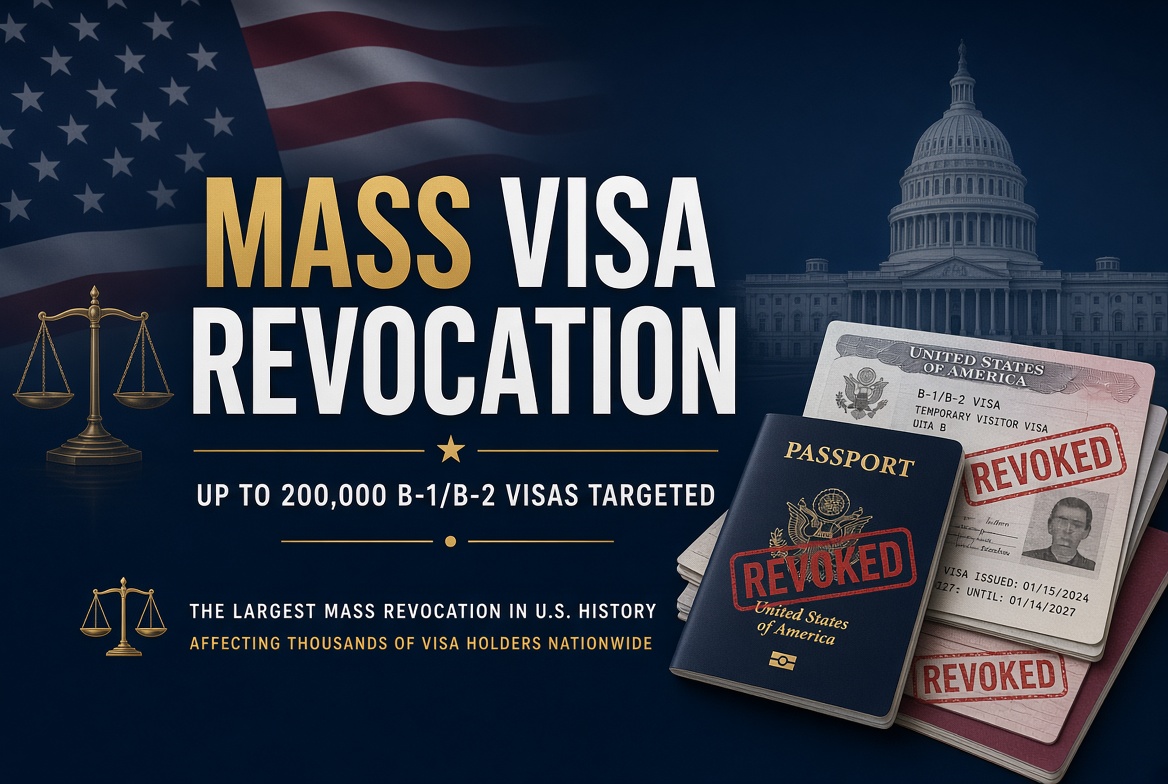
The Trump administration is preparing what officials describe as the largest single mass revocation of visas in United States history. According to State Department documents and officials familiar with the matter, the government plans to cancel the business and tourism visas of as many as 200,000 foreign nationals who entered the country on temporary visitor status and later applied for asylum.
The action focuses specifically on B-1 and B-2 visas issued between 2016 and 2026. B-1 visas are typically granted for short-term business travel, while B-2 visas cover tourism, family visits, and medical treatment. These nonimmigrant visas require applicants to demonstrate that they intend to return to their home countries after a temporary stay. The State Department is coordinating the effort with the Department of Homeland Security, and formal announcement of the revocations is expected in the coming weeks on a rolling basis.
State Department spokesman Tommy Pigott explained the rationale clearly: the government is identifying and revoking the nonimmigrant visas of foreigners who came to the United States claiming to be short-term visitors but then filed for asylum in order to remain permanently. Deputy Secretary of State Christopher Landau reinforced the message, stating that people are fed up with what he called bogus asylum claims and that asylum is not meant to serve as a loophole to circumvent immigration law. Officials emphasize that a U.S. visa is a privilege, not a right.
The move does not automatically trigger immediate deportation. Most individuals with pending asylum cases would lose their classification as temporary business or tourism visitors and be recategorized under their asylum proceedings. Their asylum applications would generally continue, though the loss of the underlying nonimmigrant status could leave them more dependent on the outcome of those claims. If an asylum application is ultimately denied, the absence of any remaining temporary status would remove a potential fallback. Legal experts note that revocation of a nonimmigrant visa can also form a basis for deportability under federal law, though separate removal proceedings by the Department of Homeland Security would still be required.
This initiative builds on an already aggressive visa enforcement campaign. Since the start of President Trump’s second term, the State Department has revoked more than 175,000 visas, the majority linked to law enforcement encounters involving crimes such as assault, driving under the influence, theft, and drug offenses, as well as other violations including fraud and national security concerns. The current effort differs in that it targets individuals who have not necessarily been accused of criminal activity, focusing instead on the perceived inconsistency between entering as temporary visitors and subsequently seeking permanent protection through asylum.
Broader immigration policies under the administration have included heightened scrutiny of visa applicants, restrictions on certain immigrant visa categories, and expanded efforts to review and, in some cases, pursue denaturalization of U.S. citizens who obtained citizenship through fraud or undisclosed serious crimes. Asylum processing itself has faced significant disruptions, though courts have intervened in some aspects of those pauses.
Critics and immigration advocates are expected to challenge the mass revocation in court, arguing that it may improperly penalize the exercise of the right to seek asylum and raise due process questions. Supporters view it as a necessary step to restore integrity to the temporary visa system and discourage the practice of using short-term entry as a pathway to longer-term stays. The precise number of affected individuals remains dynamic, as the process will unfold over time, and no detailed nationality breakdown has been released.
In practical terms, the policy is likely to serve both as an enforcement tool for those already in the country and as a deterrent for future travelers considering filing asylum claims after arriving on visitor visas. Individuals holding B-1 or B-2 visas who later sought asylum may find their immigration options narrowed, particularly if the government alleges any misrepresentation of intent at the time of visa application or entry. Those with strong, legitimate asylum claims would still have the opportunity to pursue them, but without the safety net of an active temporary visitor status.
This development marks a significant escalation in the administration’s efforts to tightly control legal pathways into the United States and to close what it sees as gaps in the asylum and visa systems. As the formal rollout approaches, affected individuals and legal observers will be watching closely for the specific implementation details, the scope of the rolling revocations, and the inevitable legal battles that follow.
Sources: Associated Press reporting based on State Department documents and U.S. officials; official statements from State Department spokesman Tommy Pigott; comments from Deputy Secretary of State Christopher Landau; related administration announcements on prior visa revocations.
#VisaRevocation #MassVisaCancellation #B1B2Visa #AsylumPolicy #USImmigration #TrumpAdministration #BorderSecurity #ImmigrationEnforcement


