



OPINION: Taxpayers Foot the Bill While Crime Takes Flight
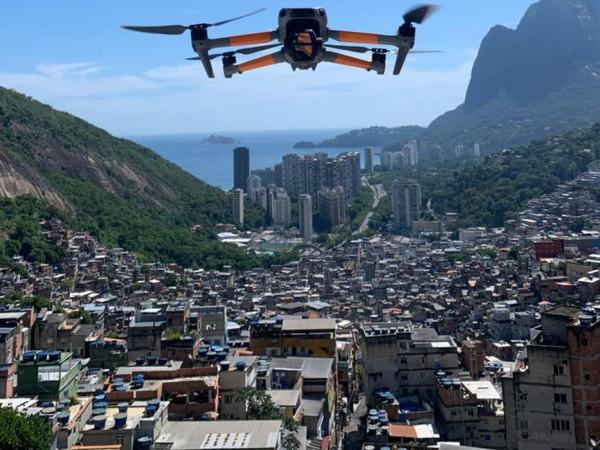
In the favelas of Rio de Janeiro, where drug factions already treat the sky as their private battlefield, the federal government has decided to invest public money teaching people how to fly drones. Two hundred thousand reais from the Ministry of Labor went toward free courses for residents of low-income communities. The official goal is noble on paper: professional qualification, small civilian drones, skills for legitimate work in mapping, video production, and inspections. In practice, the decision lands like a gift wrapped for the wrong audience.
Organized crime in Rio has already moved past surveillance drones. Factions now drop improvised explosives from the air in territorial disputes. Police have recorded lines of people waiting for training sessions run by traffickers themselves. The same technology the state is subsidizing is being weaponized in the very neighborhoods targeted by the program. This is not coincidence. It is the predictable outcome of placing dual-use skills in areas dominated by groups that answer to no law but their own.
Taxpayer money is finite. Every real spent on a course in a crime-controlled community is a real not spent on police intelligence, anti-drone defenses, or programs that actually shrink the power of the factions. The administration continues to treat Comando Vermelho and the PCC as ordinary criminal organizations rather than the quasi-military networks they have become. That refusal has consequences. When the state declines to name the threat accurately, it also declines to design policy that confronts it. Instead, it funds soft interventions that look good in press releases while the hard reality on the ground grows more violent.
The deeper implication is cultural as much as fiscal. Government programs that ignore the reality of territorial control by armed groups do not empower the poor; they risk legitimizing the status quo. Young people in these communities see two parallel paths to drone expertise: one paid for by Brasília and one enforced by the local boss. The official course may never deliberately train a bomber, yet the environment guarantees leakage, recruitment, and the normalization of technical skills under criminal oversight. Public funds become an inadvertent subsidy for the very ecosystem that holds residents hostage.
A serious government would start from a different premise. First secure the territory, then invest in skills. First treat armed factions that wage aerial war as the national-security problem they are, then talk about job training. Public money should reinforce the rule of law, not coexist uneasily with its absence. Until that order of priorities is restored, every new social program dropped into faction territory will look less like opportunity and more like abdication. Brazilian taxpayers deserve better than to bankroll experiments that leave the sky more dangerous than before.
#DinheiroPublico, #DronesNoCrime, #RioDeJaneiro, #GovernoLula, #CrimeOrganizado, #ComandoVermelho, #SegurançaPública, #CursoDeDrones, #Facções #Brazil, #publicsafety, #crime
Sources
• O Tempo, 13 July 2026: “Governo federal destina R$ 200 mil para formação de pilotos de drones no Rio de Janeiro” (Ministry of Labor partnership with IBAP-RJ for low-income community training).
• Additional police and security reporting in August 2026 documenting rising incidents of explosive-carrying drones and faction training in areas under Comando Vermelho control.


