


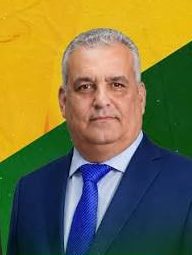
Political Clash Over Rape Accusation Against Deputy Escalates with Claims of Fabrication
By Hotspotnews
A bitter political dispute between Brazilian federal deputies Alfredo Gaspar (PL-AL) and Lindbergh Farias (PT-RJ) has intensified following a merchant’s deposition alleging that a serious sexual crime accusation was fabricated for political purposes.
The conflict began on March 27, 2026, during the final session of the Joint Parliamentary Inquiry Commission (CPMI) investigating fraud at the National Social Security Institute (INSS). Gaspar, serving as rapporteur, was presenting a report that recommended indictments involving figures linked to the government. In a heated exchange, Lindbergh Farias publicly called Gaspar a “rapist.” Alongside Senator Soraya Thronicke, he later formalized a complaint to the Federal Police accusing Gaspar of raping a 13-year-old girl years earlier, resulting in a pregnancy, and of attempts to buy the silence of those involved.
Gaspar immediately and forcefully denied the claims. He challenged Lindbergh to present evidence on the spot, offered to resign if the accusation proved true, and described it as a fabricated attack meant to destabilize him and undermine the CPMI report. He attributed a related personal story to a cousin, presented DNA-related documentation, released a video of a woman denying any connection to him as a parent, and offered his own genetic material for comparison. Gaspar also filed counter-complaints for slander, false accusation of a crime, and coercion, while seeking action in the Chamber’s Ethics Council.
In April 2026, a new element emerged. A 62-year-old merchant from Rio de Janeiro, Luis Antonio Lopes, contacted Gaspar’s office and later gave a formal virtual deposition to the Chamber’s Legislative Police. Lopes claimed the rape accusation was a staged plot. According to his testimony, a young woman who worked at his kiosk, Marcela Maria Mendes, was recruited to pose as a false victim under the name “Jailma.” He reported that payments totaling at least R$16,500 were made to her, some routed through his bank account, and he provided deposit receipts for part of those amounts. Lopes described a man known as Lucas (“Doidinho”) as a recruiter linked to political circles associated with Lindbergh Farias, and he alleged a virtual meeting that included Lindbergh and others in which payments were discussed. He said the plan involved presenting the false victim and later having her disappear to heighten suspicion against Gaspar.
The Legislative Police forwarded the deposition to the Chamber’s leadership, which sent it to the Supreme Federal Court (STF) in May 2026 because it named a figure with privileged jurisdiction. Lindbergh has strongly denied any involvement. He called the deposition “invented” and “a scam,” stated he does not know the people mentioned, and urged the Federal Police to investigate the merchant instead.
In early August 2026, shortly after Gaspar was announced as the vice-presidential running mate on Flávio Bolsonaro’s ticket, Lindbergh contacted a PL leader to say he did not intend to further politicize the matter and was preparing a public note limiting his role to having forwarded the original complaint. The approach was interpreted by some as an effort toward de-escalation. Gaspar rejected any agreement and said he would continue pursuing legal action.
The cases remain in preliminary stages at the STF under Minister Gilmar Mendes. The Federal Police and Prosecutor-General’s Office are involved in related diligences. No final judicial determination has been reached on either the original accusation or the claims of fabrication. Both sides maintain their positions: Gaspar and his allies point to his immediate denial, the merchant’s testimony with supporting deposit records, and the political timing; Lindbergh and his supporters maintain that a serious complaint was properly forwarded for investigation based on information received.
The episode highlights the intense polarization of Brazilian politics, where serious criminal allegations can quickly become weapons in institutional and electoral battles. Further developments will depend on the progress of the ongoing investigations and court proceedings.


