



STF’s Midnight Pact: Fachin Hands Mendonça the Reins in Caso Master – But at What Cost?
By Hotspotnews
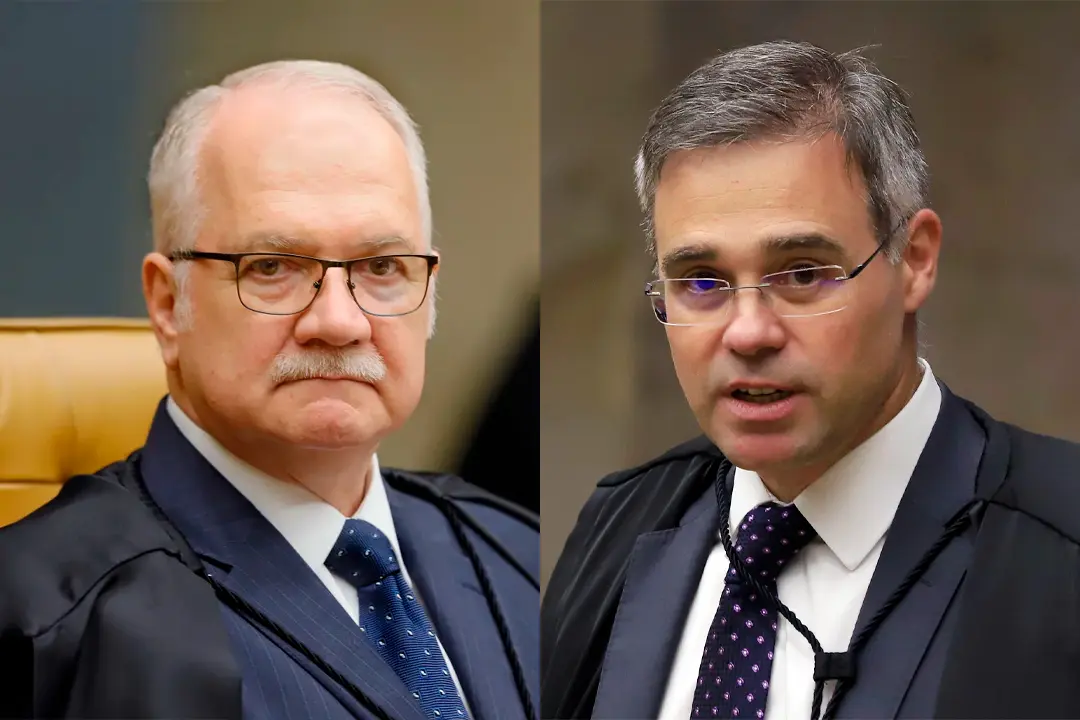
The recent closed-door meeting between Supreme Court President Edson Fachin and Justice André Mendonça has sparked intense concern among conservatives who have long viewed the STF as an institution increasingly detached from constitutional limits and public accountability. What was officially described as a discussion about the Banco Master scandal—now widely known as the “Caso Master”—has fueled suspicions of internal maneuvering to shield powerful figures while allowing selective justice to proceed.
For months, Brazilians have watched the Caso Master unfold as one of the most serious financial scandals in recent memory. A major bank allegedly operated as part of a criminal network involving fraud, influence peddling, and massive irregularities that cost taxpayers and depositors dearly. Police investigations uncovered messages and connections linking the bank’s owner to high-level political and judicial actors. When initial relator Dias Toffoli stepped aside under pressure, the case landed with Justice Mendonça, a nominee of former President Jair Bolsonaro often portrayed by the left as an ideological outlier in the current Court.
Rather than welcoming Mendonça’s appointment as a chance for impartial, thorough scrutiny, segments within the STF appear uneasy. The sudden, unscheduled nighttime meeting between Fachin and Mendonça—held outside normal agenda protocols—came right after explosive new developments in the probe, including fresh arrests and revelations that could implicate sitting justices. Public reports indicate Fachin expressed support for Mendonça continuing the investigation aggressively, with assurances that it would proceed “doa a quem doer” (no matter who it hurts). Yet conservatives see this not as genuine institutional courage but as damage control: a calculated show of unity to prevent the scandal from fully exposing alleged favoritism, backroom deals, or conflicts of interest among the Court’s dominant bloc.
The optics are troubling. Why the urgency for a private, late-night conversation? Why the need to publicly reaffirm that nothing will be “swept under the rug” if the Court has nothing to hide? Many on the right suspect the real agenda was to manage fallout, limit leaks, and ensure the investigation does not spiral into a broader examination of how certain ministers have wielded power in recent years—particularly in politically charged cases. The fact that Mendonça, once criticized by establishment voices as too conservative, now finds himself at the center of such a high-stakes probe only heightens the irony: a Bolsonaro appointee may be the one figure willing (or positioned) to follow evidence wherever it leads, even if it touches colleagues.
This episode underscores a deeper conservative critique of today’s STF: an institution that too often prioritizes self-preservation over transparency and the rule of law. When scandals threaten the Court’s image, responses tend toward controlled narratives, reinforced teamwork among the majority, and selective rigor—while ordinary citizens face the full weight of judicial overreach in their daily lives. The Caso Master is not just about banking fraud; it is a litmus test for whether the Supreme Court can police itself without resorting to the same opacity it demands from everyone else.
True institutional recovery demands more than private meetings and public platitudes. It requires full disclosure, independent oversight, and—most importantly—an end to the perception that justice bends depending on who is in the dock. Until then, episodes like the Fachin-Mendonça rendezvous will continue to erode public trust and reinforce the view that the STF operates more like a closed club than an impartial guardian of the Constitution. Conservatives will keep watching closely, demanding accountability that matches the rhetoric of “doa a quem doer”—starting at the top.


