





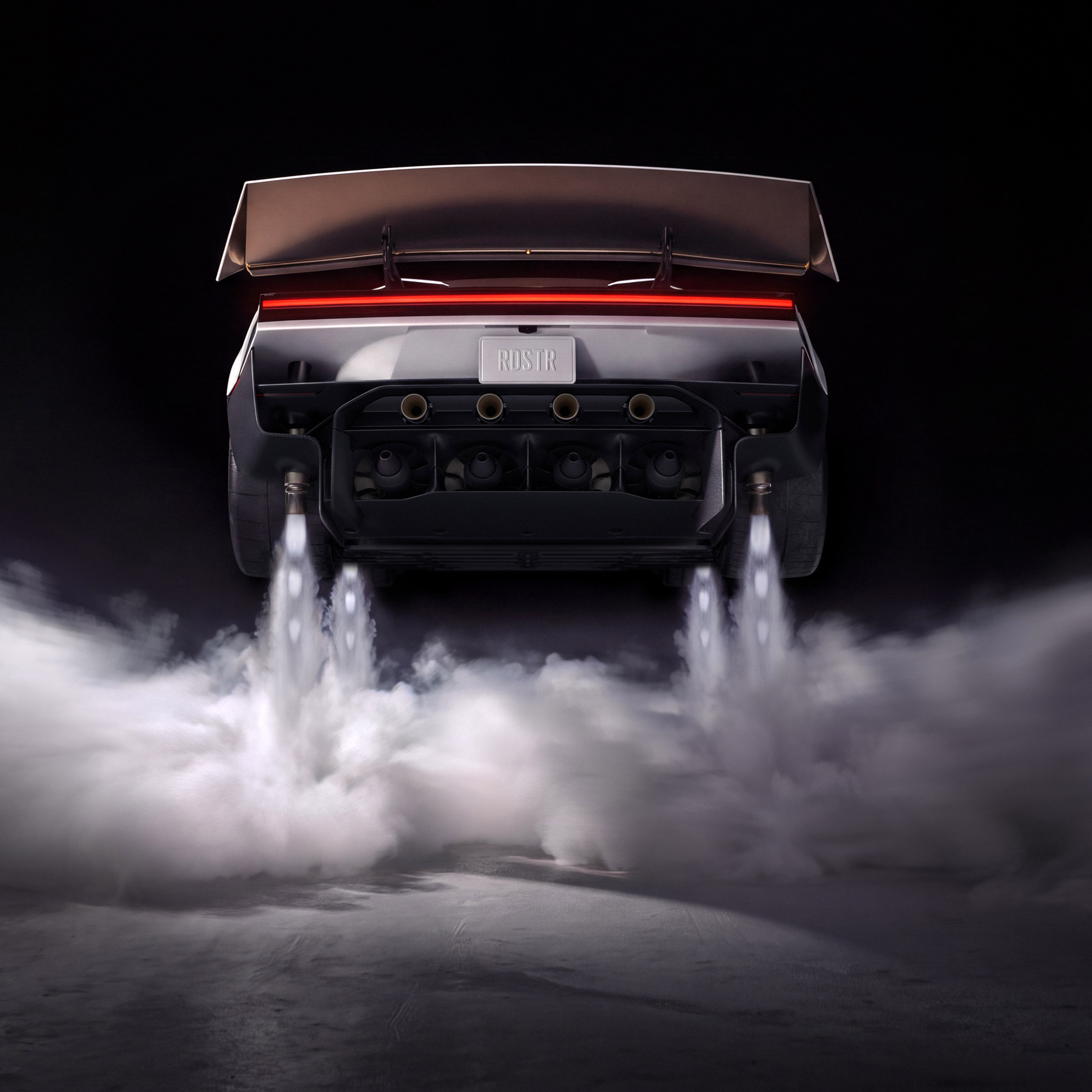
The Future Has Flying Cars: Tesla Unveils Next-Gen Roadster with SpaceX Thrusters
By Hotspotnews
Musk declared, “Flying cars are real,” and later posted on X: “Turns out the future does have flying cars.” The event, delayed from October 1 due to weather, featured remote-controlled stunts with no one inside the vehicle for the aerial maneuvers.
The Spectacle: Upside Down, Flips, and Short Flights
The white, angular Roadster — drawing design inspiration from the SR-71 Blackbird and F-35 fighter jet — first clung to a tall curved ramp, driving completely upside down thanks to a powerful multi-mode suction system that generates up to about 2G of downforce by pulling air from beneath the car.

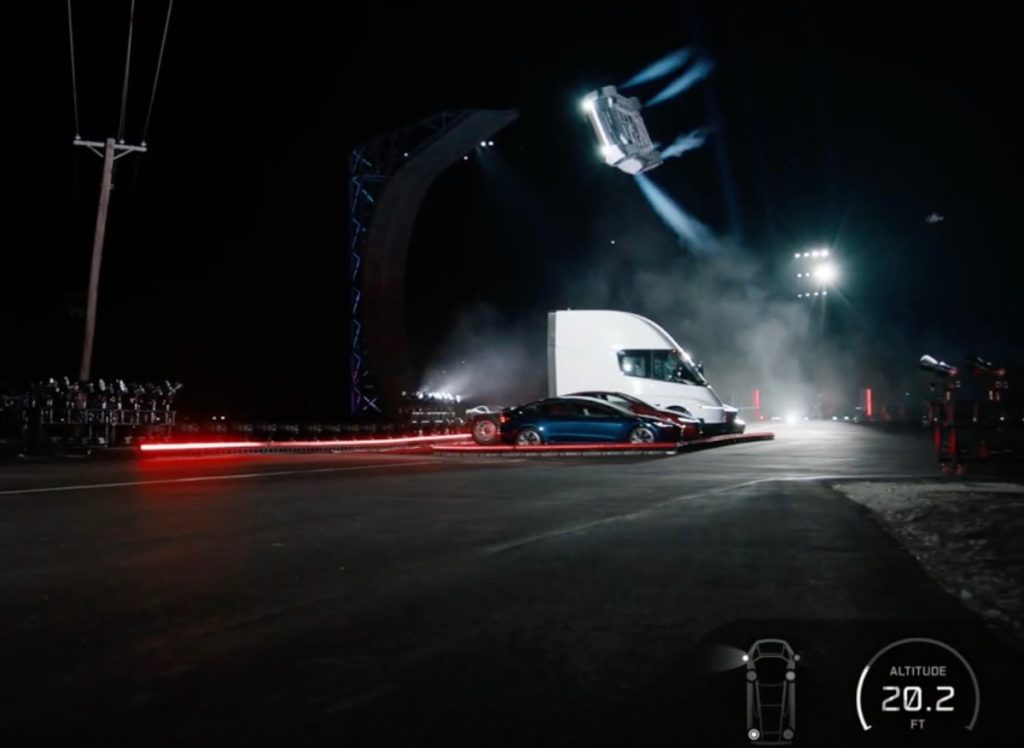

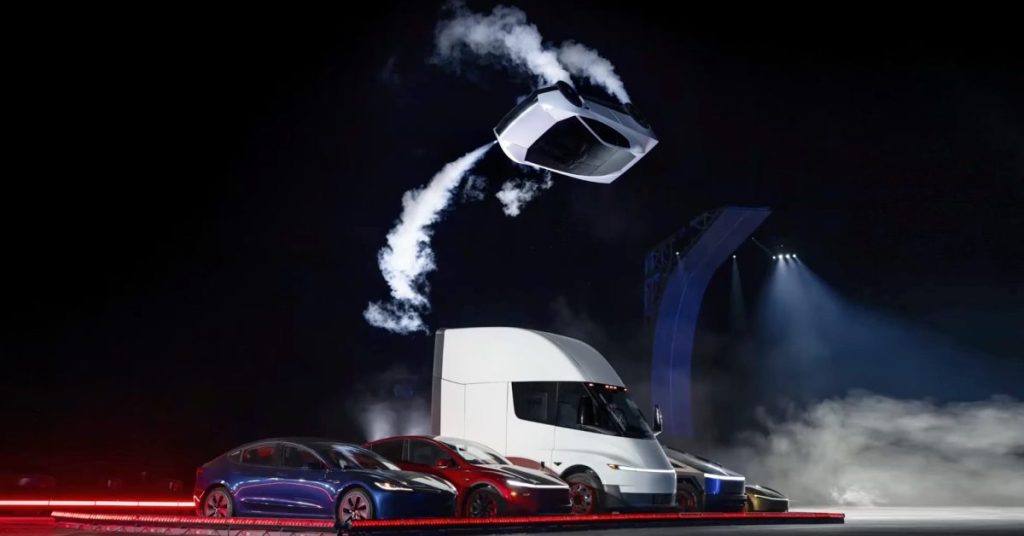


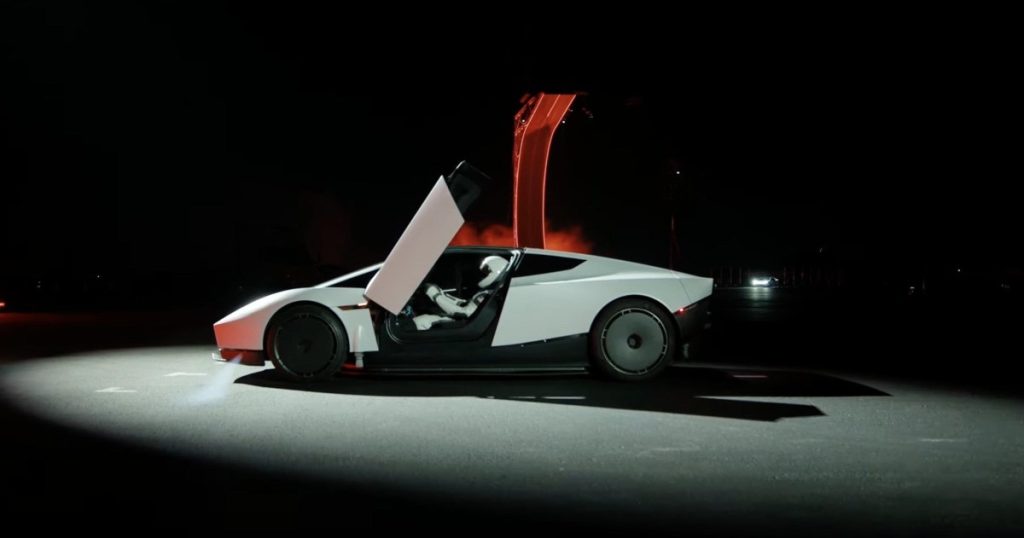
It then launched off the ramp, used thrusters to flip and stabilize, and landed cleanly. In another sequence, it hopped and flew over Tesla’s lineup, including the Semi, Cybertruck, Model Y, Model 3, and Cybercab, trailing white smoke (or vapor) from its compressed-air thrusters while performing what engineers called a “kickflip.”
A separate acceleration run claimed a blistering 0–60 mph in 0.81 seconds. Musk noted the production version could target even higher speeds, joking about Mach 0.5 (roughly half the speed of sound).
Videos of the demo are available on Tesla’s and Elon Musk’s X accounts, including the full event highlights and specific clips of the ramp jump, flips, and thruster-assisted flight. Official posts feature high-quality footage of the car transforming into Track Mode (with active wings) and the dramatic airborne sequences.
How the Technology Works
This is not a traditional eVTOL “flying car” capable of sustained vertical takeoff and long-distance flight. Instead, it’s a high-performance electric sports car augmented by aerospace tech:
- Multi-mode suction/fan system: Creates massive downforce even at zero speed, enabling upside-down driving and extreme cornering. Powered fans and active aerodynamics (including a large rear wing) handle high-downforce or low-drag modes.
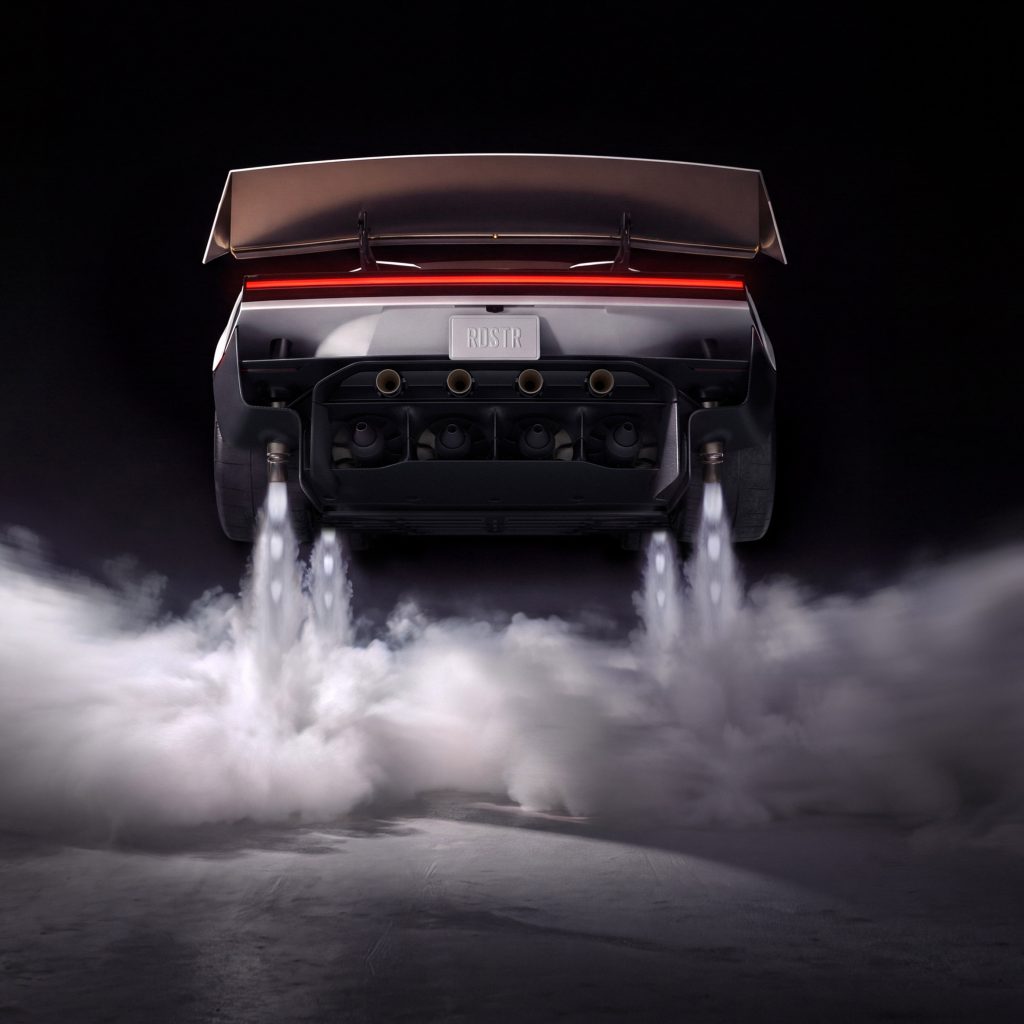
- Cold-gas thrusters: Compressed air stored in high-pressure vessels (reports cite ~250 kg of air across ~600 liters capacity and up to 10 nozzles). These provide short bursts for acceleration, braking, attitude control, hops, flips, and brief flight. The tanks can be recharged while driving. No combustion — just high-pressure air.
Tesla engineering VP Lars Moravy and Musk described the thrusters as enabling “altitude controls,” rolls, and “crazy gymnastics.” The higher-end Rocket configuration turns the car into a one-seater with perimeter thrusters for upward and rotational movement.
Three Configurations
Tesla outlined three versions after the event:
| Configuration | Seating | Key Features | Claimed 0-60 mph | Notes |
| Performance | 2 | Active aero + multi-mode suction | Under 1.6 s | Road-ready, reservation available |
| Thrust | 2 | Suction + rear cold-gas thrusters | Under 0.9 s | Race-ready, limited release |
| Rocket | 1 | Perimeter thrusters for flight/rotation | Under 0.59 s | Air-ready, invite-only; not for public roads |
All target over 300 miles of range and speeds exceeding 230 mph. Design details include concealed headlights, a full-length taillight, Ano White aerospace-inspired paint, gold-tinted glass mimicking spacesuit visors, lightweight materials (magnesium, titanium, carbon fiber), steer-by-wire, and a fixed seat position to cut weight.
Production, Pricing, and Reservations
Musk stated production begins in 2028 (“actually”). The Roadster has been delayed repeatedly since its 2017 concept reveal (original target was 2020). Reservations reopened with a $5,000 refundable deposit due today, plus $45,000 within 10 days for the base (Performance). Higher trims cost significantly more to reserve (reports of $250,000 for Thrust-level). No final base price has been confirmed; the 2017 figure was around $200,000.
The Rocket trim is invite-only and explicitly noted as not approved for public road use in some materials. Regulatory hurdles with the FAA and NHTSA for any airborne features remain significant.
Caveats and Reality Check
This is a halo product and engineering showcase, not a volume vehicle. Musk has previously called it a “small potato” financially and emphasized that safety is not the top priority (“If safety is your number one goal, do not buy the Roadster”). Extreme acceleration, thruster noise, weight of the air system, and legal restrictions mean everyday road use of the flying features is unlikely in the near term. The demo itself was a controlled stunt at a rocket test site.
Still, after nearly a decade of teases and vaporware accusations, Tesla and SpaceX delivered a real, working demonstration of a car that can leave the ground under its own power.
Hashtags: #TeslaRoadster #FlyingCars #ElonMusk #Tesla #SpaceX #Roadster #EV #Innovation #FutureIsNow
Sources
- TechCrunch, The Verge, Electrek, Yahoo Finance, Tesla’s official site and X posts, Elon Musk’s X posts (October 15–16, 2026).
The Roadster is the culmination of Tesla–SpaceX collaboration and a reminder that, as Musk has said, the future promised flying cars — and now one exists, at least in demo form. Production in 2028 will determine how much of this spectacle reaches customers.


