



The Heading Was Law. The Work Under It Was Politics.
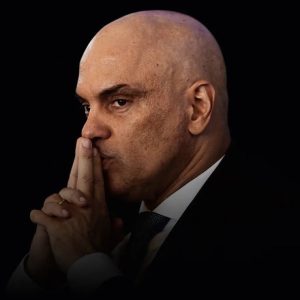
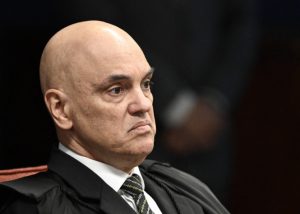
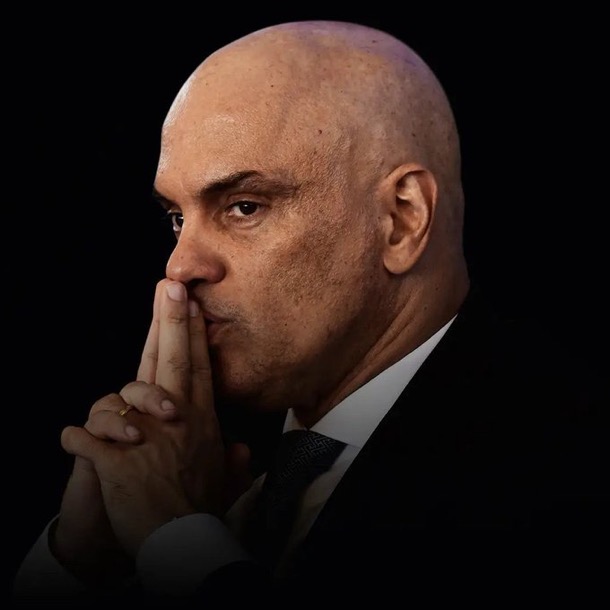
Alexandre de Moraes did not need a manifesto. He needed a brief.
By Hotspotnews
On the eve of the most delicate plenary session the Supreme Federal Court has faced in years, the justice filed a 44-page, 121-topic response to President Edson Fachin. The occasion is Petição 16.662: a Federal Police report, made public by Justice André Mendonça, that attributes to Moraes a set of approaches from Daniel Vorcaro, the jailed banker behind Banco Master. The Court is not convicting anyone today. It is deciding whether that report is usable and whether the facts in it justify opening an investigation into one of its own members.
That is a lawyer’s problem. Moraes answered it like a defendant giving a speech.
What the document actually contains
There is a legal heading, and it is not invented. According to accounts of the filing published by CartaCapital, Band, and Metrópoles, Moraes argues that an inquiry against a sitting justice was opened ex officio, without a prior request from the Federal Police or the Procuradoria-Geral da República, and without plenary authorization. He calls that a breach of the accusatory principle in article 129 of the Constitution. He asks that the PF report be annulled. He says he never sat on a Master or Vorcaro case. He says thousands of documents yield no criminal indication against him. He treats much of the police material as notes and inference rather than a proven two-way dialogue.
Those points matter because they are not only his. Reporting by CNN Brasil, G1, and the BBC has made clear that the PGR already asked for nullity on similar grounds: a judge is not an accuser, still less a pre-trial investigator, and an order to hunt specific people without a request from the Public Ministry or the police exceeds the magistrate’s role. If the fruit is born of that order, the argument goes, the fruit is void.
A justice with Moraes’s résumé should have stopped there and done the hard work underneath the heading. He did not.
The miss
A filing that impresses colleagues does five things, in order, without raising its voice.
-
It states the exact rule and the exact act that broke it.
-
It shows why the break decides competence rather than offering a technicality.
-
It separates three files that this text keeps mixing: the number and notes attributed to Moraes; the consultancy between Banco Master and the Barci de Moraes firm; and whether he ever judged those parties.
-
It takes the worst reading of the notes and still explains why that reading is not a crime, or why it is only an ethics problem for another body.
-
It asks for one remedy: annul, archive, or send the raw data to a clean examiner.
He outlined the first task and then spent his force on a political theory. The report, he writes, is a farsa. Behind it there is motivação político-eleitoral. Then the word that will be screenshotted from Brasília to every group chat in the country: VINGANÇA. The attempt to destroy democracy, he says, did not end on 8 January 2023. It only changed its modus operandi. The Court will resist.
Motive can be true and still be the weaker legal argument. Courts that want to spare a colleague need a clean off-ramp. Courts that want to keep looking need a clean on-ramp. This text gives neither. It gives a narrative.
The page as evidence against the author
Style is not decoration in a case about process. It is a fact.
The public copy that circulated overnight, first through Sam Pancher’s video of the pages and then through every political account that quotes him, is full of Caps Lock, repetition, and the seams of more than one hand. The numbered competence section reads like gabinete Portuguese. The closing reads like campaign Portuguese. Courts are used to staff drafts. What they notice is a document that was not controlled. In a controversy about whether a justice ran a clean process, an uncontrolled brief is a bad exhibit. It says: even when the audience is the full Court, he could not impose one standard on his own paper.
That is why the AI question, which arrived immediately, is the wrong question. Clean model prose is even and grammatically tidy. This is not. The likelier reading is human, rushed, and emotionally involved, with aides on the skeleton and the minister — or someone writing in his political voice — on the ending. The nearby fight over possible generative-AI marks in a different PF intelligence report, the one Moraes used against Mendonça and which Revista Oeste and others discussed earlier this month, should not be imported here as proof. It is a separate document and a separate claim.
The cost is not that justices will open a criminal case over typos. The cost is narrower and worse. People who wanted a reason to keep the facts alive now have a reason that does not look merely partisan. They can say the procedure may be messy, the family-firm point may be thin, but the target is not acting like someone who can be left unexamined.
Two rooms, one PDF
There is a third reading that sits with haste and affect. He was writing for two rooms at once.
Inside the Court he needs Fachin, Cármen Lúcia, and anyone still undecided to accept nullity or “no crime.” Press maps of the vote, from Estadão, CartaCapital, and Valor, have been tight and unstable: Mendonça, Fux, and Nunes Marques seen as more open to investigating; Gilmar Mendes, Flávio Dino, and Cristiano Zanin more resistant; Fachin and Cármen as the swing. Moraes himself may not vote. Toffoli has conflict issues on Master.
Outside the Court he needs the public that already believes 8 January never ended. Those rooms reward opposite styles. Trying to win both in one PDF is how you get a document that impresses neither.
If he truly believed the plenary would kill the case on procedure, a short, cold brief would have been enough. Length plus heat is what you write when you are not sure the formal point will save you, or when you need the country to hear a story, not just the Court. Emotional compromise fits the page better than calm confidence. A lawyer who still has distance writes as if a stranger will test every sentence. This reads as if the author is answering an insult.
What “profound juridical knowledge” should have looked like
The standard is not perfection. The standard is the office.
A minister whose authority has rested, for years, on looking like the most prepared person in the room should have filed something that made colleagues think: this is the sharper lawyer. Instead the page makes them think: this is the accused, writing as the accused.
He did not lack a legal heading. He lacked the legal work under the heading. The report argues motive harder than elements — what fact, under what statute, with what proof. The Barci–Master contract is acknowledged and then waved away as regular, invoiced, and unrelated to his docket. That may be true. It still had to be built as an argument about appearance, timing, and the difference between a family firm’s client and a justice’s duty, not as a paragraph on the way to 8 January.
Folha had already reported that Moraes prepared a public defense days earlier and then postponed it after allies warned that anything left unexplained would haunt him until this session. The written filing looks like that postponed speech finally escaping onto official paper. A speech can afford heat. A brief cannot.
The session will not be decided by prose. The prose will still matter.
Tuesday’s plenary can still do the legally cautious thing: accept the PGR’s nullity, refuse to treat Mendonça’s path as a precedent, and still decide what to do with the underlying facts. BBC and G1 have both noted that even a voided report may not end the discussion if the Court thinks the raw material deserves a clean look.
That is exactly why the filing’s failure is practical, not aesthetic. Moraes had one chance to make the off-ramp look like law rather than self-protection. He used it to accuse the on-ramp of being a coup by other means. Some of his colleagues may agree with him about Mendonça. They are less likely to thank him for forcing them to say so in the language of civil war.
Justice is blind, the proverb says, but it is not foolish. The proverb cuts both ways. A Court that rubber-stamps a sloppy offensive against a colleague is not serious. A justice who answers a competence fight with Caps Lock and a sequel to 8 January is not serious either. Profound juridical knowledge, if it is real, shows up as discipline on the page. This page does not show it.
The heading was law. The work under it was politics. That is the whole brief.
#STF #AlexandreDeMoraes #AndreMendonca #BancoMaster #DanielVorcaro #Pet16662 #PGR #EdsonFachin #SupremoTribunalFederal #8deJaneiro #EstadoDeDireito #DueProcess #OpEd


