



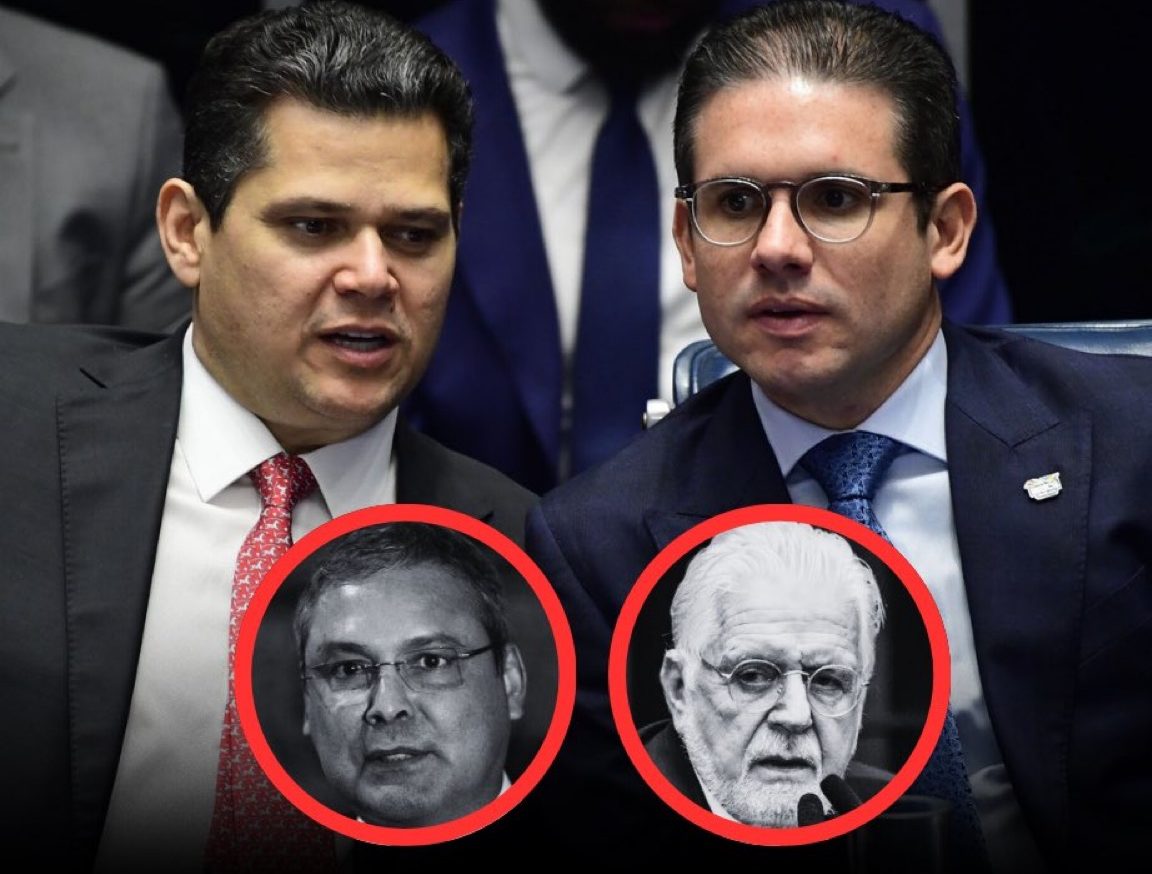
The Hour of Reckoning: Brazil’s Congress Finally Breaks the Chains of Lula’s Regime
By Hotspotnews
For two years, the Brazilian right has been told to wait. Wait for the institutions to correct themselves. Wait for the Supreme Court to tire of its own excesses. Wait for the stolen election of 2022 to be quietly forgotten. Wait while patriots rot in political prisons for the crime of protesting a fraudulent vote. Wait while the same justices who suspended constitutional rights now lecture the nation on “democracy.”
That waiting game ended this week.
On November 24, 2025, the presidents of the Chamber of Deputies and the Federal Senate—Hugo Motta and Davi Alcolumbre—publicly severed every remaining tie with Lula’s Workers’ Party. They did not do it quietly. They did not do it with the usual diplomatic euphemisms of Brasília. They did it with the cold finality of men who have decided that the cost of continuing to prop up a dying government is now higher than the cost of bringing it down.
And in that single act, the path to amnesty for the political prisoners of January 8, 2023—and ultimately for Jair Messias Bolsonaro himself—has opened wider than at any moment since the coup disguised as “defense of democracy” began.
This is not a minor parliamentary spat. This is the moment the Centrão, the great pragmatic center-right bloc that has ruled Brazil behind the scenes for decades, looked at Lula’s collapsing approval numbers, at the empty Treasury, at the Supreme Court’s open war on the legislature, and finally concluded: the PT ship is sinking, and they will not go down with it.
The triggers were many, but they all point to the same reality: Lula and his ministers believed they could treat Congress like a rubber stamp while the Supreme Court acted as the true executive power. They nominated a partisan Attorney General to the Supreme Court without even consulting the Senate president. They tried to ram through a watered-down anti-crime package that would have left organized crime laughing. They withheld billions in parliamentary amendments while demanding loyalty. They allowed Alexandre de Moraes to arrest a former president for the crime of removing an ankle monitor with a soldering iron—yes, a soldering iron—because “public order” apparently requires a 67-year-old man to be locked in a cell for thought crimes.
The Centrão endured all of it for one reason: fear of the Supreme Court. Fear that if they resisted, they too would be stripped of their mandates, their bank accounts frozen, their families harassed. That fear is now broken.
Hugo Motta’s declaration that his relationship with the PT leader in the Chamber is “terminated” was not theatrical. It was the sound of a man freeing himself from a hostage situation. Davi Alcolumbre’s refusal to even take calls from the government leader in the Senate is the gesture of a man who has decided the price of complicity is no a longer acceptable.
And with that, the amnesty bill—PL 2.020/2023—has moved from the realm of “impossible dream” to “when, not if.”
The math is brutally simple. The right and center-right together command well over 300 deputies. The urgency request for the amnesty bill already has more than enough signatures. Hugo Motta, now liberated from any obligation to Lula, can place it on the plenary agenda tomorrow if he chooses. Once it passes the Chamber—and it will, by a landslide—the pressure on Alcolumbre in the Senate becomes unbearable. He has already floated the idea of a “partial” amnesty that reduces sentences for the rank-and-file while protecting the leaders. That is the opening bid. The final offer will be full amnesty, because anything less will be seen as betrayal by the millions who still see Jair Bolsonaro as the legitimate president.
The Supreme Court will scream. Alexandre de Moraes will threaten. Luís Roberto Barroso will write another 400-page monologue about the “fascist threat.” None of it will matter. The legislature is reasserting its constitutional role after two years of judicial dictatorship, and the justices know they have pushed too far. They can declare laws unconstitutional, but they cannot dissolve Congress. They can jail one man, but they cannot jail 513 deputies and 81 senators.
This is the moment conservatives across Brazil have prayed for: the moment when the institutions that were weaponized against the people begin to turn on each other. The Supreme Court overreached. Lula underestimated the pride and survival instinct of the Centrão. And now the bill is coming due.
The political prisoners of January 8—mothers, pastors, small businessmen, veterans—who have spent nearly three years in maximum-security cells for the crime of walking into an open building—will soon walk free. Jair Bolsonaro, sentenced to 27 years for the non-crime of questioning an election, will have his persecution exposed for what it was: a Stalinist show trial dressed up in judicial robes.
Brazil is not yet saved. The fight for 2026 will be brutal. But for the first time since the dark days of 2022, the momentum is unmistakably on the side of those who never accepted the coup.
The rats are not fleeing a sinking ship. The jailers are discovering that the keys no longer fit the locks they thought they controlled.
Amnesty is coming. Justice is coming. And when it arrives, an entire nation will remember who stood on the right side of history when the regime thought it had crushed the spirit of a free people.
The wait is over.


