




The Protected Elite: Daniel Vorcaro’s Plea Proposal Exposes STF Collusion
By Hotspotnews
In the escalating corruption scandal surrounding Banco Master and its former owner, Daniel Vorcaro, one astonishing revelation stands out as a damning indictment of Brazil’s institutional rot: the banker’s defense team deliberately sought to implicate one Supreme Federal Court (STF) minister while shielding another in a proposed plea deal.
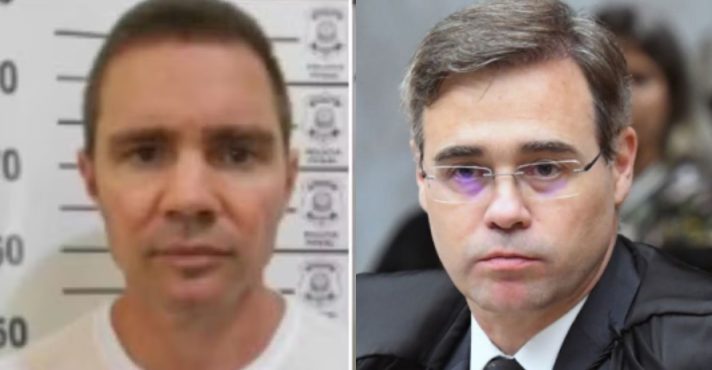
Vorcaro, the once-influential banker now held in preventive detention on charges of money laundering, fraud, and orchestrating a sprawling criminal enterprise, has become the epicenter of what Brasília insiders grimly call the “plea deal of the end of the world.” His bank’s implosion laid bare billions in irregularities and a network of influence that allegedly spanned high finance, politics, and—critically—the judiciary itself.
According to reports from respected outlets, Vorcaro’s lawyers approached STF Justice André Mendonça, the very minister serving as rapporteur in the case, with a carefully calibrated offer for collaboration premiada. The terms were explicit and extraordinary: Vorcaro would furnish evidence to incriminate **one sitting STF minister**, but only on the condition that **another** (or possibly more) be explicitly preserved and left untouched. This was no vague negotiation tactic—it was a direct attempt to script the delation, allowing the banker to throw select figures under the bus while safeguarding others within the Court’s inner circle.
Justice Mendonça rejected the proposal outright and without hesitation. He insisted that any legitimate plea must be complete, unfiltered, and uncompromising—leaving no room for selective protection, especially when the targets include fellow ministers of the Supreme Court. By refusing to entertain this carve-out, Mendonça signaled that he would not participate in what amounts to an internal protection racket among the judiciary’s most powerful members.
This attempted deal is far more than a bargaining ploy; it is a glaring admission of guilt by those who proposed it. By offering to target one minister while shielding another, Vorcaro’s team effectively confirmed the existence of compromising ties linking multiple STF figures to the Banco Master affair. Public speculation has long centered on ministers Alexandre de Moraes and Dias Toffoli—names repeatedly surfaced in connection with past dealings, stalled processes, or alleged contacts tied to Vorcaro’s operations. The proposal itself proves the point: dirt exists on more than one justice, yet the strategy was to contain the fallout by sacrificing one while insulating the rest. Such selective targeting doesn’t just reveal collusion; it institutionalizes it.
Conservatives have argued for years that Brazil suffers from a two-tiered justice system—one that rigorously pursues political opponents and ordinary citizens, while shielding the judicial elite from meaningful scrutiny. Vorcaro’s gambit lays this hypocrisy bare. Politicians from the Centrão, regional power brokers (including those from Amapá like Davi Alcolumbre), and even Planalto connections may be “safer” targets for delation—expendable in the eyes of the establishment. But naming names inside the STF risks dismantling the very architecture of impunity that has allowed the Court to amass unprecedented power in recent years.
Mendonça’s firm refusal is a rare and welcome act of institutional integrity in a system often accused of self-preservation. By proroguing the inquiry, maintaining Vorcaro’s detention, and demanding full disclosure without blind spots, he has blocked—at least for now—the path to a sanitized narrative that protects the powerful. Yet the very fact that such a proposal was made speaks volumes: it shows that even the accused understand the unwritten rule that certain spheres remain untouchable.
If Vorcaro’s collaboration ultimately proceeds without these protections, the revelations could dwarf past scandals like Lava Jato in their reach into the heart of Brasília. A full, uncensored delation would force the nation to confront whether the guardians of the Constitution truly serve the law—or merely guard their own privileges.
The Brazilian people deserve no less than complete accountability: no selective justice, no shielded ministers, and an end to the era where the marble halls of the STF function as a fortress for the elite. Vorcaro’s failed proposal has already cracked that fortress open. Now the question is whether the truth will be allowed to finish the job.


