





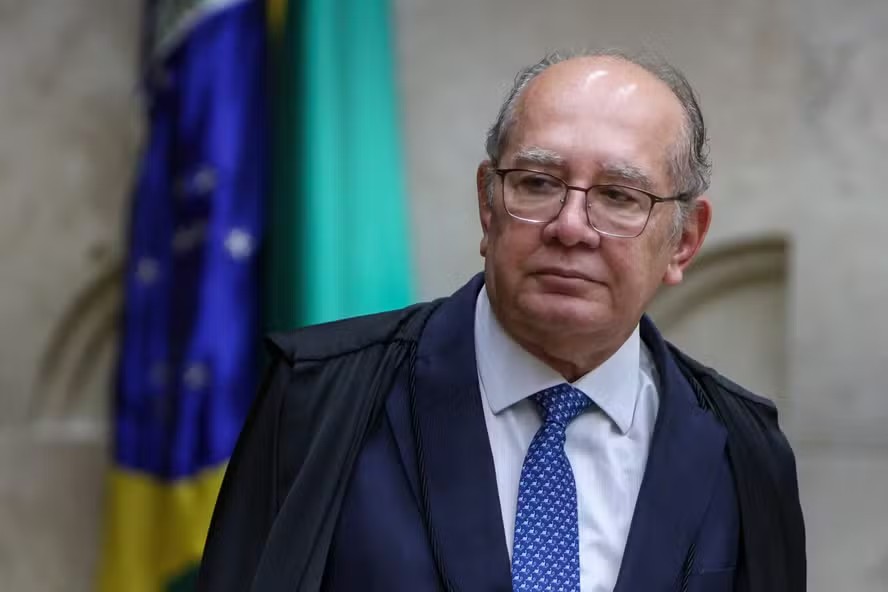
The Unaccountable Bench: Gilmar Mendes and the Banco Master Scandal
By Hotspotnews
Brazil’s Supreme Court has long positioned itself as the guardian of the Constitution and the ultimate check on political power. Yet the unfolding Banco Master scandal reveals a troubling pattern of elite entanglement that undermines that very claim. At the center stands Minister Gilmar Mendes, the court’s decano, whose role in organizing the annual Fórum de Lisboa—widely known as “Gilmarpalooza”—has placed him under intense scrutiny for a lack of transparency and apparent conflicts of interest.
The facts are straightforward and damning. Daniel Vorcaro, the now-imprisoned controller of Banco Master, lavishly funded parallel events and hospitality tied to the 2024 edition of the forum. Reports detail tens of millions of reais spent on high-end dinners, receptions, and accommodations for Brazilian authorities, including Supreme Court justices. Vorcaro’s bank, which collapsed under the weight of alleged massive fraud involving illiquid assets and questionable CDB issuances, ultimately required a record bailout from the taxpayer-backed Fundo Garantidor de Créditos—tens of billions of reais that ordinary Brazilians will ultimately shoulder through higher banking costs and systemic risk.
A conservative analysis does not require conspiracy theories. It requires basic principles of accountability and separation of powers. When a sitting Supreme Court justice presides over an event where a major financial player under later investigation for systemic fraud plays the role of generous host, the appearance of impropriety is not incidental—it is structural. Judges are not ordinary citizens. They wield extraordinary, often unreviewable power over legislation, elections, and individual rights. The public is entitled to confidence that their decisions are guided solely by law, not by relationships cultivated through luxury and access.
The lack of transparency compounds the problem. There has been no robust, proactive disclosure from Minister Mendes regarding the full extent of benefits received or facilitated through these events. Instead, the defense has largely rested on technical distinctions: that the funding went to “parallel” activities rather than the official program, or that no direct personal payment occurred. Such parsing may satisfy legal minimalism, but it fails the higher test of public trust. In a healthy republic, those who sit in judgment on others should err on the side of maximum transparency, not minimum compliance.
Even more concerning are the procedural moves within the investigation itself. Minister Mendes has taken positions—including requests for views and votes on detention matters—that some observers interpret as slowing momentum or emphasizing procedural protections in ways that benefit the broader network of investigated parties. Whether these reflect legitimate jurisprudential differences or something more is precisely why recusal standards exist. Continuing to participate in cases touching the same circle of actors that funded his signature event creates an unavoidable cloud over the court’s impartiality.
This is not an isolated incident. With similar questions now surrounding other ministers, from family-linked benefits to direct financial arrangements, the pattern grows clearer by the day.
What should the appropriate consequences be?
First, Minister Mendes should immediately recuse himself from any and all proceedings, direct or indirect, connected to the Banco Master investigation and related matters. Self-recusal is the minimum ethical step when reasonable questions of bias arise. Failure to do so invites legitimate accusations that the judiciary is protecting its own.
Second, Congress should pursue a serious, evidence-based inquiry into whether the acceptance of benefits from Vorcaro constitutes a violation of judicial ethics or, more gravely, grounds for impeachment under the constitutional standard of crimes of responsibility. STF ministers are not above accountability. The Senate has the constitutional power—and, in moments of institutional crisis, the duty—to exercise oversight when the court’s own mechanisms prove inadequate.
Third, this episode demands structural reform. Lifetime tenure without meaningful external ethics enforcement has produced a court that too often behaves like an unaccountable super-legislature. Conservatives have long argued for term limits, stricter gift and hospitality rules, independent ethics review outside the court’s self-policing, and greater transparency in decision-making. The Master scandal provides fresh, concrete evidence why those reforms are urgent rather than theoretical.
Finally, the people can’t trust a Supreme Court tinted like this. When powerful institutions—whether banks, politicians, or judges—operate in networks of mutual favor shielded from scrutiny, ordinary citizens pay the price. The billions lost in the Banco Master collapse did not disappear into thin air; they were enabled by regulatory failure and elite complacency. Allowing one of the most powerful men in the judiciary to remain above serious accountability for his role in that ecosystem sends exactly the wrong message: that some are too important to be held to the same standards as everyone else.
Brazil’s democracy cannot afford another generation of judges who lecture the political class on ethics while appearing entangled in the very practices they condemn. Transparency is not optional. Accountability is not optional. If the Supreme Court wishes to retain its moral authority, it must demonstrate that no minister is above the basic requirements of clean hands and open books. The alternative is continued erosion of public confidence in the one institution Brazilians were told would stand above the fray.
The time for deflection and technicalities has passed. The time for consequences has arrived.


