

Trump’s Venezuela Oil Deal Strengthens the Dollar, Unlocks American Investment, and Puts China and BRICS on Notice
By Hotspotnews
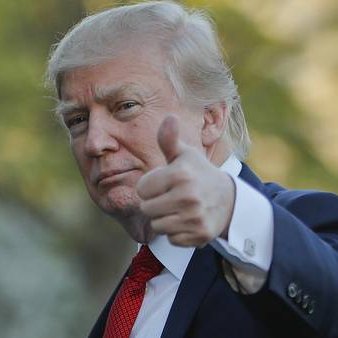
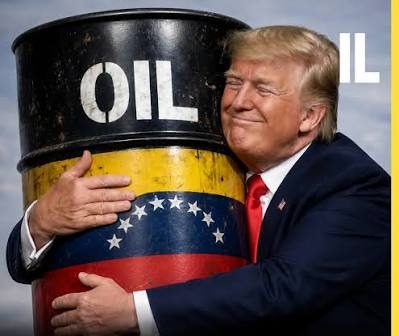
On August 28, President Trump announced that the United States had secured majority effective control of more than 65 billion barrels of Venezuelan oil reserves. He called it the biggest oil deal in world history. Fox News carried the announcement. The Associated Press, Reuters, and other outlets confirmed the core terms: a partnership negotiated by Secretary of State Marco Rubio and Defense Secretary Pete Hegseth with Venezuela’s interim President Delcy Rodríguez, nine months after U.S. forces captured Nicolás Maduro.
The crude had sat under a failed socialist state that wrecked its own industry and opened the door to Chinese loans and discounted sales. Much of that oil had been flowing east, sometimes outside the dollar system. It is now tied to American companies, American refiners, and contracts that settle in dollars. No new war was launched to seize the fields. No taxpayer appropriation bought the reserves. Private U.S. firms will develop them.
That sequence matters. Energy dominance is not a speech. It is control of supply, investment, and settlement.
The Dollar Gets a Practical Upgrade
Oil remains the world’s most important traded commodity, and it has long been priced in dollars. When buyers need dollars to complete a purchase, demand for the currency rises. Venezuela had become a working example of the opposite: sanctions-era sales to China, oil-for-loan arrangements, and workarounds that reduced the need for greenbacks.
The new structure reverses that flow. A U.S.-linked joint venture holds roughly 55 percent effective output, including an ownership stake and rights to purchase oil at cost. Cargoes that once headed to Chinese teapot refineries are being redirected toward Gulf Coast plants already built for heavy sour crude. Every barrel that now requires a dollar invoice instead of a yuan settlement or barter deal increases the usefulness of the dollar as a trade currency.
This is not an overnight flood of supply. Fields neglected for years need capital and infrastructure. Analysts note that meaningful production gains will take time. The immediate effect is directional: a major reserve holder is operating again inside the dollar system rather than outside it. That reinforces the petrodollar mechanism at a moment when some governments have advertised alternatives.
The dollar index rose modestly on the day of the announcement. Currency markets move for many reasons, and no single deal explains a half-percent move. The longer-term point is structural. More oil changing hands under dollar contracts supports the currency’s role as the vehicle for real trade.
Investment Comes Home
The deal is designed to bring private American capital into the fields. Rodríguez’s government projected more than $100 billion in investment and more than $209 billion in taxes for Venezuela over the life of the arrangement. U.S. companies gain long-term concessions. American refiners gain a nearby source of the heavy crude they are equipped to process. U.S. drivers stand to benefit if additional supply eventually eases prices.
This is the opposite of the old model in which American money subsidized distant failures. The reserves were already there. The previous government failed to produce them at scale. The new terms let U.S. firms do the work and share the output. Energy Secretary statements and White House descriptions emphasized that the arrangement comes at no direct cost to the American taxpayer.
For U.S. energy security the geography is decisive. After drawdowns of the Strategic Petroleum Reserve and disruption from the Iran conflict, a large, mapped resource in the Western Hemisphere under American commercial leadership is a hedge. It does not replace domestic production. It complements it.
A Step Ahead of China
China had been Venezuela’s dominant customer and a major creditor. State and private Chinese firms held positions in the oil sector. Discounted barrels helped Chinese refiners and repaid loans. After Maduro’s removal, those advantages eroded. Ship-tracking and trade data showed cargoes shifting toward the United States. U.S. officials have said legitimate Chinese commercial activity can continue under transparent terms, but the era of opaque, politically driven deals that locked in discounted supply is over.
Beijing condemned the January operation that removed Maduro. It has not been able to reverse the commercial outcome. The United States now sits at the center of development decisions on a large slice of the world’s biggest proven reserves. That is a concrete loss of influence for China in Latin America and a reduction in one of its preferred sources of heavy crude.
A Dent in the BRICS Narrative
BRICS is not a military alliance and Venezuela was never a member. Brazil, the group’s only South American founder, had already complicated Caracas’s path to accession. The bloc’s de-dollarization talk includes local-currency trade, the New Development Bank, and experiments with alternative payment rails. Those efforts continue.
What changed is the showcase. Venezuela had been cited as proof that a major oil producer could live outside the dollar and under the protection of an alternative geopolitical camp. The capture of Maduro and the subsequent oil agreement showed the limits of that protection in the U.S. hemisphere. China lost preferred access. The barrels moved back into dollar-settled channels. The episode demonstrated that BRICS cannot shield a partner when Washington decides to act close to home.
That is a targeted setback, not the collapse of the grouping. India buys oil where it is cheapest. Brazil has its own interests. Russia and Iran pursue separate energy and security goals. The broader campaign to chip away at dollar centrality over decades is not erased by one contract. The specific claim that a sanctioned petrostate could successfully exit the dollar system in America’s backyard has been weakened.
What the Move Actually Does
Trump’s sequence was straightforward: remove the obstacle, negotiate from strength, and let private companies develop the resource. The result is more American commercial control over a strategic commodity, more of that commodity priced and settled in dollars, more potential investment by U.S. firms, and a reduced Chinese foothold in Venezuelan oil. It also punctures part of the story BRICS members have told about an inevitable shift away from the dollar.
Production will not surge next quarter. Legal and infrastructure hurdles remain. Markets will judge the deal by barrels actually delivered, not by the size of the reserve number. Even so, the direction is clear. Energy policy that treats oil as a tool of national power rather than a problem to be managed has produced a tangible result. The dollar’s role in trade is incrementally stronger because more oil now requires dollars to move. American companies have a large new arena in which to invest. China is one step behind in a region it had treated as open. And the BRICS narrative of an unstoppable alternative order just lost one of its more visible exhibits.
#AmericaFirst #EnergyDominance #Trump #VenezuelaOil #Petrodollar #DollarStrength #China #BRICS
Sources: Associated Press, Reuters, Fox News coverage of the August 28 announcement, statements by President Trump, Secretary Rubio, and interim President Rodríguez, Energy Information Administration reserve data, and contemporaneous reporting on cargo flows and the dollar index.