


Injustice in Brazil: The Political Persecution Masquerading as Justice After January 8
By Hotspotnews
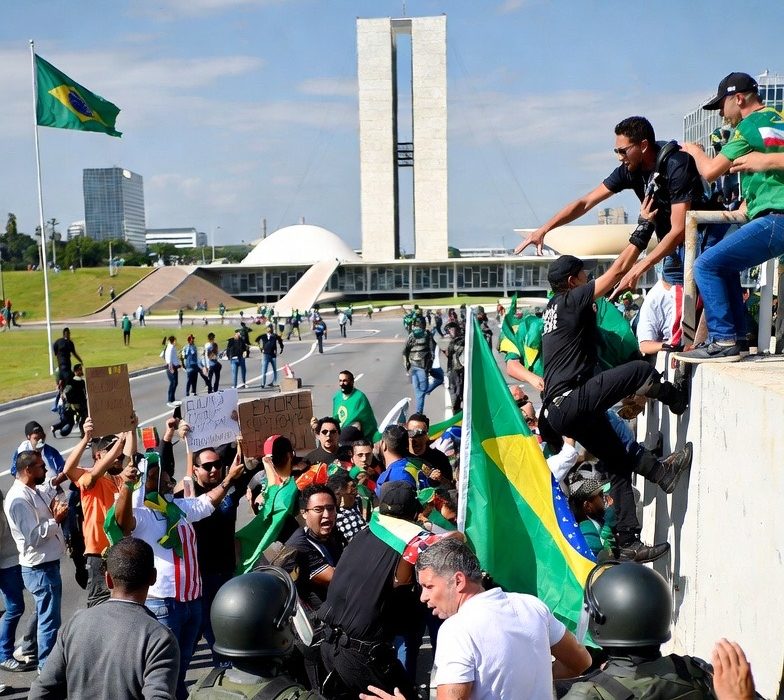
Three years after the events of January 8, 2023, when thousands of frustrated citizens gathered in Brasília to protest what they saw as electoral irregularities, Brazil finds itself grappling with a profound crisis of justice. What began as chaotic demonstrations has been transformed into a sweeping crackdown, resulting in the imprisonment of former President Jair Bolsonaro and dozens of his associates. Bolsonaro, a 70-year-old former army captain, is currently serving a staggering 27-year sentence in a special cell at the Federal Police headquarters in Brasília, convicted of leading a supposed coup plot. Yet, a closer examination reveals a troubling lack of concrete evidence, selective prosecution, and the central role of one Supreme Court justice, Alexandre de Moraes, whose actions raise serious questions about impartiality and ties to other institutions.
#### The Case Against Bolsonaro and His Supporters: Built on Sand?
Bolsonaro was convicted in September 2025 by a panel of the Supreme Federal Court (STF) on charges including attempting to violently abolish democracy and leading an armed criminal organization. The sentence—27 years and three months—was upheld, leading to his imprisonment starting in late 2025 after he allegedly tampered with an ankle monitor during prior house arrest. Prosecutors claimed he orchestrated plans to overturn the 2022 election results, including extreme allegations of assassination plots against President Lula and Justice Moraes himself.
However, critics argue that the evidence is largely circumstantial: public speeches questioning election integrity, meetings with military leaders who ultimately refused to act, and the spontaneous storming of government buildings by supporters on January 8. No direct orders for violence from Bolsonaro have been proven, and the plot allegedly “failed” because key military commanders rejected it. Many of the convicted, including generals like Augusto Heleno and Paulo Sérgio Nogueira, received lengthy sentences based on intercepted communications and testimony that supporters say was coerced or misinterpreted.
As of January 8, 2026, around 23 individuals from the core coup plot group remain detained, with 14 in closed-regime facilities like Bolsonaro. For the broader January 8 participants, over 800 have been convicted, but many sentences stem from presence at protests or social media activity rather than acts of violence. Supporters call these “political prisoners,” pointing out that while some vandalism occurred, the events pale in comparison to historical unrest that went unpunished. The asymmetry is stark: left-wing figures involved in past corruption or protests have often received leniency, while right-wing demonstrators face decades behind bars.
#### Alexandre de Moraes: The Architect of Controversy
At the heart of these prosecutions is Justice Alexandre de Moraes, who has single-handedly overseen most investigations, trials, and detentions related to January 8 and alleged coup activities. Moraes has been accused of overreach, issuing preventive arrests, blocking social media accounts en masse, and interpreting laws broadly to target Bolsonaro’s circle.
In 2025, the U.S. government initially sanctioned Moraes under the Global Magnitsky Act for alleged human rights abuses, including arbitrary detentions and suppression of speech. These sanctions extended to his family and related entities, reflecting international concern over his methods. Although lifted by December 2025 amid diplomatic shifts, the episode highlighted perceptions of bias.
Critics also point to Moraes’ investigations into military connections, probing officers who hesitated during the events or expressed sympathy for protesters. No formal condemnation of Moraes has occurred in Brazil, but his aggressive approach—combining roles as investigator, prosecutor, and judge in many cases—has fueled accusations of vendetta rather than justice. His denials of house arrest requests for aging or ill detainees, including Bolsonaro’s recent health episodes (hernia surgeries and falls in prison), underscore a perceived hardness.
#### A Nation Divided: Toward Amnesty or Further Polarization?
Calls for amnesty grow louder, with right-wing leaders pushing for reconciliation and release of those deemed non-violent. A bill to reduce sentences passed Congress in late 2025 but faces hurdles. Without it, Bolsonaro may spend his remaining years incarcerated, a fate supporters view as revenge for challenging the establishment.
Brazil’s democracy demands fair trials, solid proof, and equal treatment under the law. When convictions rely on inference over irrefutable evidence, and one justice dominates the process amid military probes and international scrutiny, trust erodes. The January 8 detainees deserve review—not as threats, but as citizens whose rights may have been trampled in the name of protecting institutions. True healing requires acknowledging flaws in the pursuit of accountability, lest justice become the very authoritarianism it claims to fight.