


Shocking Revelation in the INSS CPMI: Federal Police Delegate Admitted Receiving Orders to Withhold Informations
By Hotspotnews
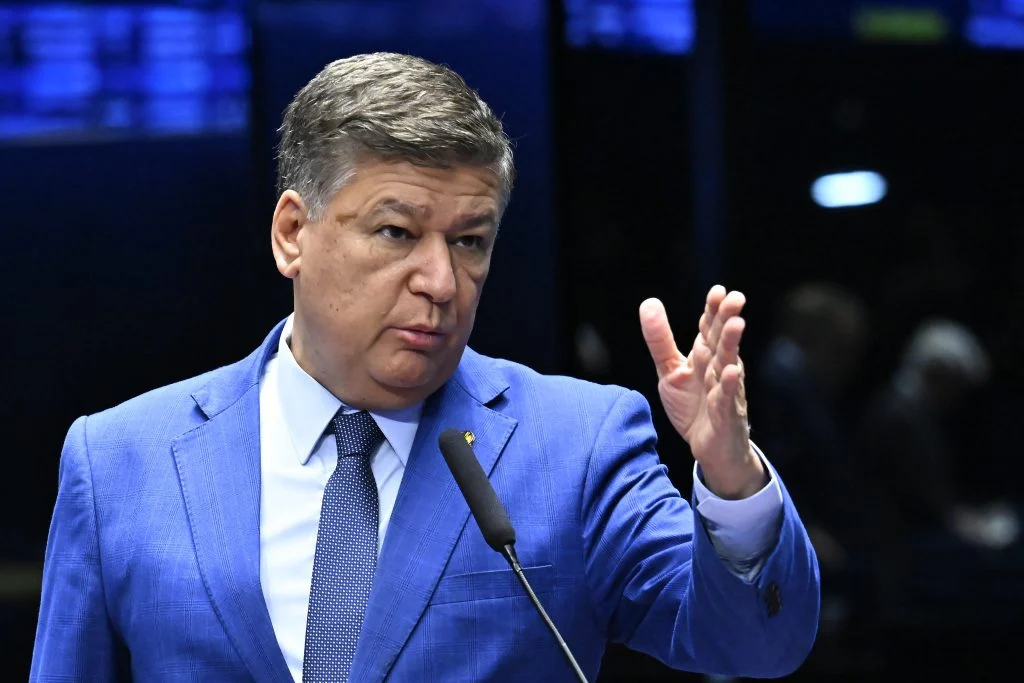
In an interview on TV Cultura’s Roda Viva program, Senator Carlos Viana (Podemos-MG), president of the Mixed Parliamentary Inquiry Commission (CPMI) investigating multi-billion-dollar frauds at the National Social Security Institute (INSS), revealed one of the most serious allegations since the commission began its work. According to Viana, a Federal Police delegate confessed in a private conversation that he had received explicit instructions from superiors not to provide complete information to the CPMI, thereby restricting institutional cooperation.
The case centers on massive fraud schemes estimated in the billions of reais, involving organized criminal networks that exploited improper deductions from benefits paid to retirees and pensioners—often through fraudulent payroll loans and other coordinated practices. The commission was established to investigate these irregularities and identify those responsible, but it has encountered repeated obstacles, including judicial decisions that limit access to seized materials and restrict key testimonies.
Faced with this reported obstruction, Supreme Federal Court (STF) Minister André Mendonça—who oversees related actions—ordered the creation of an independent investigative nucleus. This separate team, composed of Federal Police agents and officials from the Comptroller General of the Union (CGU), was tasked with analyzing the seized evidence without internal filters or interference, ensuring the probe could proceed autonomously and impartially.
Viana described the measure as an effort to safeguard the integrity of the process amid institutional pressures and resistance. He noted that the delegate appeared reluctant to fully cooperate with the commission, citing directives from higher-ups—an indication of possible attempts to shield higher levels of the investigative structure.
The INSS CPMI has made significant progress on several fronts, leading to preventive arrests of business owners, former executives, and other individuals involved in earlier phases of the operation. However, as investigations approach influential figures and potential connections to the financial and political systems, resistance has intensified. Recent STF rulings—including restrictions on access to confidential data of figures like banker Daniel Vorcaro (owner of Banco Master)—have fueled debates about the balance between protecting individual rights and the public’s right to uncover the truth behind the embezzlement.
The episode recounted by Senator Viana highlights persistent concerns about the autonomy of Brazil’s anti-corruption institutions. When a public official admits to following orders to withhold information from a congressional commission, it exposes the risk that private or corporate interests may interfere with the course of justice. Mendonça’s establishment of the parallel nucleus is viewed by some as a positive step toward course correction, but it also signals that systemic issues remain within law enforcement itself.
The public is watching closely, as INSS frauds are not mere figures in reports—they represent resources stolen from retirees who depend on these payments to survive. Viana’s push to extend the commission’s work reflects the understanding that justice for the victims demands persistence, even against powerful opposition.
As the independent nucleus advances its analysis, Brazil awaits a truth that is not once again suppressed by top-level directives. The delegate’s revelation serves as a stark warning: fighting corruption requires not only police operations but also institutional courage to break cycles of protection and blind obedience.