


The Alarming Economic Imprint of China in Brazil: A Conservative Wake-Up Call
By Hotspotnews
Under the administration of President Luiz Inácio Lula da Silva, Brazil finds itself increasingly entangled in the web of Chinese economic influence—a relationship marketed as mutually beneficial partnership but increasingly resembling a dangerous dependency that threatens national sovereignty, local jobs, and core Brazilian values.
What began as commodity trade has morphed into something far more invasive. Chinese companies now dominate key sectors, pouring billions into infrastructure, energy, ports, electric vehicles, and even everyday services like food delivery and ride-sharing. BYD, the Chinese electric vehicle giant, has built a massive factory in Camaçari, Bahia, on the site of a former Ford plant—a symbolic replacement of American industry with Beijing’s footprint. Promoted as a job creator, the project promised thousands of positions for Brazilians. Instead, investigations revealed shocking conditions for hundreds of imported Chinese workers: excessive 16-hour shifts, degrading housing, passport confiscation, and practices Brazilian authorities classified as analogous to modern slavery. A major Washington Post exposé in March 2026 detailed how these laborers, brought in to construct China’s EV future in Latin America, endured armed surveillance and exploitative contracts—conditions that echo the very authoritarian model conservatives have long warned against.
Despite settlements, fines, and worker repatriations, the pattern persists. Chinese firms continue importing their own labor, sidelining Brazilian workers in projects touted as engines of reindustrialization. This is no accident; it’s a deliberate strategy. Beijing floods markets with subsidized goods and investments, undercutting local manufacturers while embedding control through supply chains and digital platforms. Apps like Didi and others capture vast amounts of consumer data, raising fears of surveillance exported alongside the technology.
The economic imprint runs deeper. China now absorbs a massive share of Brazil’s agricultural exports—soy, beef, corn—making the nation’s prosperity hostage to Beijing’s demand. A slowdown in China, or a shift in its priorities, could devastate Brazilian farmers and exporters overnight. Meanwhile, strategic assets fall under Chinese influence: ports like Paranaguá and Açu see major investments from state-linked operators, while infrastructure deals in energy and railways position China as gatekeeper of Brazil’s logistics. Even space facilities in Bahia draw scrutiny for potential dual-use military applications, as highlighted in U.S. congressional reports.
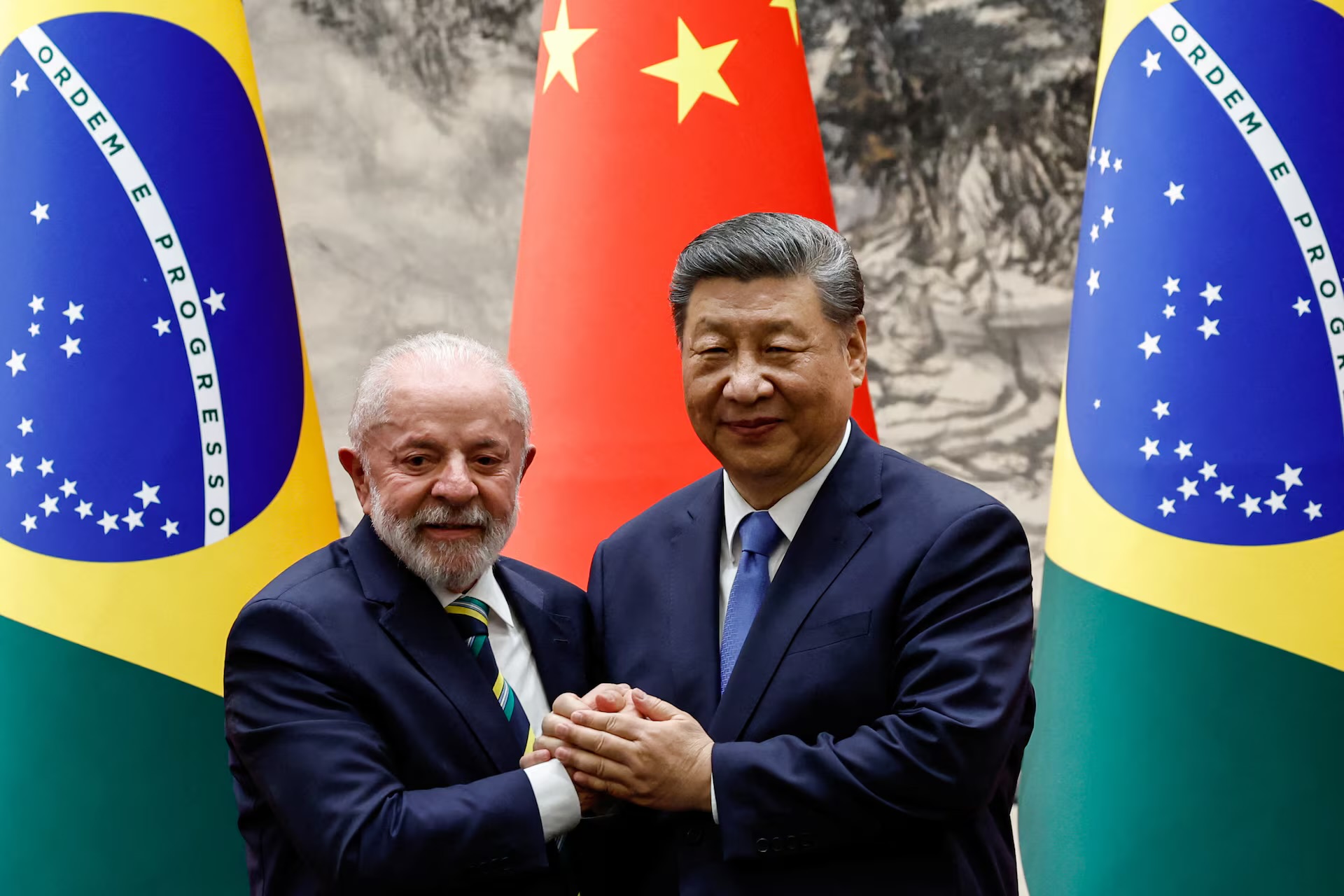
Lula frames this as “multi-alignment” and defense of the Global South, proudly touting BRICS summits and partial trade overtures with Beijing. Yet conservatives see the reality: a slow erosion of sovereignty dressed in diplomatic rhetoric. Brazil avoids formal Belt and Road membership but acts like an extension of it—trading strategic autonomy for short-term cash infusions and photo-ops with Xi Jinping. The result? Overconcentration of trade, vulnerability to Chinese economic coercion, and a quiet handover of influence that weakens Brazil’s ability to chart its own course.
This is not partnership; it’s predation. True sovereignty demands diversification—stronger ties with free-market democracies, protection of domestic industries, and vigilance against foreign powers that exploit rather than empower. Brazil’s conservatives must demand accountability: scrutinize every deal, prioritize Brazilian workers, and reject the illusion that economic submission equals independence.
The flag still flies high, but if current trends continue, decisions affecting Brazil’s future will increasingly be made not in Brasília, but in Beijing. It’s time to reverse course before the imprint becomes irreversible.