


Brazil’s Deepening Ties with Iran Collide with Trump’s Economic D-Day: Potential Fallout for Brasília
By Hotspotnews
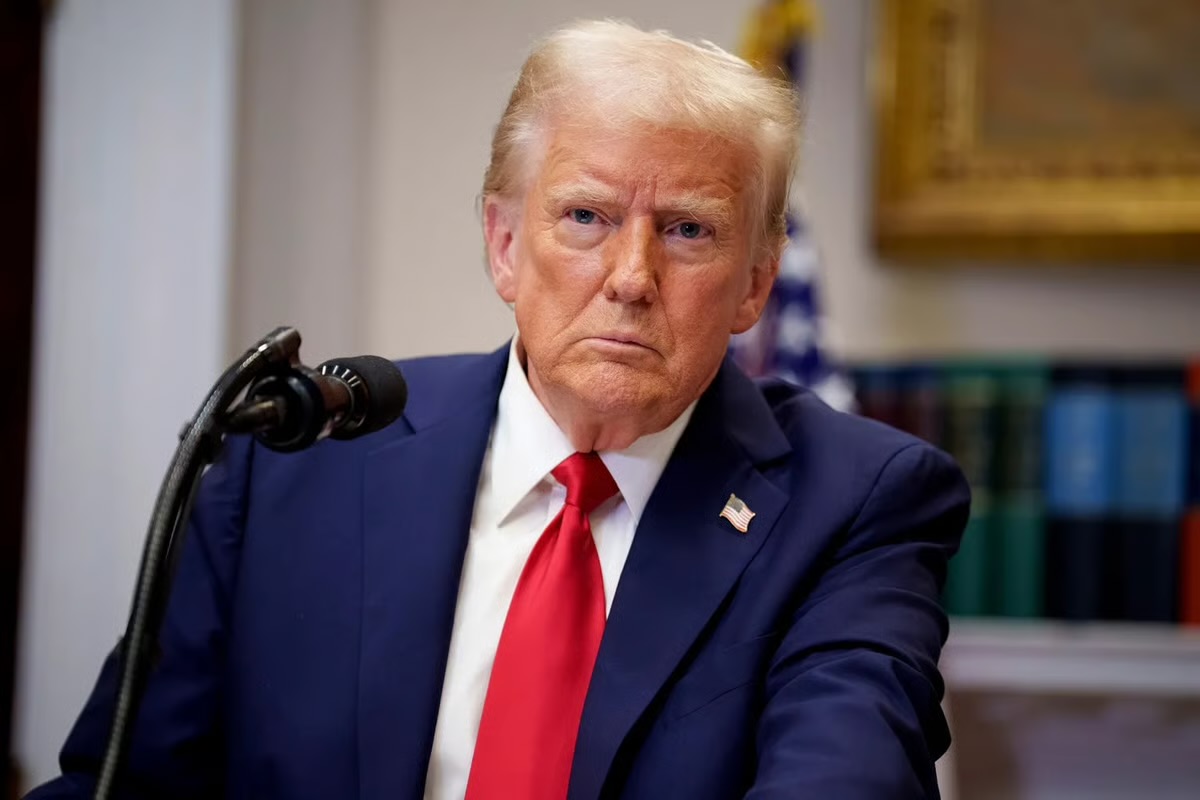
In mid-August 2026, President Donald Trump announced what he called the most crushing economic operation ever taken against any country, targeting the Islamic Republic of Iran. In a forceful statement, Trump declared economic warfare and isolation on an unprecedented scale, warning that any nation allowing its financial institutions, businesses, airports, or government entities to provide a lifeline to Tehran would face tremendous economic consequences. Oil smuggling, financial swap lines, cash transfers, exchange houses, ship registries, and front companies must end immediately, he stated. The measures were framed as an “Economic D-Day,” with a call for allies to join the United States in isolating and defeating the Iranian threat.
U.S. Treasury Secretary Scott Bessent reinforced the message, describing the campaign as the greatest coordinated economic isolation in world history. The approach, he indicated, would involve telling partners they are either with the United States or against it, with full enforcement against those continuing business with Iran, including oil purchases or money transfers. Details of the precise tools were expected to be outlined further in the coming days.
Brazil finds itself directly in the potential crosshairs. Official data from Brazil’s Ministry of Development, Industry, Trade and Services show that Brazilian exports to Iran rose in the first half of 2026 to approximately US$1.34 billion, up about 15 percent from the same period in 2025, while imports from Iran remained modest at around US$29.5 million. For full-year 2025, Brazilian exports to Iran reached roughly US$2.9 billion, dominated by agricultural commodities—primarily corn, soybeans, soybean meal, and sugar. These food shipments represent a tangible economic support for Iran amid its ongoing conflict and sanctions pressure. Iran is also a fellow BRICS member, and bilateral discussions have continued on expanding cooperation through local-currency transactions, barter arrangements, and private-sector support.
Compounding the visibility of these ties was a high-profile meeting on August 12, 2026. Dilma Rousseff, former Brazilian president and current president of the New Development Bank (NDB)—the multilateral lender created by the BRICS countries—met with Abdolnaser Hemmati, Governor of Iran’s Central Bank, on the sidelines of the BRICS Finance Ministers and Central Bank Governors meeting in Jaipur, India. According to Iranian official statements, Rousseff emphasized the importance of Iran’s participation in the NDB and its potential to contribute to regional and international cooperation. Both sides agreed to continue technical consultations aimed at Iran’s membership in the bank and enhanced access to its financing facilities. Hemmati indicated that membership would occur soon. Parallel talks between Iranian and Brazilian economic officials focused on a joint roadmap to boost bilateral trade and agricultural exchanges.
These developments occur against the backdrop of already strained U.S.-Brazil commercial relations. The Trump administration has imposed 25 percent tariffs on a range of Brazilian exports under Section 301 investigations into alleged unfair trade practices, affecting billions of dollars in goods and prompting Brazilian countermeasures and credit support packages for impacted firms. Additional secondary measures linked to Iran could intensify this pressure.
Likely Consequences for Brazil
If the United States follows through on its warnings, Brazil could face several layers of economic repercussions. First, secondary sanctions or expanded tariffs could target Brazilian entities, banks, or companies involved in trade or financial facilitation with Iran. Agricultural exporters—the backbone of Brazil’s shipments to Tehran—might confront restricted access to U.S. markets or financing, or pressure to curtail sales. Given that Brazil’s trade with the United States far exceeds its commerce with Iran (U.S. bilateral flows in recent periods running into the tens of billions of dollars annually), the cost-benefit calculation heavily favors compliance with Washington over continued expansion with Tehran.
Brazilian financial institutions could encounter difficulties in dollar-clearing or correspondent banking relationships if perceived as providing lifelines. Participation in or facilitation of Iran’s access to NDB financing might draw particular scrutiny, potentially complicating the bank’s broader operations or Brazil’s role within it. Existing tariff disputes could escalate, with Iran-related secondary measures layered onto the current 25 percent duties, further eroding Brazilian export competitiveness in the American market and weighing on investment flows.
Domestically, the agribusiness sector, a major employer and source of foreign exchange, stands exposed. Any forced reduction in Iranian purchases could require rapid redirection of corn and soy volumes, while higher overall U.S. trade barriers would raise costs for Brazilian industry. Geopolitically, the episode tests President Luiz Inácio Lula da Silva’s multi-alignment strategy, which seeks balanced relations with the Global South, BRICS partners, and traditional Western markets. Brazilian media, including Gazeta do Povo, have already noted that the country’s expanded partnership with Iran places it in the sights of Trump’s economic campaign.
Iranian officials have dismissed the U.S. threats as diversions or “economic terrorism,” while Brazil has historically defended sovereign commercial choices. Yet the asymmetry in market size and the demonstrated willingness of the Trump administration to use tariffs and isolation tools suggest that continued support—whether through commodity trade or institutional financial channels—carries rising risks. Details of enforcement remain forthcoming, but the direction is clear: countries facilitating Iran’s economic survival face deliberate and potentially severe costs.
Sources drawn from President Trump’s public statement, remarks by Treasury Secretary Scott Bessent reported via major financial outlets, Iranian government and central bank statements, Brazilian Ministry of Development, Industry, Trade and Services trade data, and contemporaneous reporting by outlets including Gazeta do Povo, Reuters, and others covering the BRICS meetings and bilateral economic discussions.
#Brazil #Iran #Trump #EconomicIsolation #BRICS #DilmaRousseff #NDB #USBrazilTrade #Agribusiness #SecondarySanctions #ForeignPolicy