


Brazil’s Tariff Threats Expose the Cost of Defying American Leadership
By Hotspotnews
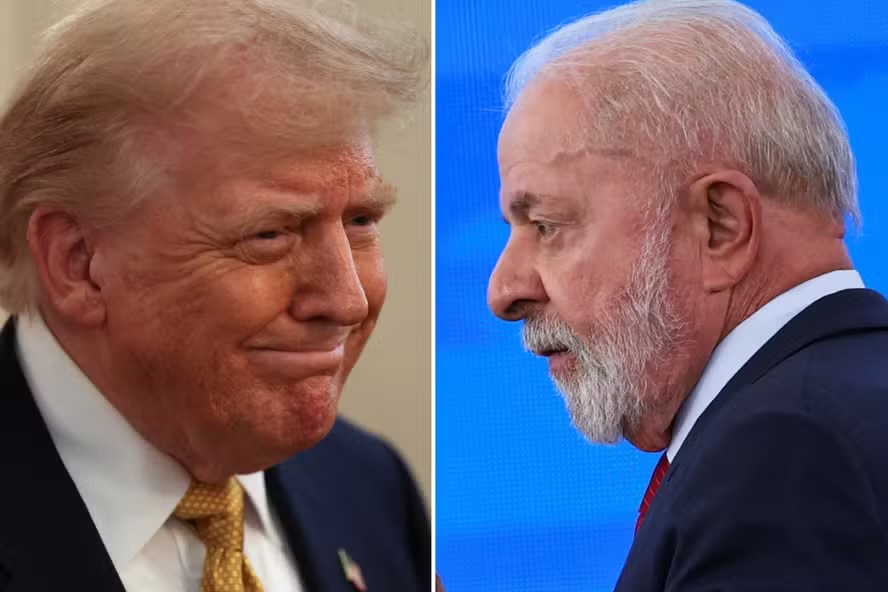
Brazil’s government under President Luiz Inácio Lula da Silva has formally begun the process of retaliating against United States tariffs. Washington imposed a 25 percent duty on a range of Brazilian goods earlier this year, along with additional penalties tied to forced-labor enforcement failures. Lula’s administration is now activating its Reciprocity Law, raising the prospect of countermeasures that could extend beyond simple tariffs into patent suspensions, restrictions on American services, and other barriers.
This is not a routine trade disagreement. It reflects a deeper realignment in the Western Hemisphere. The United States is restoring order through initiatives like the Shield of the Americas, which prioritizes partners committed to dismantling drug cartels, securing borders, and rejecting the failed socialist model that has repeatedly impoverished Latin America. Governments that continue cozying up to left-wing orthodoxy or looking the other way on transnational crime are discovering that preferential access to the American market is no longer automatic.
The tariffs target specific Brazilian practices long flagged as unfair—ranging from digital payment systems that disadvantage U.S. firms, to intellectual property shortcomings, ethanol market barriers, and environmental enforcement gaps. These measures are tools of leverage, not punishment for its own sake. They signal that the free ride for regimes indifferent to American interests is ending.
Consequences for Brazil
Brazil stands to absorb the sharper immediate blow. The United States remains its second-largest export destination after China, accounting for roughly a tenth of total Brazilian overseas sales. Key sectors already feeling the pressure include footwear, furniture, wood products, certain machinery, sugar, and ethanol. Industry estimates place the value of affected exports in the range of several billion dollars annually. Footwear manufacturers, for whom the U.S. market is especially important, have already revised export forecasts downward. Wood, pulp, and some steel-related products have seen sharp volume declines.
Brazilian exporters face higher costs, lost market share, and pressure to scramble for alternative buyers. While China has absorbed some redirected volume, it does not seamlessly replace the American market’s scale, quality standards, or payment reliability for many industrial goods. Domestic inflation risks rise if retaliation disrupts imported American inputs—machinery, pharmaceuticals, chemicals, and refined products that Brazilian industry relies upon. Political timing compounds the problem: Lula faces reelection pressures, and visible economic pain in export-oriented regions could erode support among workers and businesses who prefer open markets over ideological confrontation.
Longer-term, Brazil risks deeper isolation from the emerging network of hemispheric partners prioritizing security and market-oriented policies. Continued friction may deter U.S. investment and technology transfers that Brazilian firms need to modernize.
Consequences for the United States
American costs are real but more manageable. U.S. importers and consumers of Brazilian goods—certain agricultural products, industrial materials, and consumer items—will face higher prices or the need to shift suppliers. Some U.S. businesses that rely on Brazilian inputs may see margins squeezed in the short run. Retaliation could also hit American exporters of aircraft parts, pharmaceuticals, machinery, and fuels, sectors where the United States runs a consistent surplus with Brazil.
Yet the U.S. economy is vastly larger and more diversified. American firms can source alternatives from other Latin American partners, Asia, or domestic production more readily than Brazilian exporters can replace the U.S. market. The bilateral trade relationship has long favored the United States with a substantial surplus; reducing dependence on Brazilian goods in targeted categories strengthens rather than weakens that position. Moreover, the strategic gains—greater leverage over regional security, reduced tolerance for cartel-enabling environments, and pressure against socialist governance—outweigh the localized commercial friction.
Who Hurts More?
Brazil will hurt more. Relative economic size matters. What registers as a manageable adjustment in the $28-trillion American economy lands harder in Brazil’s smaller, more commodity- and export-sensitive structure. Specific Brazilian industries tied to the U.S. market face concentrated job and revenue losses that are harder to absorb. Retaliatory measures risk a classic self-inflicted wound: restricting access to high-value American technology and capital goods while failing to force policy changes in Washington.
History shows that smaller economies challenging larger ones on trade rarely win pure confrontations when the larger partner has clear alternatives and strategic resolve. Lula’s government can posture with nationalist rhetoric and credit lines for affected sectors, but those are temporary palliatives. Sustainable prosperity requires reliable access to the world’s most important consumer market and alignment with partners who share interests in security and growth.
The United States is demonstrating that it will no longer subsidize policies that undermine its own interests or the stability of the hemisphere. Brazil’s leaders face a choice: adapt to the new reality of reciprocal accountability or absorb the costs of continued resistance. The data and the structure of the relationship both suggest the heavier burden will fall on Brasília.