

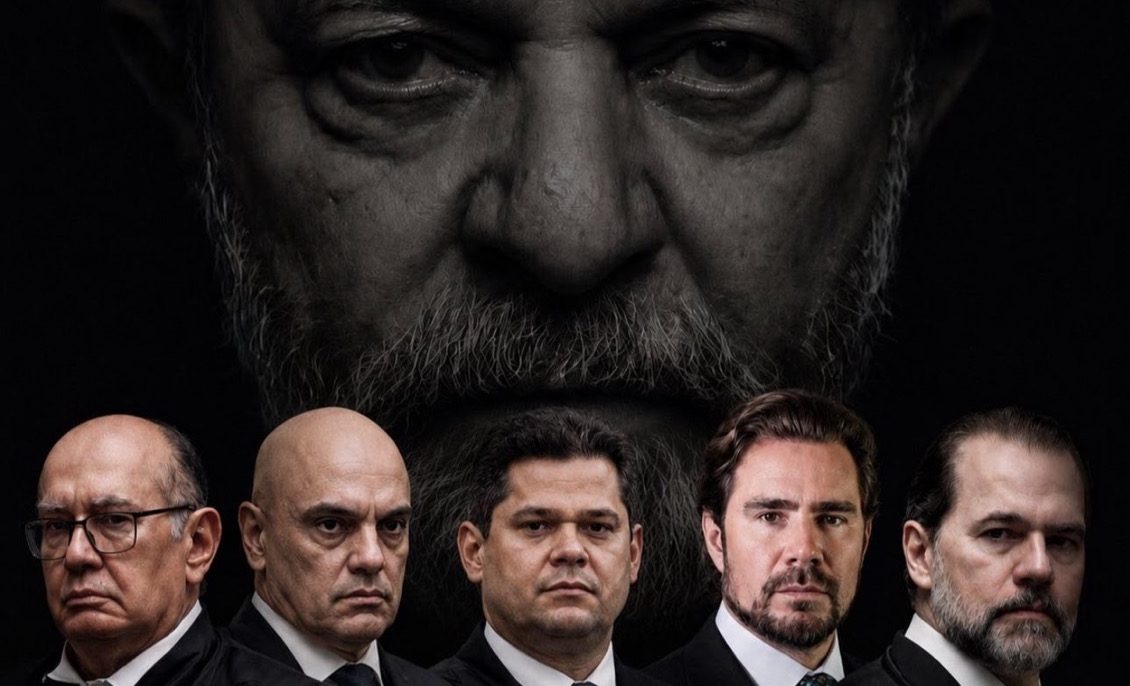

The STF’s Dark Horse Trap: How Brazil’s Judicial Elite is Cornering Bolsonaro-Appointed Ministers to Shield Their Own Scandals
In the opaque halls of Brazil’s Supreme Federal Court (STF), a familiar drama is unfolding—one that exposes the deep rot of selective justice and institutional capture. While the left cheers from the sidelines, the facts reveal a coordinated effort by powerful ministers and their allies to ensnare the Court’s conservative-leaning voices, particularly Ministers André Mendonça and Kassio Nunes Marques, the two justices appointed by former President Jair Bolsonaro.
At the center is the so-called “Dark Horse” project—a biopic chronicling Bolsonaro’s rise. Leaked messages show Senator Flávio Bolsonaro engaging with banker Daniel Vorcaro, owner of Banco Master, to secure financing for the film. Tens of millions of reais changed hands. Vorcaro, now imprisoned amid massive fraud allegations at his bank, treated the project with urgency after pressure from the Bolsonaros. Conservatives don’t shy from scrutiny: large financial dealings involving politicians deserve investigation. But context matters. This money flowed from a private banker to a private cultural project—not public funds or direct campaign coffers.
Enter the real scandal. The same Vorcaro struck a far more suspicious deal: a R$129 million contract with the law firm of Viviane Barci de Moraes, wife of Minister Alexandre de Moraes. This eye-watering sum—roughly R$3.6 million per month—dwarfs typical arrangements for a firm of its size. Vorcaro himself later suggested to authorities it was a vehicle to “get close” to the powerful minister, with little actual legal work performed. Yet Moraes continues to insert himself into related cases, refusing to recuse despite glaring conflicts that would disqualify any lesser judge. This is the same Moraes who has weaponized “fake news” inquiries and censorship orders against conservative voices for years.
When Deputy Lindbergh Farias (PT) filed a criminal complaint over the Dark Horse transfers, it landed predictably with Moraes. The Prosecutor-General’s Office, under Paulo Gonet, rightly noted the obvious connection to the broader “Caso Master” fraud probe—already under Mendonça’s rapporteurship. By standard rules of judicial precedence (prevenção), the matter should shift to Mendonça. Instead of accepting this procedural outcome, Moraes resisted and kicked the decision upstairs to STF President Edson Fachin. Meanwhile, Minister Gilmar Mendes took to national television on Roda Viva to publicly blast Mendonça for even entertaining a plea proposal from Vorcaro’s side—labeling it a “gross error” and blurring ethical lines by opining on an active case involving a colleague.
This is not organic justice. It’s a pincer movement: Moraes clinging to control over Bolsonaro-related matters, Gilmar applying public pressure to weaken Mendonça’s position, and the system directing politically radioactive evidence straight to the ministers seen as less hostile to the right. Mendonça and Nunes Marques—Bolsonaro’s appointees—face mounting pressure in an institution dominated by activists. The establishment wins either way by forcing them into impossible binds or painting them as biased if they demand due process.
Brazilian conservatives have long warned of an activist judiciary that acts as a de facto fourth branch—or rather, the dominant one—targeting elected leaders while shielding its own. Moraes’ wife’s massive contract with a fraud-implicated banker reeks of influence peddling. Gilmar’s TV intervention flouts basic judicial decorum. Gonet’s technical opinion, while procedurally sound, lands conveniently amid this frenzy. Together, they illustrate a Court more interested in settling political scores than delivering impartial rulings.
The truth is uncomfortable for all sides. Illicit financing, if proven, should face consequences regardless of party. But the glaring double standards—where Moraes evades scrutiny over R$129 million while hounding the Bolsonaro family—undermine any claim to fairness. This Dark Horse saga isn’t about one film. It’s about whether Brazil will ever escape the cycle of lawfare, where justice is reserved for the out-of-power and protection for the insiders.
Mendonça and Nunes Marques must stand firm on due process and evidence, not politics. The Brazilian people, exhausted by endless scandals and eroded liberties, deserve transparency: full disclosure of all contracts, recusal where conflicts exist, and an end to ministers playing prosecutor, censor, and kingmaker. Until the STF reforms itself, trust in Brazil’s institutions will continue to erode—one “coincidence” at a time.