

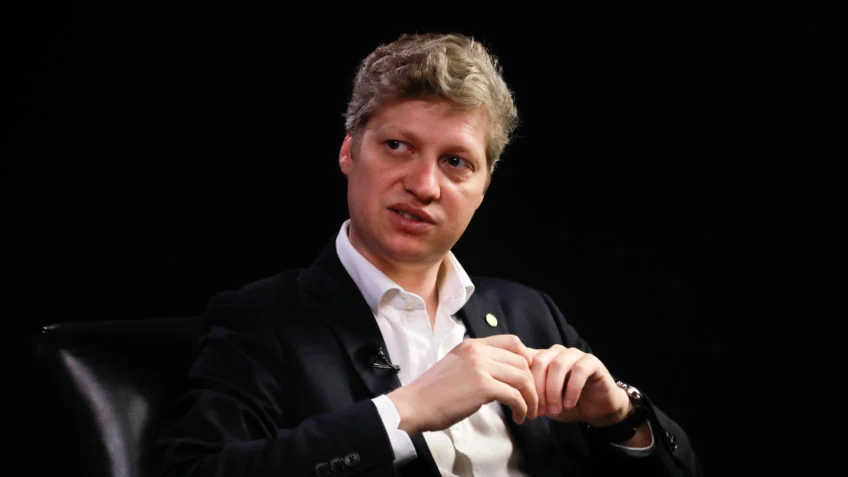

The Van Hattem case is a direct test of whether a deputy can still accuse a public official of misconduct from the floor of the Chamber without becoming a criminal defendant.
On 14 August 2024, federal deputy Marcel van Hattem (Novo-RS) spoke from the tribune. He displayed a photograph of Federal Police delegate Fábio Alvarez Shor and accused him of producing “relatórios absolutamente fraudulentos” that were used to justify the preventive arrest of Filipe Martins, a former presidential adviser. He called Shor an “abusador de autoridade,” said the reports were at minimum incompetent and irresponsible, and noted that a key document was an editable Word file found on Mauro Cid’s laptop. He closed by invoking his parliamentary immunity.
The Federal Police opened an inquiry. In November 2024 it indicted him for calúnia and injúria. In April 2026 the PGR filed a formal denúncia at the STF. The case (Inquérito 4978) is now before the First Chamber in a virtual judgment running from 20 to 30 November 2026. The relator is Flávio Dino. The Chamber will decide only whether to accept the denúncia and turn van Hattem into a réu. Conviction is not yet at issue, but acceptance alone would establish that a floor speech of this kind can ground a criminal action.
Article 53 of the 1988 Constitution states that deputies and senators are inviolable, civilly and criminally, for any of their opinions, words, and votes. The clause was written after the military dictatorship precisely to stop the use of criminal process against legislators for political speech. Floor speeches have historically received the strongest protection under that article. The PGR and the police reports argue that the immunity is not absolute and that van Hattem’s language crossed into personal insult and false accusation of crime. The defense answers that the statements were made in the exercise of the mandate, concerned the conduct of a public agent in an ongoing investigation, and therefore remain covered.
This is not the Daniel Silveira case. Silveira was convicted in 2022 for social-media videos containing threats and incitement against STF ministers; the Court held those statements fell outside immunity. Van Hattem spoke inside the Chamber about the professional acts of a police officer. Treating the two as interchangeable expands the Silveira precedent far beyond its facts and applies the narrowest reading of immunity to the setting where the Constitution’s protection is meant to be widest.
The procedural choices reinforce the substantive pressure. Van Hattem’s lawyer, Alexandre Wunderlich, asked that the judgment be moved to a physical session so the defense could make oral argument on the immunity question. Dino denied it. The Conselho Federal da OAB then filed its own request for a presencial hearing and asked to participate as an assistant, limited to defending lawyers’ right to sustentação oral. The OAB was careful to say it was not endorsing van Hattem’s political or legal thesis. As of the start of the virtual session, the request had not altered the format.
The selective pattern is difficult to ignore. Strong public statements by the President about opposition figures have not produced parallel indictments for crimes against honor. When the same Court and the same police apparatus treat criticism of their agents as calúnia while leaving other political speech untouched, the process functions as lawfare: criminal procedure used to raise the cost of opposition activity. The chilling effect is immediate. Deputies who might otherwise document irregularities in police reports or judicially supervised investigations will now weigh the risk of an STF inquiry before they speak. The Chamber’s Ethics Council, the ordinary internal remedy for excesses of tone, is bypassed. The voter, who can remove a deputy at the next election, is displaced by a judicial panel.
If the denúncia is received, the precedent travels. Future floor speeches that name officials and allege misconduct become potential criminal cases. Congress loses the last institutional space in which its members were supposed to be able to speak without prior clearance from the judiciary. That is not the ordinary operation of the rule of law. It is the subordination of legislative oversight to judicial permission.
#ImunidadeParlamentar #VanHattem #STF #Artigo53 #Lawfare #CongressoNacional