

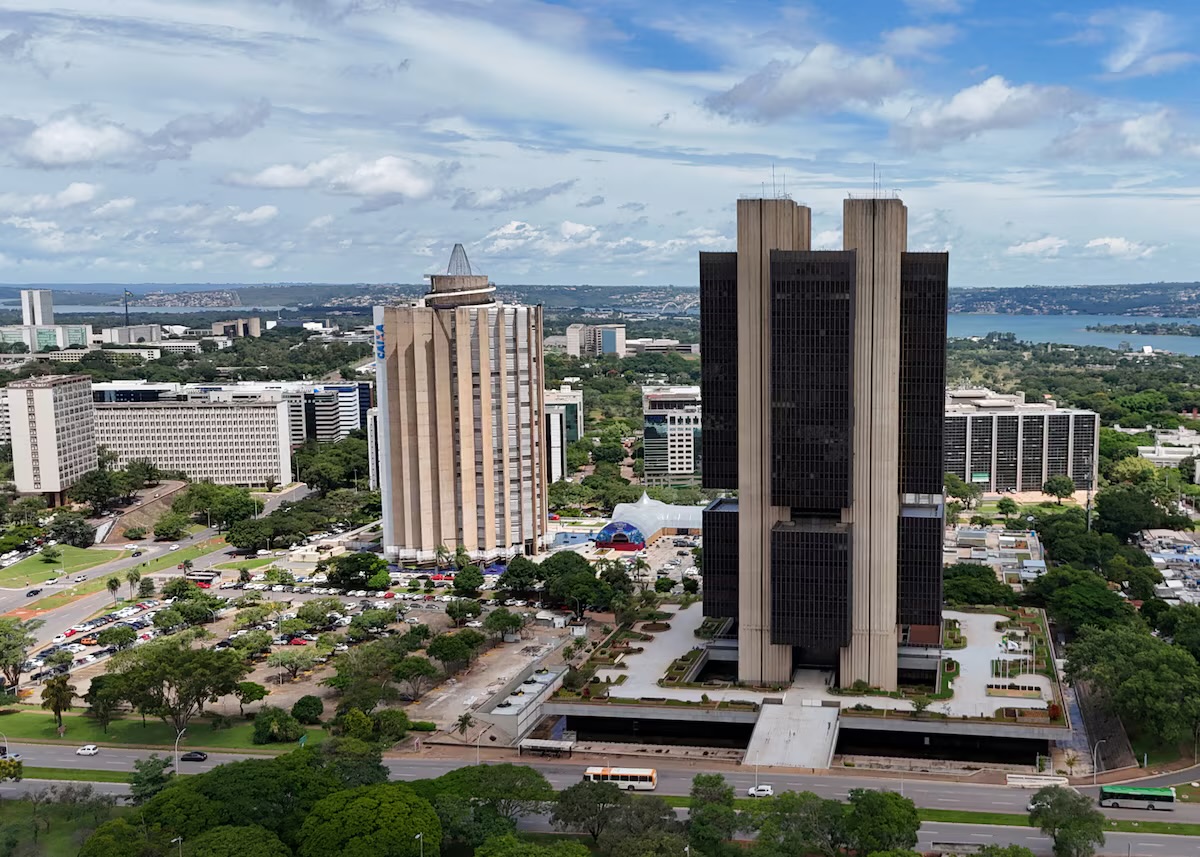

“Brazilian financial institutions see growing fiscal risks, cenbank survey shows,” drawing from relevant context:
This survey, which included responses from 91 financial institutions, highlights a growing concern about the country’s fiscal stability. Specifically, 52 institutions identified the fiscal situation as the primary risk to financial stability, an increase from 42 in the previous quarterly survey conducted in November 2024. This shift underscores mounting unease about Brazil’s economic trajectory, particularly in light of its fiscal policies and public debt dynamics.
The fiscal risks stem largely from Brazil’s rising public debt, fueled by high interest costs and increasing mandatory expenditures under President Luiz Inácio Lula da Silva’s administration. This has led to a situation where financial institutions are less willing to take risks, reflecting a more cautious stance on asset prices, funding access, and liquidity. The Central Bank has responded to these pressures by tightening monetary policy, with a 100 basis-point interest rate hike already signaled for its March 2025 meeting, following a similar increase in December 2024 that brought the benchmark Selic rate to 12.25%. This hawkish stance aims to curb inflation and stabilize the economy, but it also reflects the severity of the perceived fiscal challenges.
Globally, the survey notes that risks over the next three years are tied to U.S. economic policy and geopolitical conflicts, which could exacerbate Brazil’s vulnerabilities. For instance, potential U.S. policy shifts under President-elect Donald Trump, such as trade or fiscal measures, could strengthen the dollar and weaken the Brazilian real, further driving inflationary pressures and complicating debt management. Domestically, the government’s inability to reassure markets—evidenced by the real hitting a historic low in December 2024 despite Central Bank interventions—adds to the fiscal risk narrative. The market’s disappointment with a delayed and underwhelming fiscal adjustment package in late 2024 has only deepened these concerns.
On the economic cycle front, the survey aligns with broader projections of moderating growth. After a robust 2.9% GDP growth in 2023, driven by agricultural and hydrocarbon output, 2024 growth is expected to slow to 2.1%, with restrictive monetary policy, a lower fiscal deficit, and external shocks like the Rio Grande do Sul floods playing a role. While medium-term growth is projected to stabilize at around 2.5%, the worsening assessment from financial institutions suggests skepticism about the sustainability of this recovery amidst fiscal strain.
In summary, the Central Bank survey reveals a clear trend: Brazilian financial institutions are increasingly alarmed by fiscal risks tied to public debt and expenditure growth, compounded by a challenging economic outlook. This perception is driving a more conservative approach among these institutions and pressuring the Central Bank to maintain a tight monetary policy, even as global and domestic uncertainties loom large. The situation reflects a critical juncture for Brazil’s economy, where fiscal discipline and effective policy responses will be key to mitigating these risks.
The Hotspotorlando News