


Mexican Navy Tall Ship Crashes into Brooklyn Bridge, Killing Two
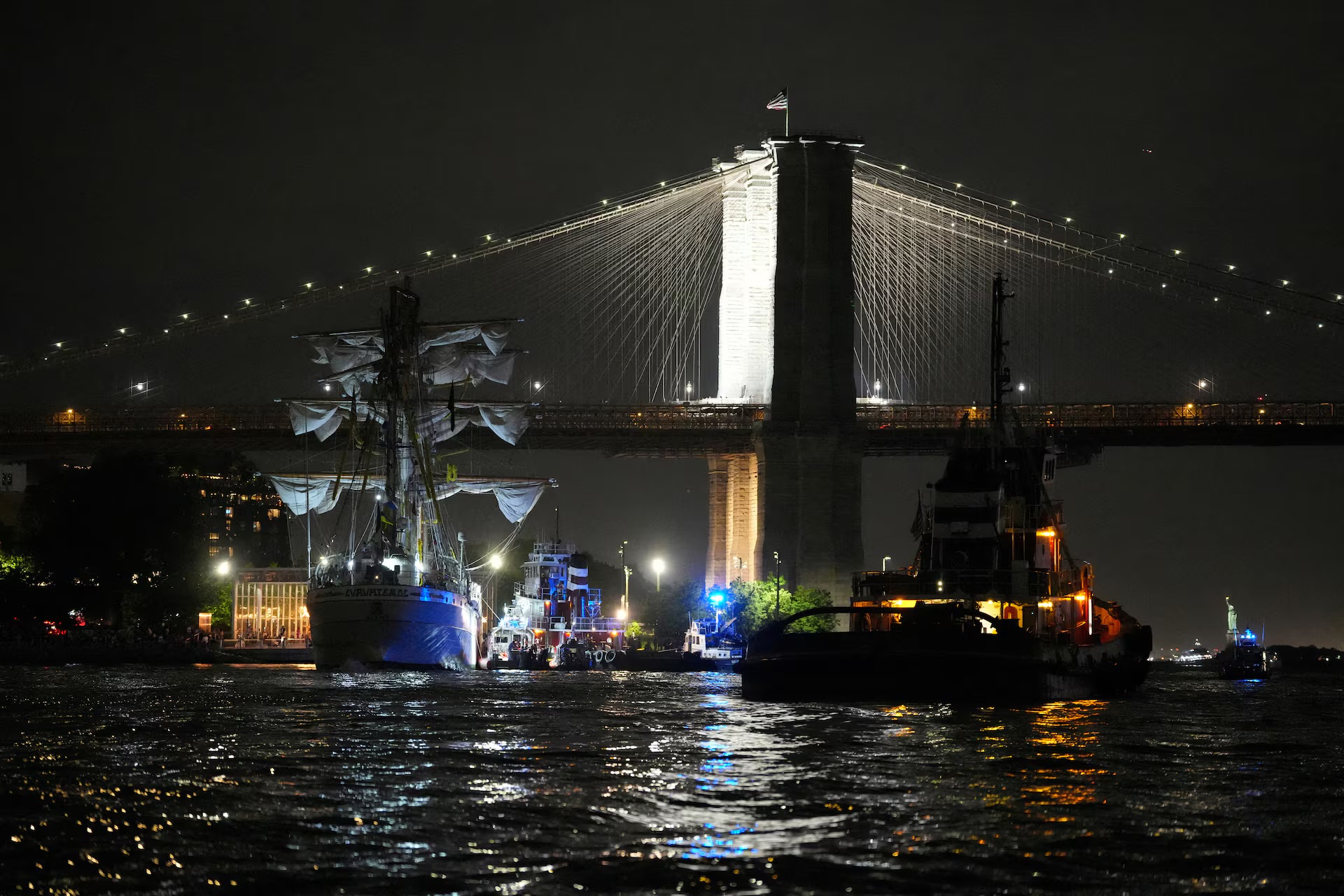
**New York City, May 17, 2025** – In a tragic and unprecedented incident, the Mexican Navy training ship *Cuauhtémoc*, a 297-foot three-masted barque, collided with the Brooklyn Bridge, resulting in the deaths of two crew members and injuries to 22 others, 11 critically. The disaster, which occurred yesterday afternoon, has stunned maritime and city officials, marking the first recorded instance of a sailing vessel striking the iconic 142-year-old suspension bridge.
The Incident
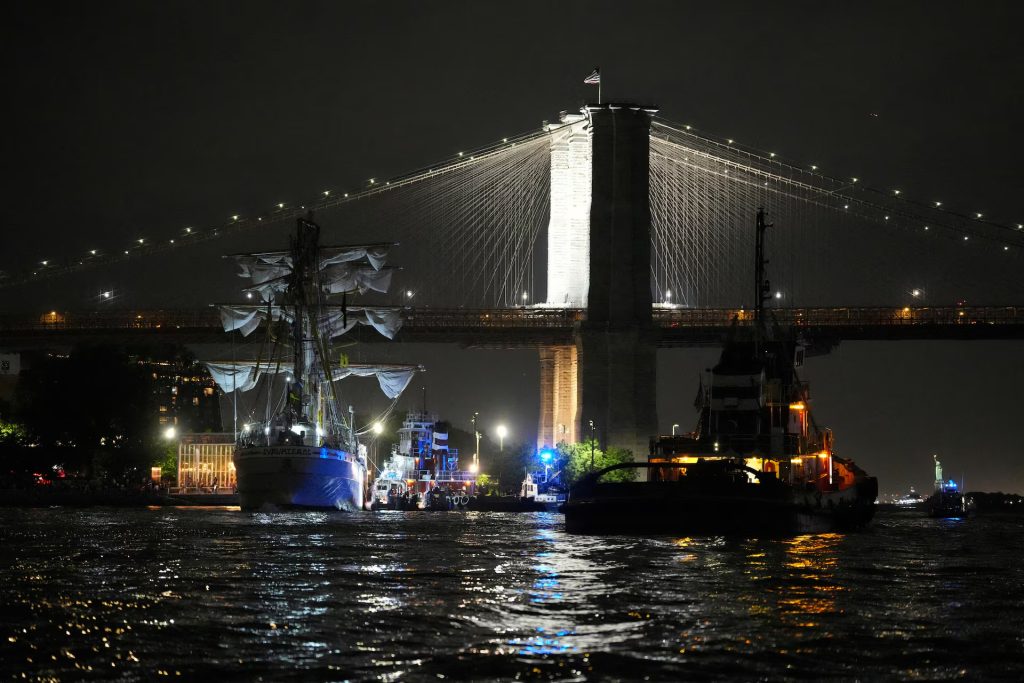
The *Cuauhtémoc*, a steel-hulled sail training vessel built in 1982, was departing from Pier 17 in Manhattan’s South Street Seaport as part of a goodwill tour celebrating Mexico’s 200th anniversary of independence. Carrying 277 crew members, including cadets and officers, the ship was bound for Iceland on a planned 254-day global voyage. At approximately 2:30 PM EDT, the vessel suffered a catastrophic mechanical failure, losing both power and steering. Drifting backward in the East River’s strong currents, the *Cuauhtémoc* veered uncontrollably toward the Brooklyn Bridge.
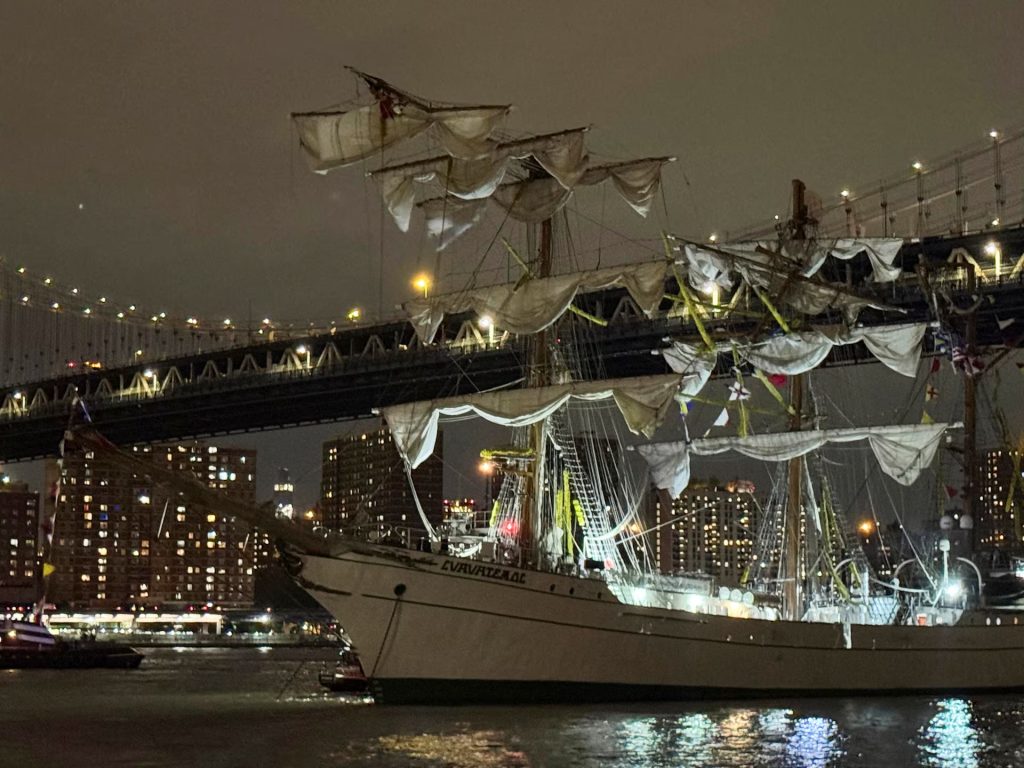
The ship’s three masts, towering up to 160 feet, were too tall to clear the bridge’s 135-foot clearance above the river. As the vessel collided with the bridge’s underside, the masts snapped, sending splintered wood and rigging crashing onto the deck. Sailors stationed in ceremonial positions on the masts were caught in the chaos, with some left dangling from safety harnesses. The two fatalities, both Mexican Navy personnel, were attributed to injuries sustained from falling debris. Eyewitness videos circulating on X captured the harrowing moment, showing the masts buckling and crew members scrambling amid the wreckage.
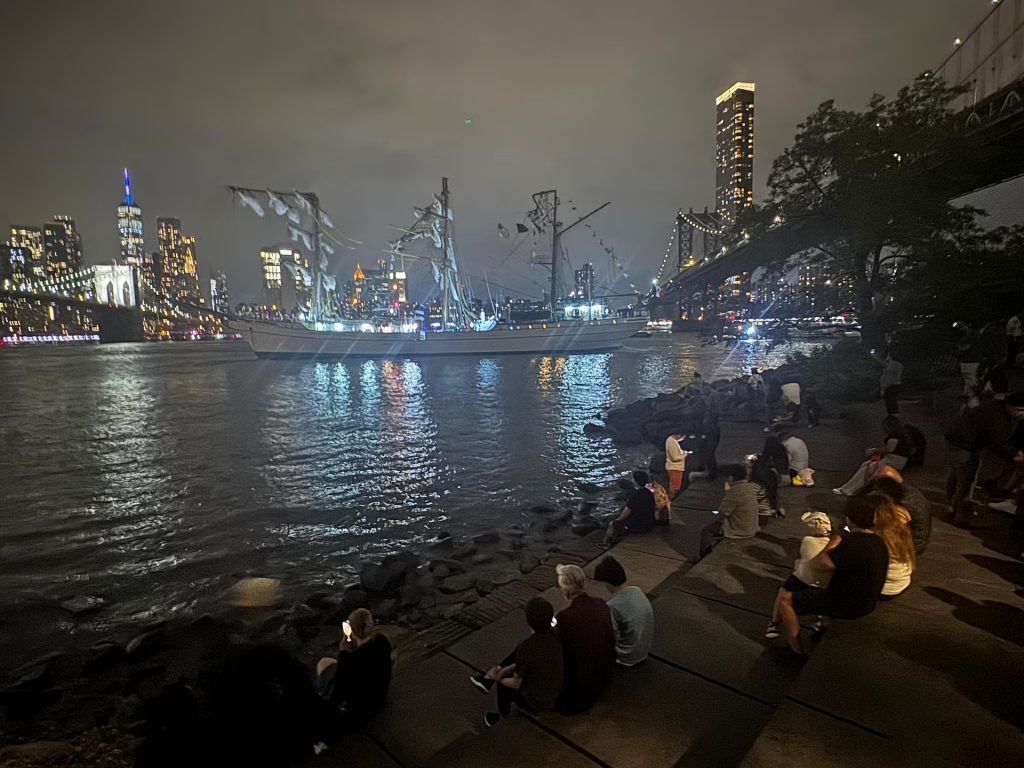
The ship subsequently drifted toward Pier 35, where it was secured with the assistance of harbor tugs and the U.S. Coast Guard. No crew members fell into the water, and no pedestrians or vehicles on the bridge were harmed. The Brooklyn Bridge, a National Historic Landmark, sustained no structural damage and was reopened to traffic and pedestrians after a thorough inspection by the New York City Department of Transportation.
Investigation and Response
The National Transportation Safety Board (NTSB) has launched an investigation, focusing on the *Cuauhtémoc*’s voyage data recorder to pinpoint the cause of the mechanical failure. Preliminary reports suggest a possible engine or steering system malfunction, though investigators are also examining maintenance records and crew training protocols. The Mexican Navy has pledged full cooperation, and the ship remains docked at Pier 35, **Is this the first time it happened?
This incident is the first recorded collision between a sailing vessel and the Brooklyn Bridge since its opening in 1883. While the bridge has faced minor incidents, such as vehicle accidents or maintenance-related issues, no prior event involved a tall ship or caused fatalities in this manner. Historical records and maritime archives, including those reviewed from web sources, confirm no similar accidents involving sailing ships striking the bridge’s structure. The East River’s heavy maritime traffic has occasionally led to collisions with piers or other vessels, but the Brooklyn Bridge’s height and design have historically prevented such impacts from tall-masted ships.
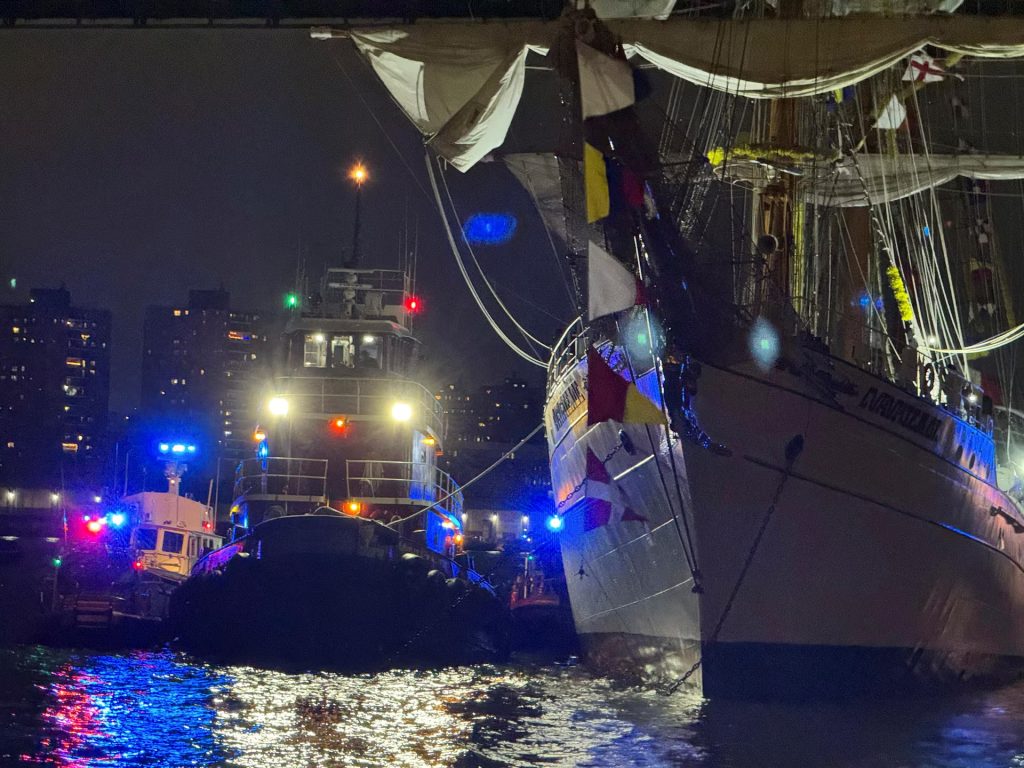
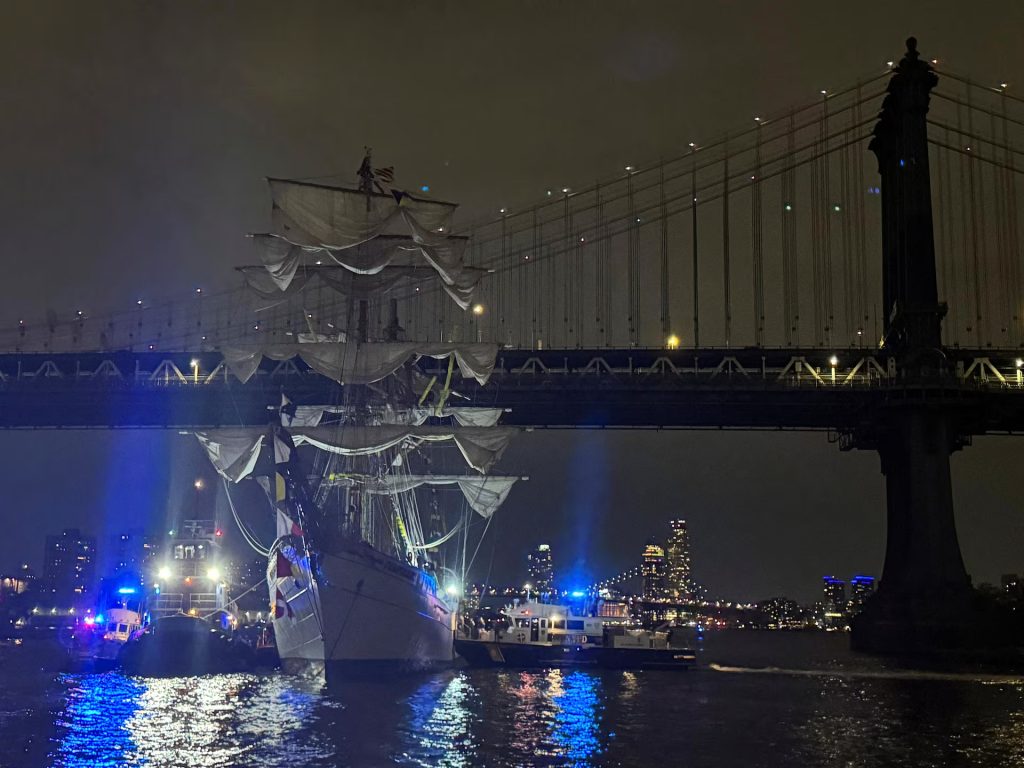
Aftermath and Implications
Mexican President Claudia Sheinbaum expressed condolences, stating, “Our hearts are with the families of the fallen sailors and those recovering. The Mexican Navy will provide full support.” The injured crew members are receiving treatment at local hospitals, with the Mexican consulate coordinating assistance. The *Cuauhtémoc*, a symbol of naval tradition since its commissioning, is severely damaged, with its masts destroyed and propulsion systems inoperable. The ship’s planned voyage, which included stops in Europe and South America, has been canceled.
New York City officials praised the rapid response of first responders and harbor units, which prevented further casualties. Mayor Eric Adams noted, “This is a tragic reminder of the challenges of navigating our waters. We stand with Mexico during this difficult time.” The incident has sparked discussions about maritime safety protocols in the busy East River, particularly for large sailing vessels operating near low-clearance bridges.
Historical Context
The *Cuauhtémoc*, named after the last Aztec emperor, has served as a training vessel and goodwill ambassador for over four decades, visiting 37 countries without prior major incidents. Its tours often include public open houses, showcasing naval heritage. The Brooklyn Bridge, an engineering marvel, has endured hurricanes, wars, and millions of crossings, but its maritime interactions have been minimal until now. This collision underscores the risks of combining historic vessels with modern urban waterways.
The NTSB investigation is expected to take weeks, with findings likely to influence future regulations for tall ships in urban ports. The Mexican Navy faces logistical challenges in repairing or repatriating the *Cuauhtémoc*, which may require extensive shipyard work. For New Yorkers, the incident serves as a somber reminder of the city’s maritime vulnerabilities, even as the Brooklyn Bridge stands resilient.
As the investigation unfolds, the maritime community and New York City mourn the loss of life and hope for the recovery of those injured in this historic tragedy.
Sources: Information compiled from web reports, X posts, and maritime safety data available as of May 18, 2025. No conflicting reports were found regarding the unprecedented nature of the incident.
photos by Reuters