

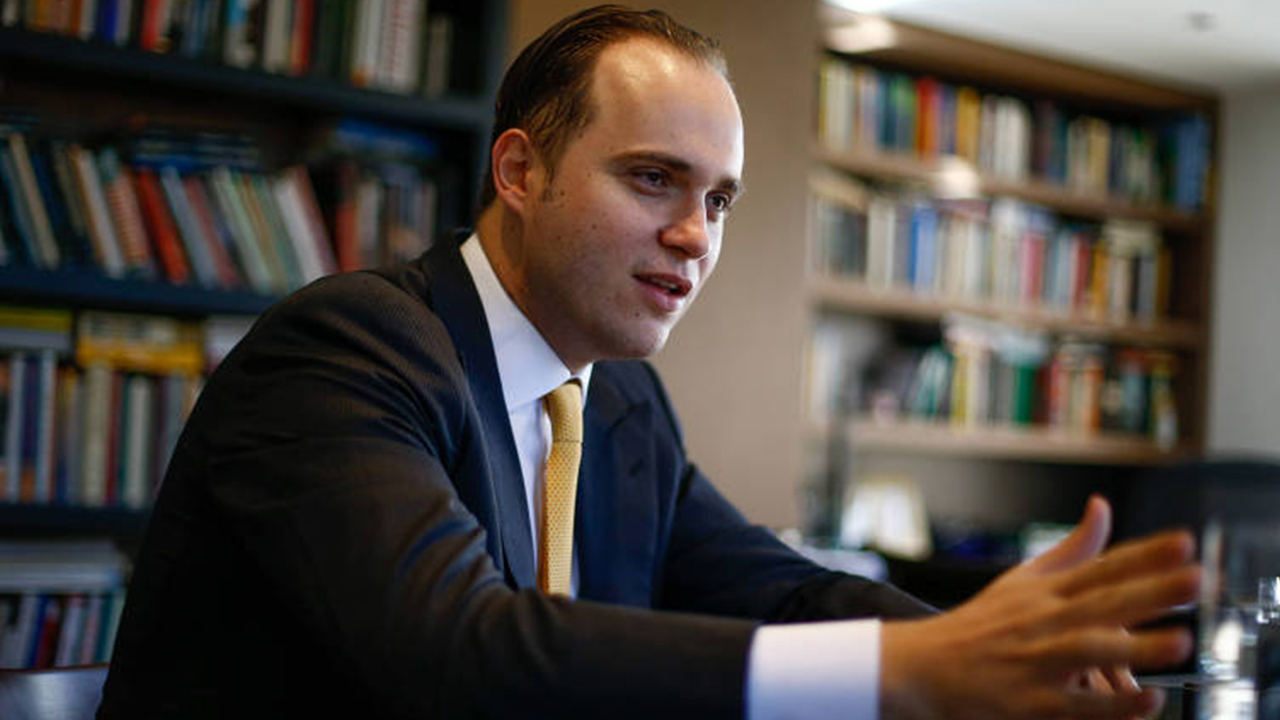

A Brazilian Jurist Ascends to Leadership: Rodrigo Mudrovitsch Takes the Helm of the Inter-American Court of Human Rights
By Hotspotnews
In an era when international institutions often face skepticism for prioritizing ideological agendas over core principles of justice and sovereignty, a noteworthy development unfolded recently in San José, Costa Rica. Brazilian jurist Rodrigo Mudrovitsch was inaugurated as President of the Inter-American Court of Human Rights (IACHR), marking a significant moment for Brazil’s representation on the regional stage and highlighting the value of qualified, homegrown legal talent rising through merit in multilateral bodies.
The Inter-American Court of Human Rights, established under the framework of the Organization of American States, serves as the principal judicial organ for interpreting and enforcing the American Convention on Human Rights across the Americas. Its role in upholding fundamental freedoms—such as due process, free expression, property rights, and protections against arbitrary state power—remains vital in a hemisphere where democratic backsliding and institutional erosion pose real threats. The Court’s decisions carry weight in shaping national jurisprudence and holding governments accountable to shared standards of liberty and rule of law.
Rodrigo Mudrovitsch’s elevation to the presidency for the 2026–2027 term reflects the confidence his peers placed in him after he served as Vice President during the prior biennium and as a judge since early 2022. At the time of his initial election to the Court, he was among the youngest magistrates in its history, a testament to his precocious accomplishments in law and public service.
Mudrovitsch’s professional background is firmly rooted in constitutional and public law—fields essential for any institution tasked with balancing individual rights against state authority. He holds a law degree from the University of Brasília, followed by a master’s in Constitutional Law from the same institution and a doctorate in State Law from the University of São Paulo, one of Latin America’s most respected academic centers. His scholarly work has emphasized themes such as representative democracy, constitutional jurisdiction, and the limits of state power, contributing to Brazil’s ongoing debates on governance and institutional integrity.
Before joining the Court, Mudrovitsch built a distinguished career as an attorney, university professor, and legal advisor. He participated in high-level legislative efforts, including contributions to Brazil’s civil code reform, the new administrative improbity law, and judicial efficiency initiatives under the National Council of Justice. He also held leadership roles within the Brazilian Bar Association, serving as National Prosecutor for Human Rights and as a member of constitutional and human rights study commissions. These experiences equipped him with practical insight into how legal principles translate into policy and institutional reform—precisely the kind of grounded expertise needed to guide a supranational court.
From a conservative perspective, Mudrovitsch’s trajectory offers reassurance amid concerns that international human rights bodies sometimes drift toward expansive interpretations that encroach on national sovereignty or promote progressive causes at the expense of traditional values. His nomination originally advanced under a center-right administration focused on strengthening democratic institutions without surrendering Brazil’s autonomy. His academic emphasis on representative government and constitutional limits aligns with principles that prioritize ordered liberty, separation of powers, and resistance to overreach by unelected entities.
The recent inauguration ceremony, attended by prominent Brazilian figures from across branches of government, underscored Brazil’s institutional commitment to regional human rights mechanisms. While critics may question the optics of official travel, the event itself reinforced Brazil’s stake in a stable, rights-respecting Americas—one where courts defend core freedoms without becoming vehicles for ideological imposition.
As President Mudrovitsch begins his term, the Court faces ongoing challenges: safeguarding judicial independence across the region, addressing threats to democratic norms, and ensuring rulings respect the subsidiarity principle that national systems handle most matters unless grave violations occur. His leadership, informed by rigorous constitutional scholarship and practical Brazilian experience, positions him well to advance these goals in a balanced, principled manner.
In an age of global institutional fatigue, the rise of a capable Brazilian conservative-leaning jurist to head this key tribunal deserves recognition—not as blind endorsement, but as evidence that merit and expertise can still prevail in international forums committed to genuine rule of law.