


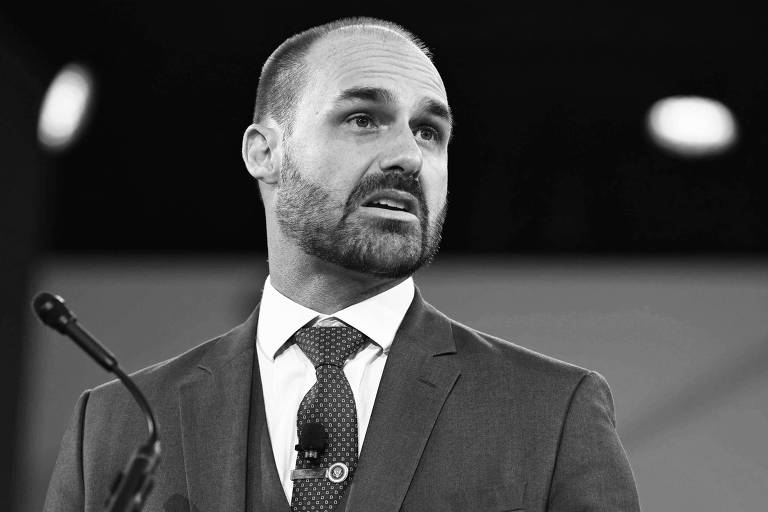
A Conservative Perspective on Eduardo Bolsonaro’s Case
By Hotspotnews
In any healthy democracy, when domestic institutions fail the people they were designed to serve, citizens—especially elected representatives—have a moral duty to sound the alarm and seek remedies. Eduardo Bolsonaro’s efforts to rally international attention and pressure against what he and millions of Brazilians view as a weaponized judiciary represent exactly that: a desperate but principled cry for help in the face of systemic erosion of rule of law, due process, and basic fairness.
The conviction of Eduardo by the STF’s First Panel for “coação no curso do processo” is a textbook example of the very problem it claims to solve. Here was a federal deputy, watching his father—a former president democratically elected—face what many legal observers describe as selective prosecution, lengthy processes, and decisions that stretch constitutional boundaries. Domestic avenues felt exhausted: Congress often paralyzed or co-opted, appeals stacked within the same institutions under scrutiny, and a pattern of monocratic rulings that blur the lines between judging and governing. Turning to a friendly foreign power like the United States under President Trump wasn’t treason; it was an appeal to shared democratic values and human rights standards when Brazil’s own system appeared captured by ideological interests.
Critics on the left howl about “sovereignty” and “interference,” yet conveniently forget their own history. During Lula’s imprisonment under Lava Jato, PT leaders and allies aggressively lobbied international bodies, foreign media, and governments, framing it as legitimate advocacy. The double standard is glaring: one side’s “freedom of expression” becomes the other’s “crime.” True conservatism rejects this selective justice. Equal application of the law isn’t optional—it’s foundational. When courts prioritize political outcomes over evidence, procedure, and impartiality, they invite exactly the kind of external scrutiny Eduardo pursued.
His actions yielded concrete results that exposed the rot: U.S. tariffs spotlighted Brazil’s governance failures, Magnitsky sanctions on key figures like Alexandre de Moraes signaled that human rights abuses and censorship wouldn’t go unnoticed, and visa restrictions underscored the personal stakes for those wielding unchecked power. These weren’t perfect or cost-free—economic pain hit Brazilian exporters, diplomacy strained—but they forced a conversation the establishment preferred to suppress. Eduardo paid a steep personal price with conviction, ineligibility, and exile, yet he highlighted urgent realities: rampant corruption scandals that transcend parties but fester under weak oversight, crushing taxation that punishes productivity, rising crime that ordinary citizens endure daily, and a profound mistrust in institutions that threatens social cohesion.
Brazil cannot simply “wait” for an administration ideologically aligned with judicial activism and expansive state power to self-correct. History shows entrenched elites rarely relinquish authority voluntarily. Conservatives rightly argue for structural fixes: genuine judicial reform to restore balance among branches, stronger congressional oversight, term limits or accountability mechanisms for Supreme Court justices, and a renewed commitment to federalism and individual liberties. Eduardo’s stand, however imperfect, was an act of resistance against the normalization of lawfare—the use of legal tools for political ends. It reminds us that patriotism sometimes demands confronting power, even at great risk.
Supporters understand the consequences he faced, but they also see the deeper necessity. A nation that silences its critics in the name of “institutional defense” risks becoming the very authoritarianism it claims to oppose. Restoring Brazil’s democratic health requires courage, consistency, and an unyielding defense of truth over tribal loyalty. Eduardo Bolsonaro’s voice from abroad continues to echo that call.


