


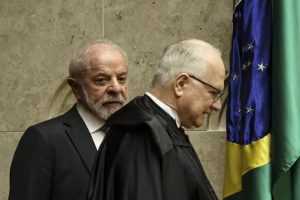


When a Supreme Court Justice Becomes a Political Operative The Last Supper is getting Sour
By Hotspotnews
A growing number of Brazilians are de Moraes’ residence was routine institutional housekeeping. The private dinner that brought President Lula, Senate President Davi Alcolumbre, and Justices Moraes and Cristiano Zanin together is being correctly identified for what it is: a stark illustration of how far the separation of powers has eroded.
The mainstream press has treated the episode with remarkable restraint, describing it as an encounter “articulated by ministers of the STF” to restore relations between the executive and the Senate. That language is deliberately soft. What actually occurred is that two sitting justices of the highest court in the land stepped into the role of political brokers, hosting a reconciliation meeting at the private home of one of them after the Senate exercised its constitutional right to reject a presidential nominee.
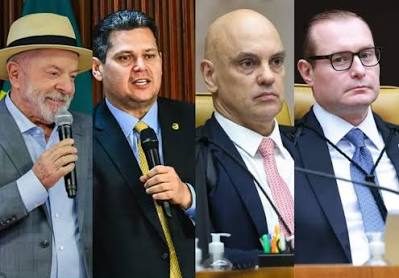

One commentator put the matter with unusual clarity: Alexandre de Moraes is no longer functioning as a minister of the Supreme Court. He is operating as a minister of Lula’s government. The observation is uncomfortable, but it is difficult to dismiss. When a justice uses his personal residence to mediate political disputes between the president and the leader of the Senate, the claim of judicial independence becomes difficult to sustain.
This is not a minor breach of etiquette. The Brazilian Constitution establishes distinct roles for the three branches of government precisely to prevent concentrated power. Judges are not supposed to serve as political facilitators for the executive. They are not supposed to host closed-door negotiations aimed at smoothing over legislative resistance. When they do, the judiciary ceases to function as a check on power and begins to operate as an extension of it.
The timing makes the episode even more troubling. With national elections approaching, the public is being asked to accept that the same justice who has played a highly visible role in politically sensitive cases can also act as an informal political manager for the government without raising institutional concerns. Treating this as a footnote, as much of the press has done, only deepens public cynicism about the neutrality of the courts.
Conservatives have warned for years that the expansion of judicial power under the current Court risked transforming the STF into a political actor rather than a constitutional guardian. The dinner at Moraes’ home is not an isolated incident. It is the logical consequence of a process in which institutional boundaries have been steadily relaxed in the name of convenience and political alignment.
A republic that cannot maintain clear lines between its branches of government is a republic in decline. Brazilians are right to demand better than polite explanations and carefully worded headlines. When a Supreme Court justice becomes the venue and the mediator for executive-legislative peacemaking, the problem is no longer one of optics. It is one of constitutional integrity.


