

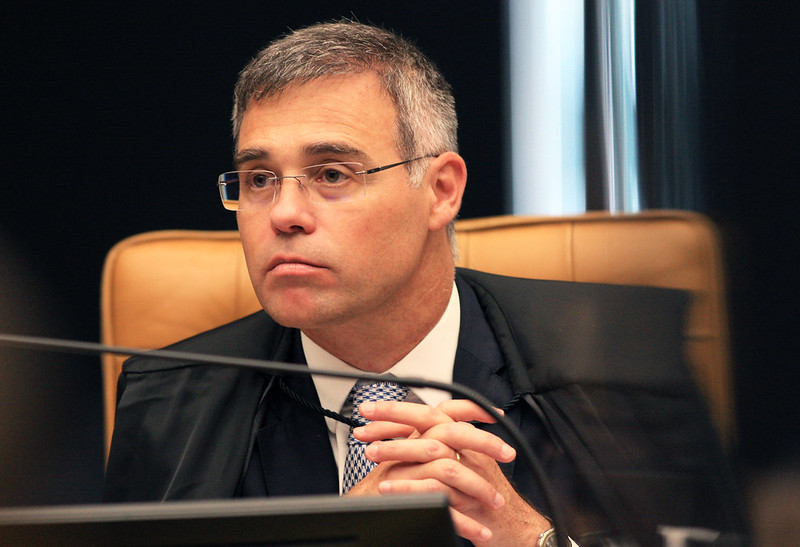

Andre Mendonça: what Abou him?
By Hotspotnews
André Mendonça, the minister of the Supreme Federal Court (STF) appointed by former President Jair Bolsonaro in 2020, became the new relator (rapporteur) of the Banco Master fraud investigation on February 12, 2026, following a lottery redistribution after Dias Toffoli voluntarily stepped aside amid the controversy over his potential conflict of interest.
This change occurred immediately after a closed-door meeting of the full STF plenary, where the ministers unanimously rejected any declaration of suspicion or impediment against Toffoli, validated all his prior acts in the case, and allowed the reassignment to proceed normally. Mendonça’s selection was random via the court’s electronic system, not a deliberate choice by Fachin or others.
Since taking over, Mendonça has adopted a markedly different approach from Toffoli’s tenure, which had been criticized for imposing extreme secrecy, centralizing evidence at the STF, and restricting Polícia Federal (PF) operations—moves seen by many as slowing or containing the probe. Key actions by Mendonça include:
– Reducing secrecy levels in the STF’s portion of the inquiry, making more material accessible while still preserving necessary protections.
-Granting greater operational autonomy to the PF, authorizing them to resume standard forensic perícias (examinations) on approximately 100 seized devices (mostly cellphones from Daniel Vorcaro and associates) without the tight prior constraints. This includes allowing routine diligences like witness and suspect interviews at PF facilities rather than exclusively at the STF.
– Reversing specific prior restriction’s, such as permitting the CPMI (Parliamentary Inquiry Commission) on INSS frauds to access previously withheld bank, tax, and telematic breach-of-secrecy data involving Vorcaro—material that Toffoli had pulled back.
– Maintaining overall sigilo (secrecy) on sensitive aspects to prevent leaks or prejudice, while emphasizing that any new investigative steps by the PF must be requested and approved by him on a case-by-case basis to avoid unilateral actions or abuses.
– Scheduling ongoing coordination meetings with PF leadership, including one held shortly after he assumed the role and another convened for February 23, 2026, to review the first-phase report, discuss pending requests, and decide critical next steps—most notably whether the main inquérito (inquiry) stays at the STF (due to foro privilegiado implications for any high officials) or is sent to first-instance federal justice.
Mendonça is also simultaneously handling the related INSS fraud probe, placing him at the center of two politically explosive investigations with potential ramifications across government, Congress, and the financial sector.
From a conservative perspective, Mendonça’s early moves represent a welcome correction: they restore investigative momentum, empower law enforcement professionals over judicial micromanagement, and signal a departure from the perceived “protectionist” handling under Toffoli. Critics of the prior approach view this as a partial “destoffolização” (de-Toffolization) of the case, allowing the PF to advance without artificial bottlenecks. However, Mendonça has also publicly criticized aspects of the PF’s earlier pursuit of the Toffoli-related angle without proper judicial oversight, reflecting his emphasis on balanced institutional boundaries.
As of February 22, 2026, the core fraud investigation continues under Mendonça’s guidance with renewed PF activity, though no major breakthroughs or indictments have been publicly announced yet. The Senate and public scrutiny remain focused on whether this shift truly delivers accountability or merely relocates the same institutional caution to a new name.
In recent weeks, a glimmer of hope has emerged in Brazil’s long-struggling fight against elite impunity and massive financial fraud. The Supreme Federal Court (STF) case involving Banco Master—a scandal that allegedly siphoned off tens of billions of reais, devastating investors, pension funds, and ordinary Brazilians—has taken a decisive turn for the better.
When Justice Dias Toffoli stepped aside amid troubling questions about potential conflicts of interest, the case landed with Justice André Mendonça. Appointed to the STF by former President Jair Bolsonaro, Mendonça has long stood out as a voice for restraint, due process, and resistance to judicial overreach. Unlike some colleagues who have been accused of shielding powerful interests or slowing investigations through procedural roadblocks, Mendonça has moved swiftly and decisively.
Within days of assuming the rapporteur role, he overturned restrictive measures imposed under the prior handling of the case. He restored full operational autonomy to the Federal Police (PF), allowing them to resume routine investigative steps without unnecessary interference. Pericias on seized devices—including around 100 cell phones—were green-lighted without the previous cumbersome restrictions. Standard depositions and other essential procedures were permitted to proceed in their normal format. He also reduced excessive secrecy levels and ensured parliamentary inquiries, such as the CPI do INSS, could access relevant sealed data for greater transparency.
Most encouragingly, Mendonça has scheduled a critical follow-up meeting with PF delegates to review the investigation’s progress, examine pending forensic results, and decide on next steps—including whether the case should remain at the STF or be sent to lower courts for faster, more direct accountability. These actions signal a commitment to letting law enforcement do its job unhindered, rather than micromanaging or delaying in ways that have plagued similar high-profile probes in the past.
For conservatives who have watched Brazil’s institutions repeatedly fail to deliver swift justice in cases of grand corruption and financial abuse, Mendonça’s approach represents a welcome departure from the status quo. His background as a former Attorney General under Bolsonaro and his consistent emphasis on constitutional limits, individual rights, and institutional integrity align with values of limited government, rule of law, and accountability for the powerful—no matter their connections.
Of course, true justice in Brazil requires far more than one minister’s rulings. The country still grapples with a judiciary burdened by delays, selective enforcement, and a culture that too often protects the elite while ordinary citizens bear the consequences of economic mismanagement and fraud. Systemic reforms—stronger checks on judicial activism, faster due process, and genuine independence for investigative bodies—are essential for lasting change.
Yet in this specific case, which has exposed vulnerabilities in the financial system and potential misuse of public-linked resources, Mendonça’s proactive stance offers real cause for cautious optimism. If he continues to prioritize evidence-based progress, authorizes thorough probes, and holds accountable all those implicated—regardless of political or economic clout—he could help restore faith that Brazil’s highest court can serve justice rather than obstruct it.
The coming days, particularly the outcomes of his meeting with the PF, will be telling. Brazilians deserve no less than full transparency, rapid advancement of legitimate investigations, and consequences for those who betrayed public trust on such a massive scale. Justice André Mendonça has the opportunity to prove that conservative principles—honesty, diligence, and fidelity to the law—can still prevail at the top levels of Brazilian institutions. For the sake of the nation, let’s hope he seizes it.