



A Win for Free Speech in Brazil
By Hotspotnews
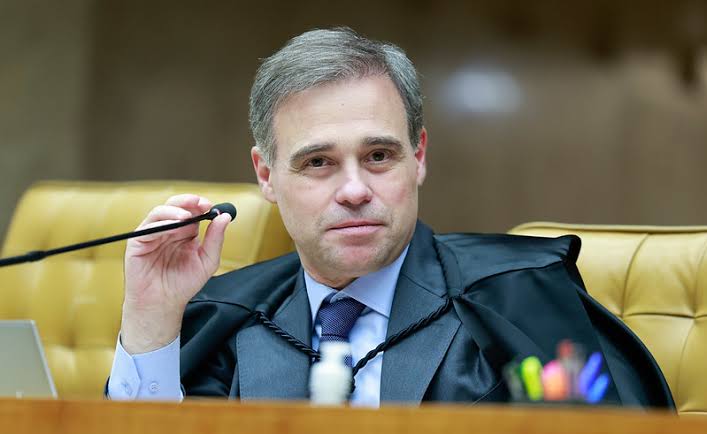
In a refreshing display of judicial restraint, Supreme Court Justice and TSE Minister André Mendonça has correctly refused to censor a satirical video by Senator Flávio Bolsonaro. The decision protects political speech at a time when many in Brazil’s political establishment prefer silence over debate.
The video in question uses artificial intelligence to depict Bolsonaro in a military-style operation targeting vessels marked with the acronyms of Brazil’s most notorious criminal organizations—PCC and Comando Vermelho—alongside the Workers’ Party (PT). Accompanied by a sharp caption promising “bad news” for all three, the piece is classic political satire: exaggerated, pointed, and unmistakably critical of perceived soft approaches to organized crime.
Mendonça’s ruling recognized this for what it is. He described the content as political criticism delivered in a satirical and caricatured tone, and he correctly noted that such expression remains a fundamental element of democracy. The Electoral Court, he emphasized, should practice “minimal interference” in public debate. Harsh, uncomfortable, or even aggressive criticism directed at parties and policies is protected, not suppressed.
This stands in welcome contrast to the reflex among some political actors to treat any association of the PT with failures in public security as forbidden speech. Brazilians living under the daily threat of criminal factions have every right to demand accountability and to use satire, memes, and pointed commentary to press the point. Labeling such criticism as illegitimate does not make the underlying problems of organized crime disappear; it merely attempts to police the conversation about them.
Freedom of expression is not reserved for polite, carefully hedged statements that offend no one in power. It exists precisely to protect speech that challenges orthodoxy, including the orthodoxy that certain parties or policies must remain above pointed scrutiny on crime. By keeping the video online, Mendonça affirmed that principle.
In an election year, the temptation to use institutional power to mute opponents is always present. Today’s decision pushes back against that temptation. It is a modest but meaningful victory for open debate, and conservatives who value free speech over managed narratives have reason to celebrate it.


