

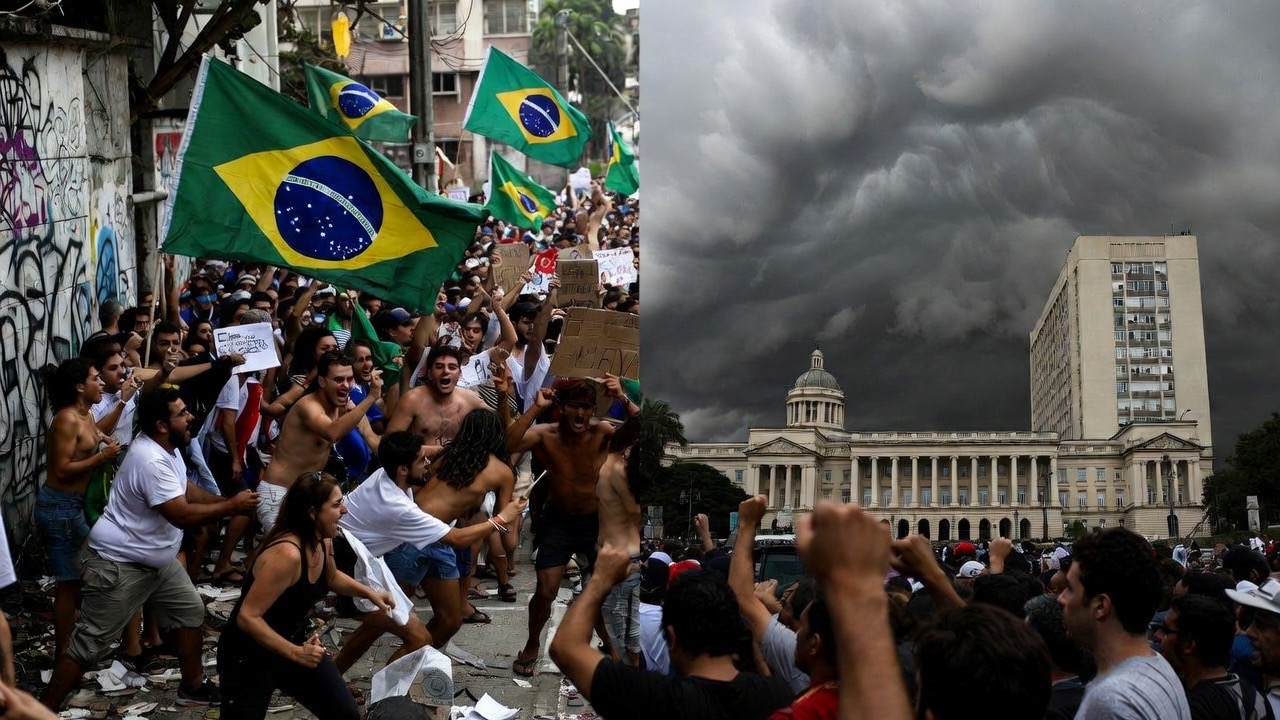

Brazil: the biggest concern right now is a rupture.
By Hotspotnews
Many Brazilians no longer believe that justice can truly happen through the normal channels, and that loss of faith creates a profound problem for the country.The Erosion of Trust in Institutions
Brazil is facing what feels like an unprecedented moral and institutional crisis. A powerful Supreme Court justice stands accused of suspiciously close ties to a banker at the center of the nation’s largest financial fraud scandal in history. Leaked messages suggest the banker sought urgent help on the very morning of his arrest—asking if something could be “blocked”—and received quick replies that vanished after being read. The justice denies it all, calling reports fabrications, but the contradictions keep mounting: shifting explanations, family connections questioned, and a pattern that many see as one law for the elite and another for everyone else.
This isn’t isolated. Deputies from the opposition have taken the floor to declare openly that wealth grants impunity, that influence buys protection, and that the system protects its own while ordinary citizens face harsh consequences. Impeachment requests pile up—dozens now, backed by parties and even state governors—but they stall in the Senate, blocked or buried by those in control. Investigations drag on, explanations evolve, and public confidence crumbles further with each revelation.
When large segments of society conclude that formal accountability is impossible, the ground shifts. People stop seeing institutions as neutral referees and start viewing them as captured by power. Frustration builds quietly at first—through social media, conversations, protests—then louder. Rhetoric hardens: calls to dissolve courts, mass actions, or simply withdraw consent from the system. History shows this rarely ends well. Ruptures don’t always arrive with tanks; they often creep in through eroded legitimacy, polarized elections, street confrontations, or paralysis where no one trusts anyone to enforce rules fairly.
### The Dangerous Feedback Loop
The real danger is the cycle feeding itself. One side sees attacks on the judiciary as threats to democracy itself, a necessary defense against authoritarian relapse. The other sees unchecked power, censorship, selective justice, and now apparent financial entanglements as proof that the guardians have become the problem. Both sides dig in, escalation becomes inevitable, and the middle ground vanishes.
If belief in peaceful, institutional paths collapses further, unpredictable outcomes follow: boycotts of elections, radical mobilization, or worse. No one wins in a rupture—least of all ordinary Brazilians who just want fairness, safety, and a functioning country.
### A Narrow Path to Avoid the Worst
Rebuilding even a sliver of trust won’t be easy, but it starts with basics:
– Swift, transparent, credible investigations that people across the political spectrum can accept as impartial.
– Political leaders on all sides lowering the temperature instead of fanning flames for short-term gain.
– Pressure from civil society demanding accountability without veering into anti-institutional extremism.
The coming weeks and months—with more potential leaks, Senate maneuvers, and the 2026 election looming—will decide whether this crisis de-escalates or spirals. Brazil has survived deep divisions before by clinging to the idea that institutions, however flawed, can still self-correct. Right now, that idea hangs by a thread.
The people won’t believe justice will happen unless they see real proof that it can. Restoring that belief is the only way to prevent the rupture many fear is coming.