


The Master Collapse: How a Bank Scheme Reached the Highest Offices—and Why America Stepped In
A mid-sized Brazilian bank did not simply fail. It was liquidated after regulators said the books no longer matched reality. Ordinary savers were made whole by a guarantee fund that then had to cover a giant hole. The man at the center, Daniel Vorcaro, faces accusations of inflating the bank’s worth, issuing high-yield papers without enough backing, and moving value through a maze of funds and firms. That is the core of the Banco Master affair.
The alleged method was simple and costly. Attract money with generous rates. Dress weak or phantom credits as solid assets. Keep the machine running with new inflows while the true cushion thinned. When the Central Bank finally shut the doors in November 2025, the guarantee fund was left to pay depositors. The bill ran into tens of billions of reais. That money did not appear from thin air. It came from the system that protects everyday accounts.
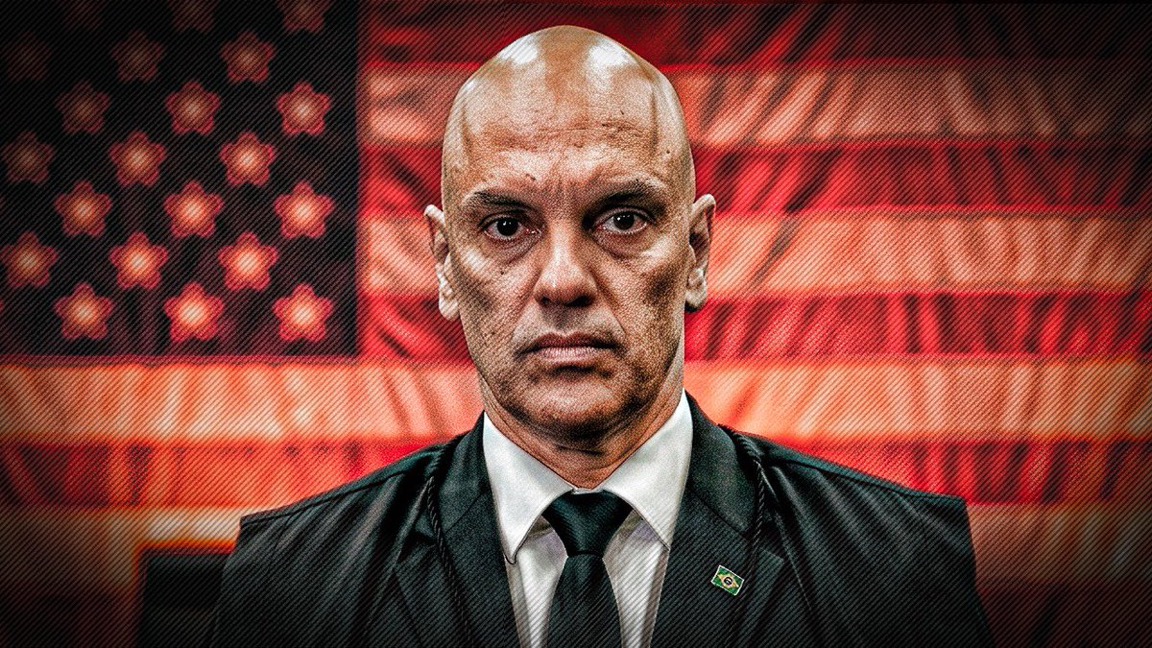
What turned a bank failure into a national scandal was the company Vorcaro kept. Messages and contracts pulled from phones and files pointed toward political and judicial circles. One contract, now reported at about 131 million reais in gross fees, linked Vorcaro’s bank to the law office of Viviane Barci de Moraes, wife of Supreme Court Justice Alexandre de Moraes. Metadata later indicated the justice himself had opened and altered the draft. The office says he only checked for legal barriers and found none. Critics see a conflict that should never have existed: a sitting high-court judge anywhere near a lucrative private deal with a banker later accused of wrecking an institution.
That mix of money and power is the conservative complaint in plain terms. Rules that bind small players should bind the well-connected. When a bank can buy influence, or appear to, the public loses twice—once in the fraud, again in the loss of trust.
The United States entered the picture for a practical reason, not a political one. Vorcaro held property and dealings in Florida. Brazil’s liquidator asked a U.S. bankruptcy court to recognize the Brazilian shutdown under Chapter 15. The court agreed. Assets in America could be frozen. Records spanning years—art sales, real-estate papers, bank files—could be demanded. The stated purpose was to stop value from vanishing and to give Brazilian creditors a chance to recover what was taken. U.S. investigators have also looked at the Florida footprint. None of this is a crusade against Brazil. It is the ordinary machinery used when a foreign insolvency leaves tracks on American soil.
Consequences are already visible. Depositors were paid, but the guarantee fund was drained. Other institutions that touched the scheme face their own probes. Vorcaro’s U.S. holdings are under watch. Brazilian police continue to map a web of funds, companies, and alleged pressure on officials. The political calendar feels the heat: names from Congress, the Central Bank, and the Supreme Court keep appearing. Each new document raises the same question: who received protection, and who paid the price?
A conservative reading does not require conspiracy theater. It requires consistency. If the bank cooked its numbers, the people who signed, approved, or profited should answer in court, not in press notes. If a justice’s household stood to gain tens of millions from the same banker, the appearance alone damages the bench. If assets sit in another country, they should be traced, not sheltered. Equal justice is not a slogan. It is the only way a financial system survives the next clever operator.
The Master case is a warning written in large numbers. Easy credit stories and political friendships do not replace capital. When they try, the bill lands on savers, on the guarantee fund, and on the reputation of institutions that were supposed to stand apart from the deal.
Sources: reporting by Revista Oeste, Estadão, O Globo, Folha de S.Paulo, G1, CNN Brasil, Gazeta do Povo, and U.S. court coverage of the Florida Chapter 15 proceeding (2025–2026).
#BancoMaster #Vorcaro #STF #EstadoDeDireito #JusticaIgual #FraudeBancaria #Capitulo15 #Brasil2026