


U.S. Intelligence Steps In: CIA Deputy Meets Brazilian Police Chief Amid Rising Tensions
By Hotspotnews
In a move that underscores the growing alliance between American and Brazilian security forces under the Trump administration, CIA Deputy Director Michael Ellis traveled to Brasília for a high-level meeting with Andrei Rodrigues, Director-General of Brazil’s Federal Police (PF), on January 28, 2026.
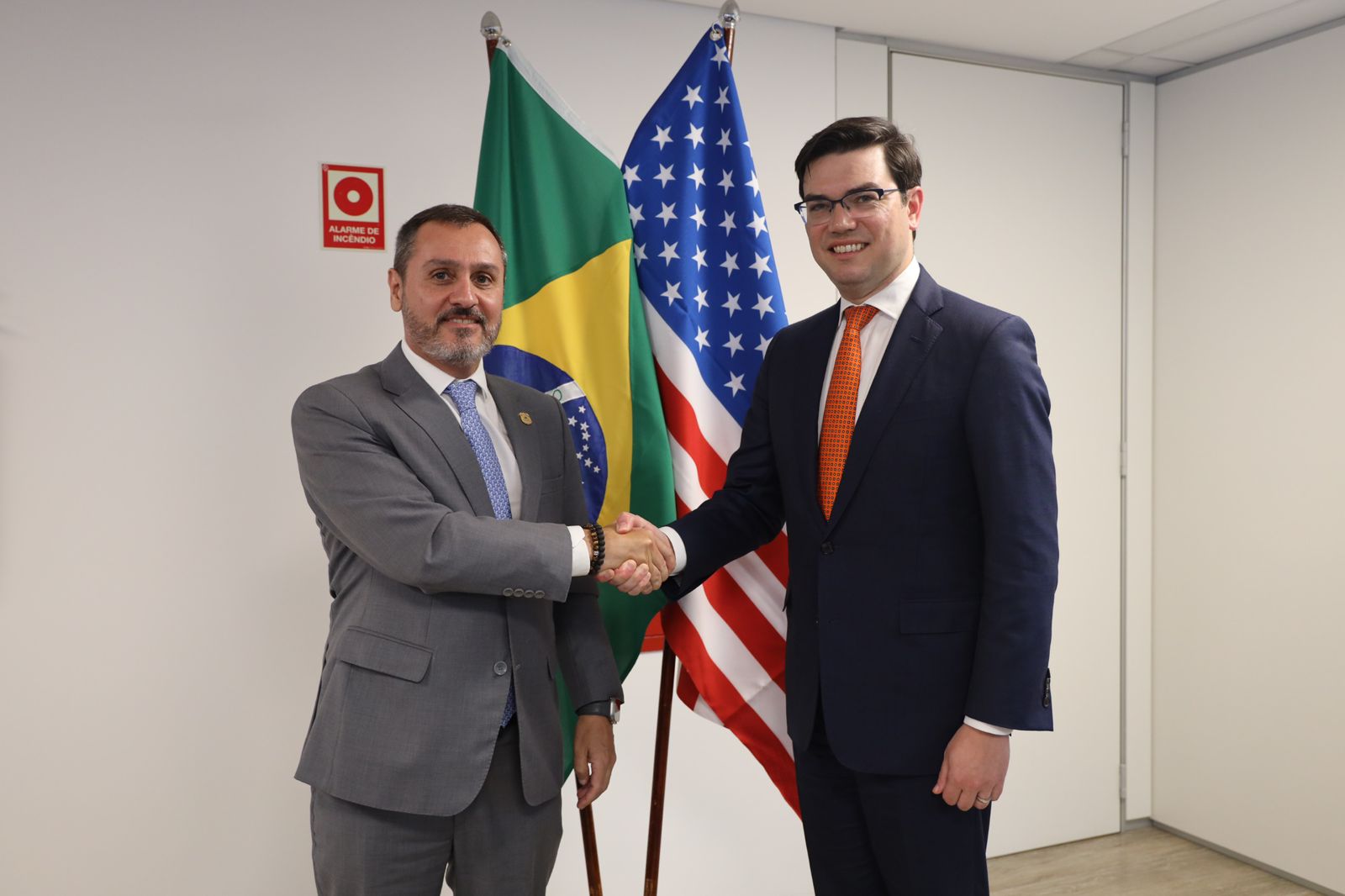
This encounter, captured in a widely shared image of the two leaders shaking hands against the backdrop of Brazilian and American flags, signals a renewed commitment to combating transnational threats and bolstering intelligence sharing—efforts that conservatives have long advocated for in the face of leftist policies weakening national sovereignty.
The meeting, described officially as a “courtesy visit,” brought together key figures from both sides. Rodrigues was joined by his top deputies, including Executive Director William Murad, Intelligence Director Leandro Almada, International Cooperation Director Felipe Seixas, and Counterintelligence Coordinator Rafael Caldeira. Discussions centered on deepening cooperation between the CIA and PF, with a focus on exchanging critical information to tackle cross-border crimes such as drug trafficking, cyber threats, and terrorism. Emphasis was placed on Brazil’s pivotal strategic role in the Americas, a nod to the nation’s potential as a bulwark against instability in the region—instability often exacerbated by socialist regimes like those in Venezuela and beyond.
What makes this rendezvous particularly noteworthy is its timing, coming amid the escalating Banco Master scandal that has rocked Brazil’s financial and political landscape. The scandal involves allegations of massive money laundering and corruption tied to powerful interests, with investigations revealing ties to international networks. While official statements from the PF avoided specifics, insiders suggest the CIA’s involvement could provide the technological and intelligence muscle needed to unravel these webs—resources that Brazil’s current administration under President Lula has struggled to muster independently. This isn’t just diplomacy; it’s a practical pushback against the corruption and inefficiency that have flourished under progressive governance.
From a conservative perspective, this development represents a welcome shift. For years, Brazil has grappled with judicial overreach and political persecution, particularly against right-leaning figures, under the influence of leftist institutions. The CIA’s engagement, led by Ellis—a seasoned operator with roots in the Trump era—hints at a changing tide. It could mark the beginning of external pressure to restore balance, ensuring that investigations like Banco Master target real threats rather than serving as tools for ideological vendettas. No longer can Brazil’s elite hide behind bureaucratic shields; American oversight might force accountability, echoing the “America First” doctrine that prioritizes strong alliances against global chaos.
Critics on the left may decry this as foreign meddling, but conservatives see it for what it is: a necessary collaboration to safeguard freedom and security. With Trump’s return to the White House emphasizing robust international partnerships, this meeting could herald broader reforms, from curbing illegal migration flows to dismantling narco-states. Brazil, once a beacon of economic promise, stands to benefit if it embraces this path—moving away from socialist experiments toward a future of stability and prosperity.
As details continue to emerge, one thing is clear: the handshake in Brasília isn’t just symbolic. It’s a step toward real change, where conservative values of law, order, and mutual defense take precedence over the failed policies of the past.