


Fachin’s Fiery Stand: A Call for Accountability in Brazil’s Supreme Court
By Hotspotnews
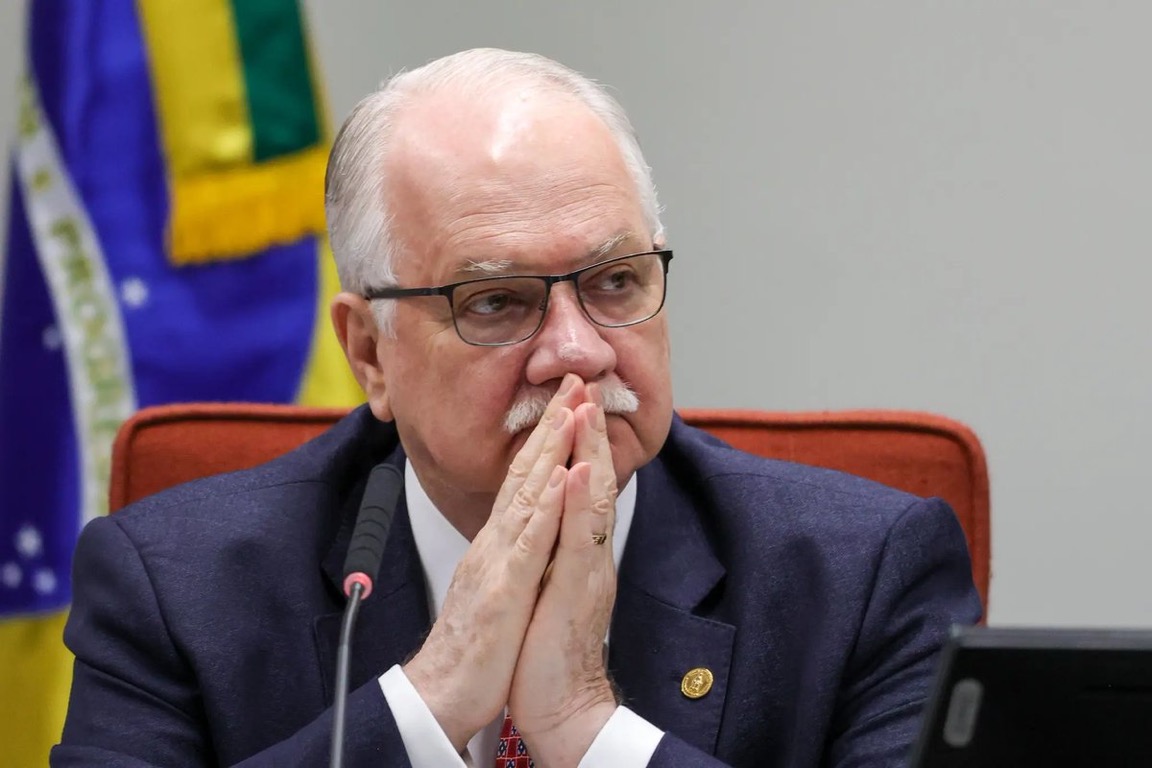
In a bold and unyielding address at the opening of Brazil’s judicial year, Supreme Federal Court (STF) President Edson Fachin delivered a much-needed rebuke to the entrenched powers within the judiciary.
Speaking before his colleagues and the nation on February 2, 2026, Fachin didn’t mince words, highlighting the critical need for legitimacy and transparency in a court that has too often operated as an unaccountable fiefdom. His remarks, laced with pointed examples of ethical lapses, were a direct shot across the bow at Justices Dias Toffoli and Alexandre de Moraes—two figures who have come to symbolize the overreach and opacity that conservatives have long decried in Brazil’s highest court.
Fachin’s speech was a refreshing departure from the usual platitudes that mark such ceremonial events. He emphasized that the judiciary’s authority stems not from divine right or electoral immunity but from the trust of the Brazilian people—the very taxpayers who fund its operations. “The Supreme Court must respect itself and the population to function properly and earn respect,” Fachin declared, invoking the wisdom of Italian jurist Pietro Calamandrei to remind his peers that magistrates are not “superior creatures” above criticism or suspicion. This is conservative common sense at its core: no one, not even robed justices, should be beyond the law or public scrutiny.
The real fireworks came when Fachin zeroed in on specific hypocrisies plaguing the court. He called out scenarios where a minister’s spouse secures a staggering 129 million reais contract without explanation, and another justice jets around on a private plane owned by someone under investigation—all while facing no repercussions. These weren’t abstract hypotheticals; they were thinly veiled references to Toffoli and Moraes, whose actions have fueled public outrage and eroded faith in the institution. Toffoli, as relator in the contentious Banco Master case, has faced accusations of conflicts of interest, including ties to figures involved in the scandal. Meanwhile, Moraes has earned notoriety for his aggressive oversight of inquiries, often accused of trampling on free speech and due process in the name of “defending democracy.”
For conservatives, this moment is a vindication. Brazil’s STF has morphed into a super-legislature under left-leaning influences, annulling anti-corruption efforts like Operation Lava Jato and imposing censorship that stifles dissent. Toffoli’s role in dismantling Lava Jato, which exposed billions in graft among political elites, remains a sore point, as does Moraes’ iron-fisted approach to social media regulation and political inquiries. Fachin’s insistence on accountability strikes at the heart of this judicial activism, reminding us that true justice requires humility, not hubris.
Yet, this isn’t just about individual justices; it’s a systemic indictment. Fachin pushed for a code of ethics, to be shepherded by Justice Carmen Lúcia, as a step toward restoring integrity. He warned that without self-imposed reforms, external pressures—from Congress or the public—could force change upon the court. In a nation weary of institutional overreach, this is a rallying cry for conservatives who believe in limited government and the rule of law, not rule by decree.
Of course, the left will dismiss Fachin’s words as mere theater, but the divisions within the STF are palpable. Reports of internal rifts, including Toffoli’s defiance in keeping the Banco Master inquiry under the court’s purview despite calls to relinquish it, underscore a court in crisis. Fachin’s defense of the institution doesn’t absolve its flaws; rather, it exposes them, demanding that the judiciary earn its legitimacy through transparency and ethical conduct.
As Brazil grapples with economic challenges and political polarization, Fachin’s address serves as a beacon for conservative values: accountability, fiscal responsibility, and respect for the people’s sovereignty. If the STF heeds his call, it could mark the beginning of a reformed judiciary. If not, the Brazilian people—armed with their votes and voices—will continue to demand better. The ball is now in the court’s court.