





False Evidence, Real Prison: How a Fabricated US Record Locked Up a Bolsonaro Aide for Months
By Hotspotnews
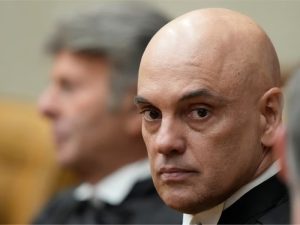
In a development that should alarm anyone who values the rule of law, a United States federal judge has confirmed what Filipe Martins and his defenders long maintained: the key piece of evidence used by Brazilian Supreme Court Justice Alexandre de Moraes to keep the former Bolsonaro international affairs advisor behind bars was false.
Judge Gregory A. Presnell of the U.S. District Court for the Central District of Florida stated during a March hearing—whose full transcript has now surfaced—that a Border Patrol system entry claiming Martins entered the United States on December 30, 2022, was fraudulent. “There was a false record made in the Border Patrol systems that affected a person considerably. The government recognizes the falsity and the gravity of this,” Presnell declared. He further ordered U.S. Customs and Border Protection to turn over documents identifying those responsible for inserting the fabricated data.
That false record was not a minor clerical error. Moraes relied on it in 2024 to justify Martins’ preventive detention, arguing it showed a flight risk after the former president’s trip to Florida. Martins spent nearly six months in custody on the strength of this document. The defense presented contemporaneous Brazilian evidence—cell phone records, domestic travel, and banking activity—showing he never left the country. The U.S. agency itself later admitted the entry never occurred. Yet the Brazilian justice system proceeded as if the fiction were fact.
This episode fits a broader pattern that conservatives have warned about for years: the selective and expansive use of judicial power against political opponents of the current Brazilian establishment. Martins was later convicted by the STF’s First Panel to 21 years for alleged involvement in a plot against the 2022 election results. Regardless of one’s view of that conviction, the preventive imprisonment rested on demonstrably false foreign records. When a court treats fabricated evidence as decisive, the integrity of the entire process is compromised.
The American judge’s criticism of the U.S. government’s resistance to transparency only sharpens the point. If even U.S. authorities dragged their feet on revealing how a false immigration entry appeared in official systems, Brazilians are entitled to demand equal scrutiny of how that same falsehood was weaponized in their highest court. Martins has pursued Freedom of Information Act litigation in the United States precisely to uncover who created or inserted the record and why.
For those who believe institutions must be constrained by evidence rather than political convenience, this case is a cautionary tale. Preventive detention is an extraordinary measure. When it is sustained by a document later branded false by a foreign federal judge, public trust erodes. Conservatives have repeatedly argued that the post-2022 legal campaign against Bolsonaro allies has stretched legal norms to achieve political ends. The Martins episode supplies concrete, court-verified ammunition for that critique.
Accountability must cut both ways. Those who inserted or relied upon the false record should face the same rigorous standards applied to the defendants in the broader “coup” investigations. Anything less confirms the suspicion that Brazil’s justice system has become a selective instrument rather than a neutral arbiter.
Sources: Transcript of U.S. District Judge Gregory A. Presnell’s hearing as reported by Folha de S.Paulo; contemporaneous reporting by Revista Oeste and Gazeta do Povo; prior public statements by U.S. Customs and Border Protection acknowledging the erroneous entry; official records of Martins’ STF proceedings and preventive detention orders.
#FilipeMartins #RuleOfLaw #STF #AlexandreDeMoraes #BrazilianJustice #FalseEvidence #PoliticalPersecution #Bolsonaro #Accountability


