




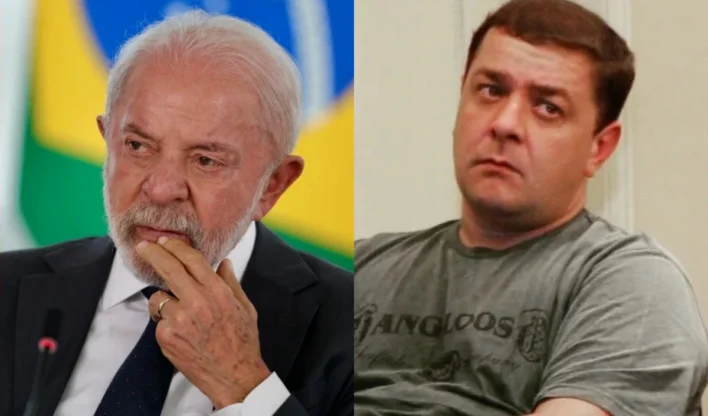
International Media Forces Spotlight on Lula’s Son: No One Is Above the Law
By Hotspotnews
In late July 2026, a quiet but consequential decision by Brazilian Supreme Court Justice André Mendonça authorized the Federal Police to formally investigate Fábio Luís Lula da Silva—better known as Lulinha, the eldest son of President Luiz Inácio Lula da Silva—for alleged corruption and influence peddling. What might have remained a domestic political story has instead become international news, carried by outlets such as Bloomberg and Reuters. The world is watching, and that scrutiny is overdue.
The core of the probe concerns suspicions that Lulinha used his proximity to the presidential office and government institutions to advance commercial interests tied to medical cannabis products. Investigators are examining whether he helped open doors at the Health Ministry and potentially within the presidential apparatus on behalf of associates, including the lobbyist known as “Careca do INSS.” A parallel line of inquiry involves possible influence efforts related to Dataprev, the state technology firm that manages critical social security data. These allegations emerged from broader investigations into irregularities at the National Social Security Institute (INSS), where fraudulent deductions from retirees’ benefits have already drawn significant attention.
This is not Lulinha’s first brush with official scrutiny. Earlier in 2026, authorities had already moved to lift bank and tax secrecy in connection with the INSS matter, examining whether he held a hidden role linked to the same network of intermediaries. President Lula has publicly insisted that his son will face investigation like any other citizen and that he will not intervene to protect him. Those words are welcome. Actions must now match them.
From a conservative perspective grounded in the rule of law, the significance of this case extends far beyond one individual. Political power has a long history of creating informal networks of influence that ordinary citizens never enjoy. When the relative of a sitting president is accused of leveraging that access for private gain, the integrity of public institutions is directly tested. Brazilians have endured repeated cycles of high-level corruption scandals. The expectation that family members of the powerful operate under different rules corrodes public trust and rewards cynicism. An independent judiciary and a professional Federal Police must be allowed to follow the evidence wherever it leads—without political interference, selective outrage, or attempts to reframe legitimate inquiries as partisan attacks.
The international coverage matters precisely because it reduces the space for domestic narrative control. When major global financial and news organizations report the authorization of these probes, the story becomes harder to minimize or dismiss as internal political noise. Accountability is not a left or right issue; it is a foundational requirement of any functioning republic. Conservatives have long argued that concentrated political power invites abuse, and that transparent institutions and equal application of the law are the strongest safeguards against it. This episode offers a clear test of that principle.
Lulinha, like every other citizen, is entitled to the presumption of innocence and a fair process. No responsible observer should declare guilt before the investigation runs its course. At the same time, no responsible observer should accept the notion that the son of a president deserves special insulation. The Federal Police requested the inquiry. A Supreme Court justice authorized it. Those steps reflect the proper functioning of institutions rather than their capture.
Brazil faces serious challenges—economic pressures, public security, and the persistent need for cleaner governance. Shielding powerful families from scrutiny would only deepen those problems. The decision to investigate Lulinha, and the international attention it has drawn, should be treated as an opportunity to reaffirm a simple standard: public office and family connections confer no immunity. The evidence must be examined rigorously, the process must remain independent, and the results must be accepted without favoritism. Anything less invites the very erosion of trust that has plagued Brazilian public life for too long.
The world is indeed paying attention. Brazilians should demand that their institutions rise to the moment.


